
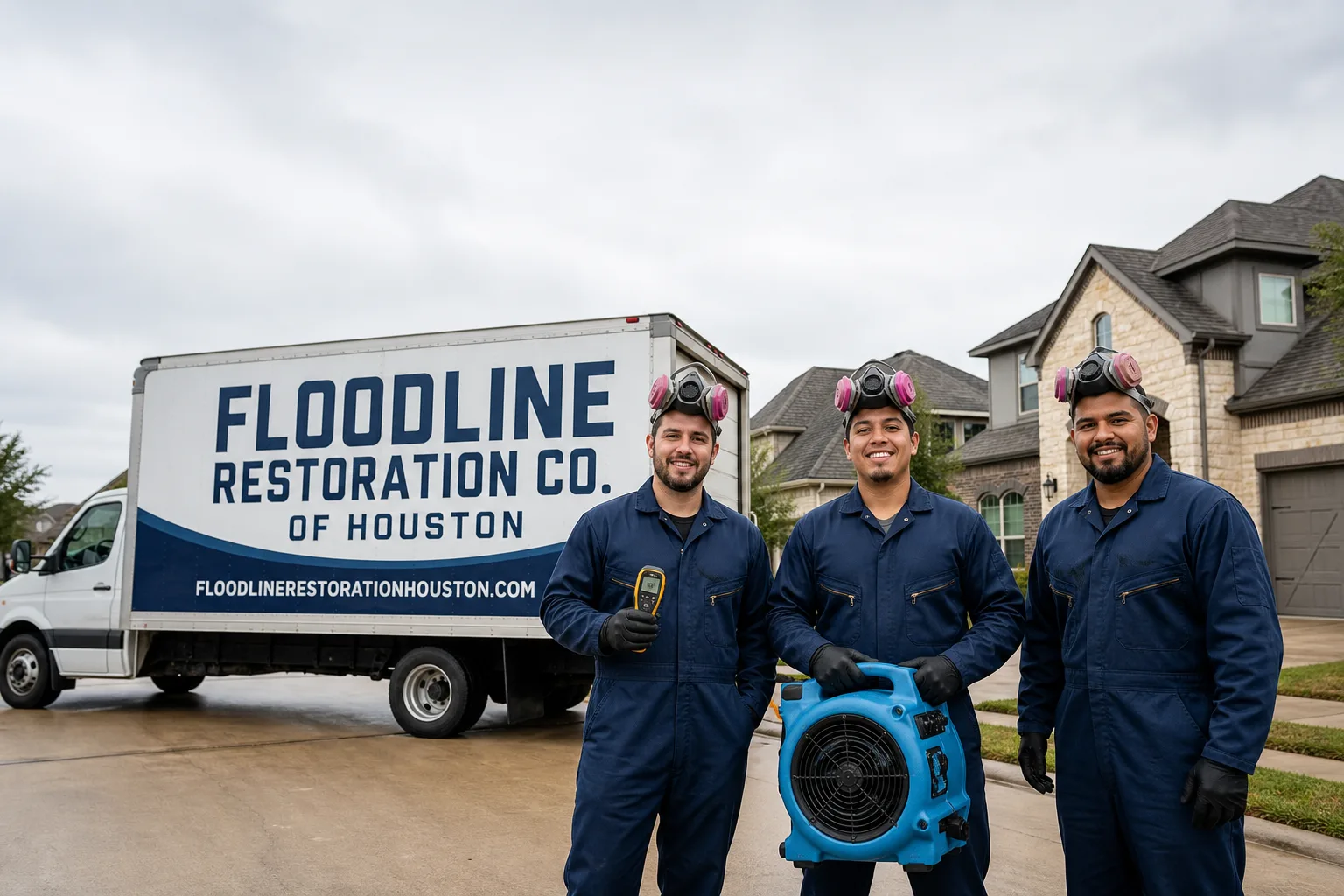
Fast, Reliable Mold Remediation Across Dayton
Mold remediation in Dayton starts with an honest assessment of the wall cavity, the crawl space, and the air you’re breathing, not just the stain you can see. Most Dayton homes we inspect carry hidden mold behind finished drywall, under pier-and-beam floors, or inside manufactured-home underbellies where Trinity River flood moisture settled years ago. We respond to Dayton calls within hours, not days, because at 75% humidity and rising, a small colony becomes a structural problem while you wait. Call (888) 977-4690 and a live dispatcher answers, any hour, any day.
Why Floodline Restoration Co. of Houston Is Dayton’s Preferred Mold Remediation Company
Dayton homeowners have a specific kind of mold problem, and we’ve spent years learning exactly how it behaves here. The houses off FM 1960, along the Trinity River bottomlands, and in the older subdivisions near Dayton High School share a history: flood cycles, quick cosmetic repairs, and moisture that never fully dried. We find mold in places other crews don’t look, because we know where Harvey-era water actually settled. Our technicians are background-checked, uniformed, and trained to IICRC, RIA, and IFA standards. Curt Bowman founded this company in 2010 with a dispatch board, not a sales desk, and that’s still how it runs. The 90-Day Done Right Promise, in writing, covers every mold job we do in Dayton. If it’s not done right, we make it right. No arguing, no paperwork battles.
When a Dayton homeowner calls at 2 a.m. with a water heater that flooded a hallway, a live person answers. That’s not a marketing line. It’s the way we’ve operated for over 42 years, and it’s why homeowners in Liberty County keep our number on the fridge. A certified crew reaches Dayton the same visit and starts extraction immediately, because every hour of standing water in this humidity compounds the mold risk downstream.
Our Mold Remediation Services in Dayton
Mold Inspection & Testing
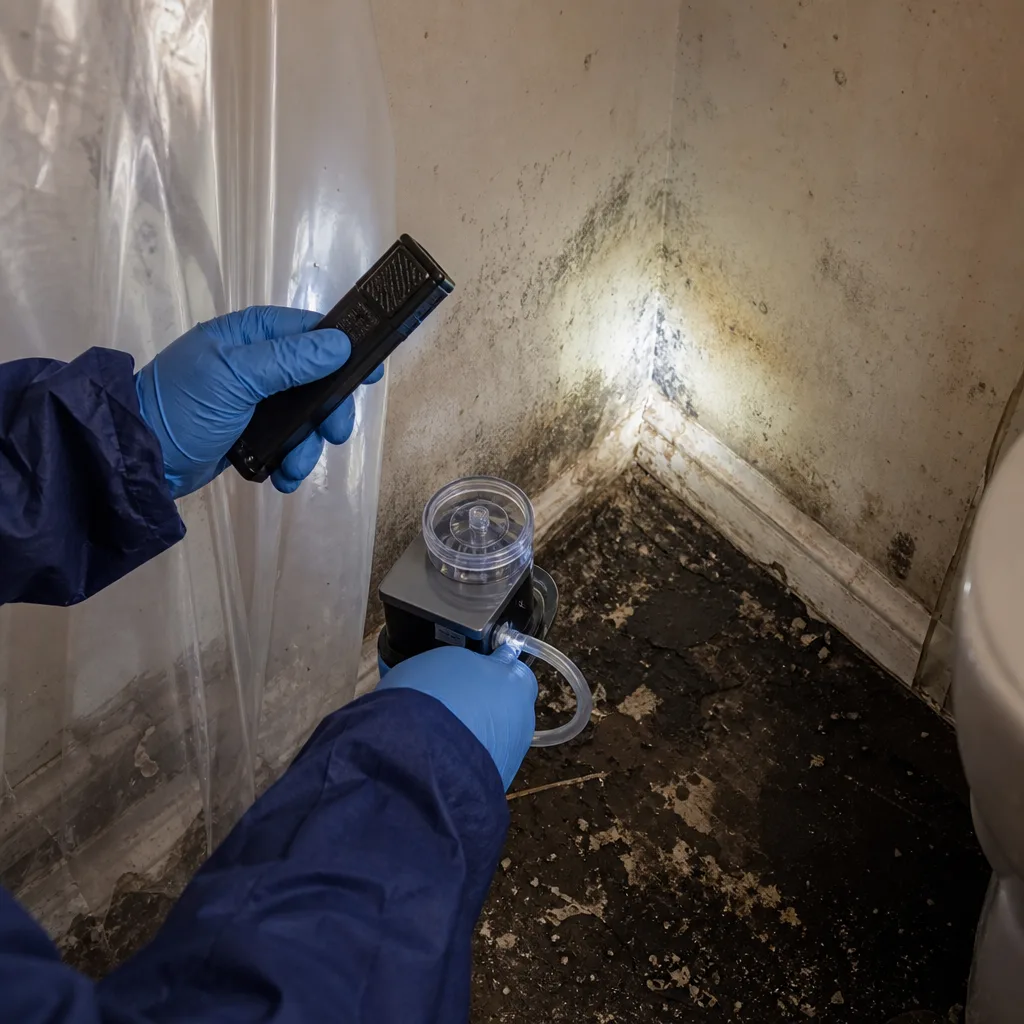
A Dayton mold inspection has to account for what’s behind the walls, not just what’s visible. We run moisture meters across drywall, baseboards, and subflooring, and we collect air samples that show whether the spore count indoors exceeds what’s outside. In homes near the Trinity River, we specifically check wall cavities and crawl spaces where post-Harvey remediation may have skipped the stud bays. If you smell mustiness but see nothing, you need a professional inspection, not a bleach wipe.
Mold Removal
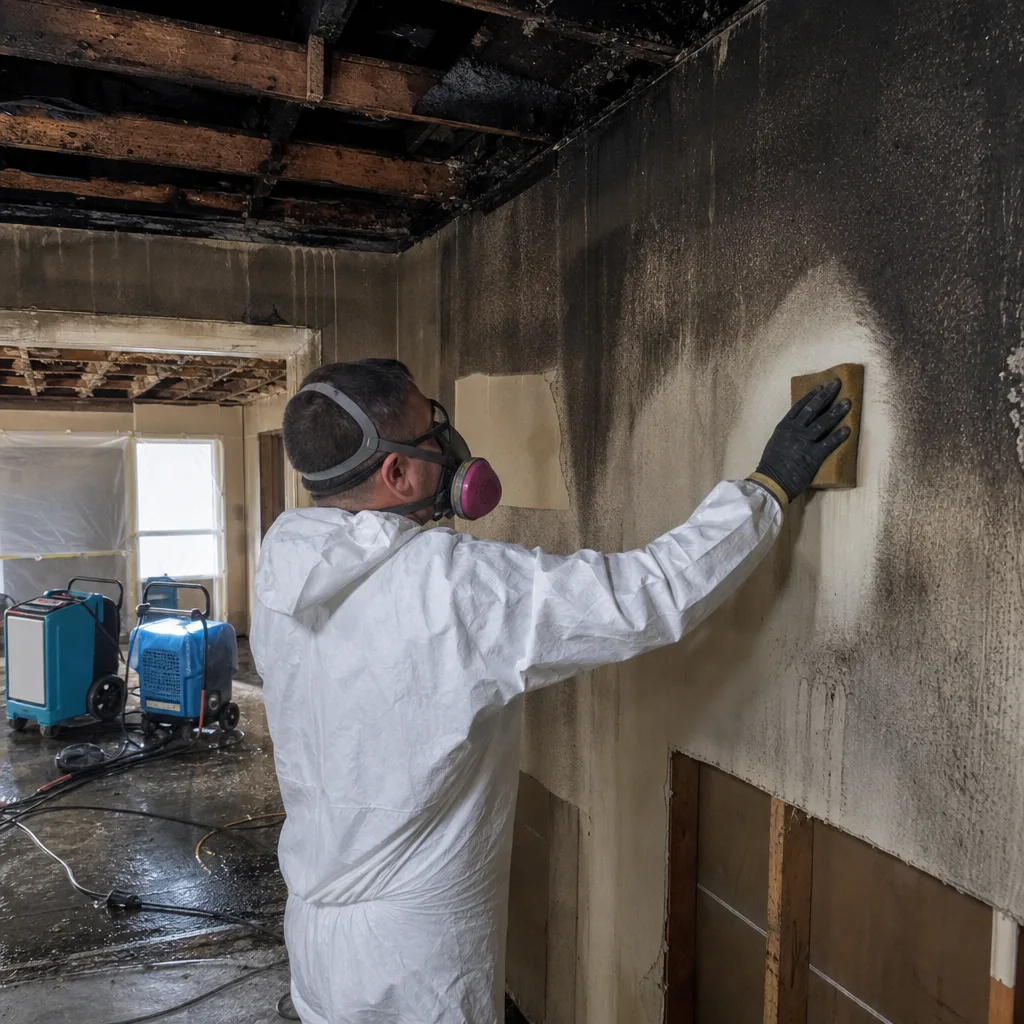
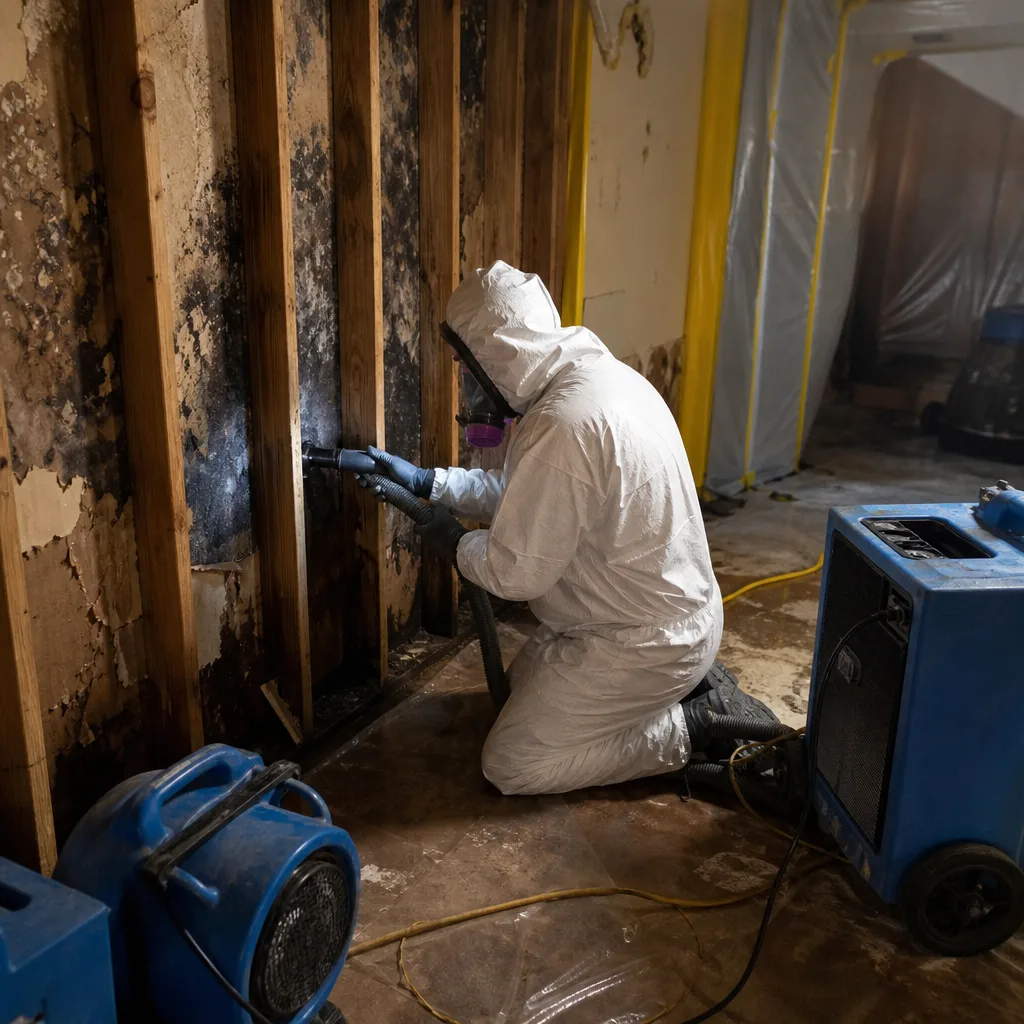
Surface cleanup alone fails in Dayton’s climate. Our mold removal process opens affected wall cavities, removes contaminated insulation and drywall, and treats framing with professional-grade antimicrobials. We set up containment with negative air machines so spores don’t cross-contaminate your living room while we work in the back bedroom. For homes with large rural footprints and attached workshops, the containment setup matters more, not less.
Black Mold Remediation
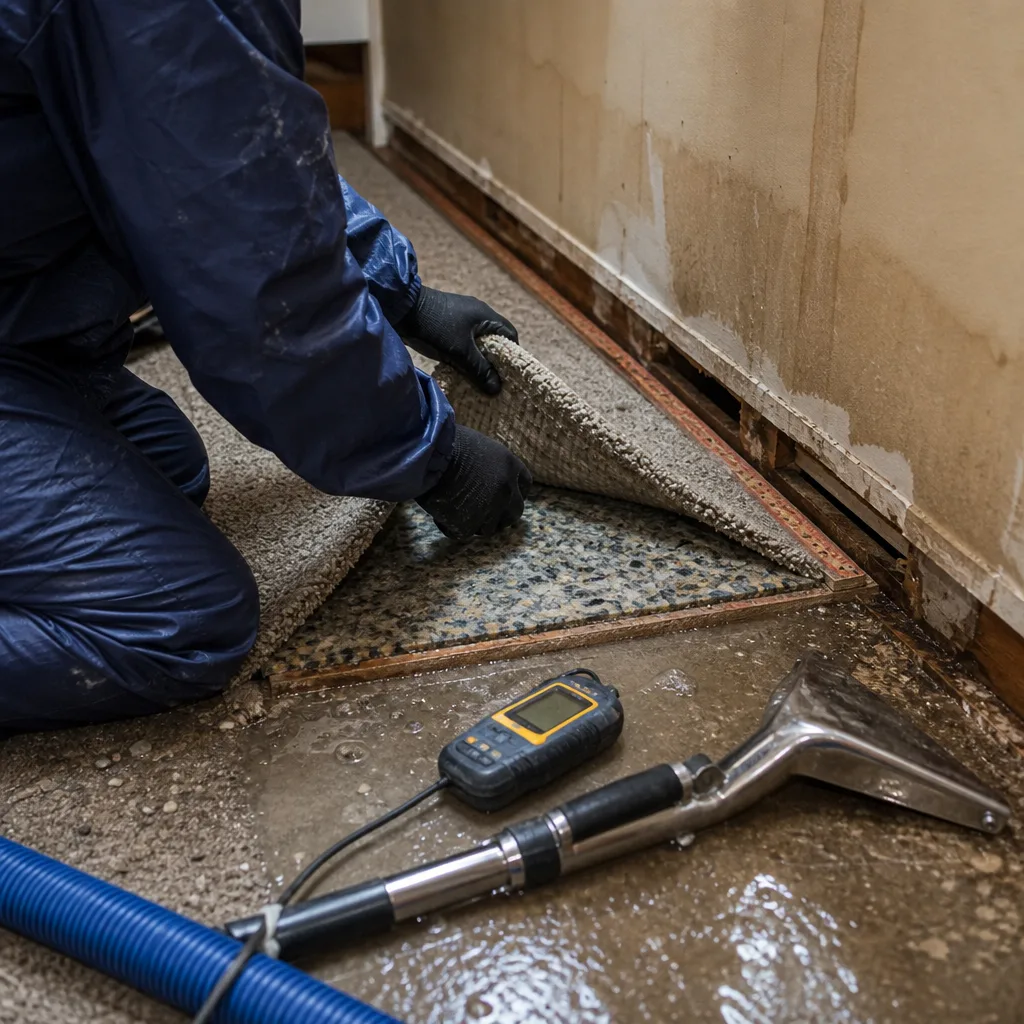
Black mold, often Stachybotrys, thrives in the wet-dry-wet cycles common to Dayton homes that flooded and were repaired too quickly. We handle it with HEPA filtration, full containment, and structural drying that gets wall cavities below 15% moisture content before we close anything up. If black mold is present, we never recommend spot treatment. The colony has roots in the framing, and it will return.
Air Quality Restoration
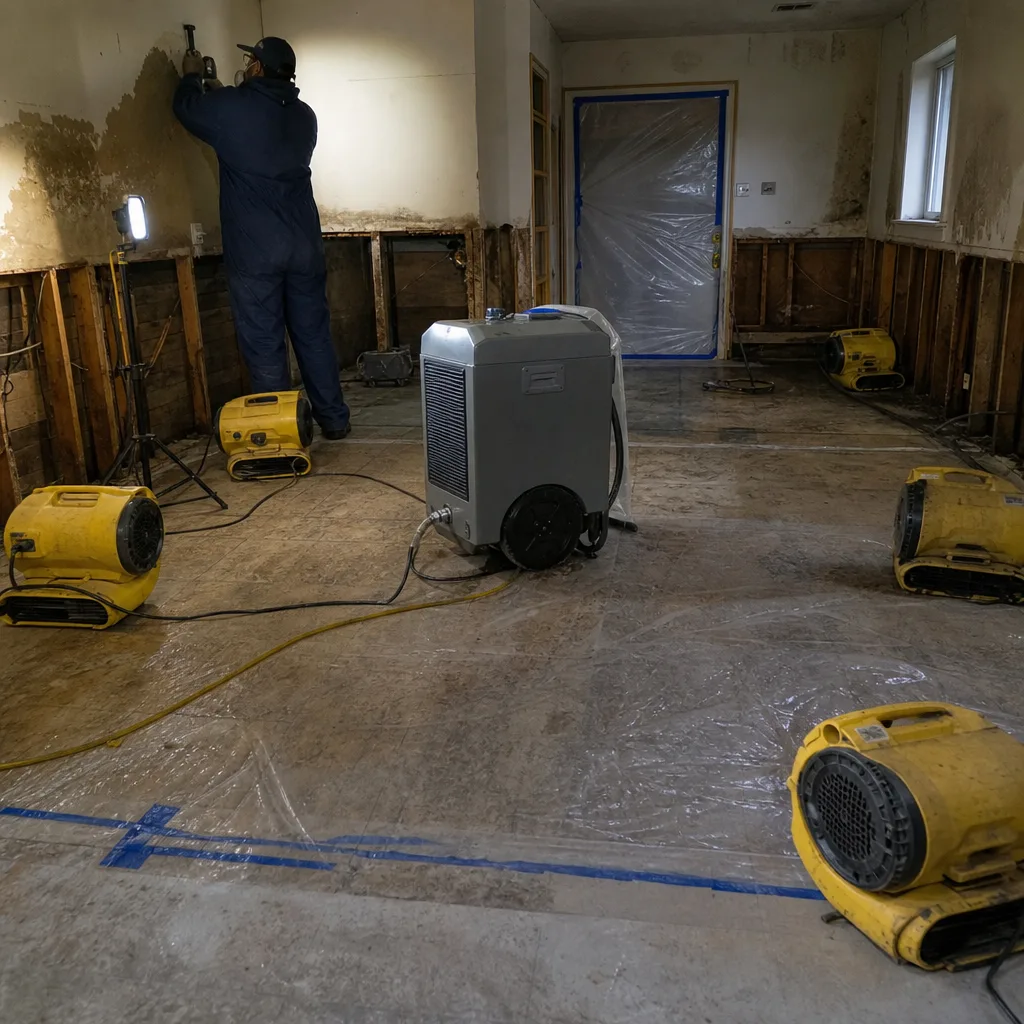
After physical mold removal, the air in a Dayton house often still carries elevated spore counts. We run HEPA air scrubbers, desiccant dehumidifiers, and air exchange units until indoor air quality tests within normal range. This step matters more here than in drier markets, because mold spores stay suspended in humid air longer and resettle on every surface in the house. A visible-mold job without air quality restoration is a half job.
Crawl Space Treatment
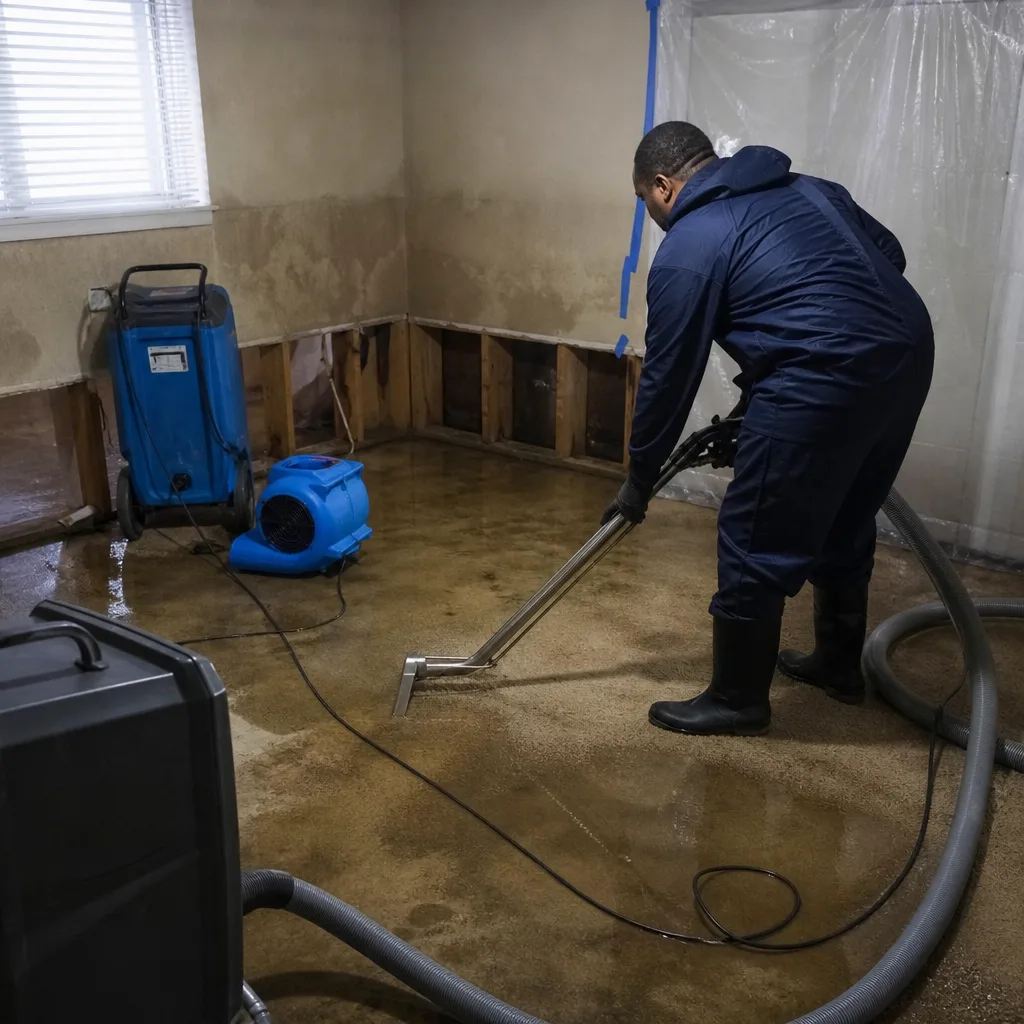
Dayton’s pier-and-beam homes and manufactured housing both hide moisture under the floor. Crawl spaces here collect humidity from the soil, flood silt from past storms, and condensation on ductwork. We treat the crawl space as part of the remediation, not an add-on. Our crews install vapor barriers, dry the subfloor, and treat framing so the mold doesn’t migrate up into your living space through the floor joists.
Moisture & Humidity Control
Mold remediation in Dayton without a moisture control plan is just a pause before the next outbreak. We identify the source: a slow plumbing leak, poor drainage around the foundation, inadequate ventilation in a manufactured home, or a roof issue. Then we fix it and recommend specific dehumidification or encapsulation strategies for your home’s construction type. The goal is a dry standard that holds through the next humid season.
What happens when you call
- 1
A real person answersNo phone trees - you reach a local pro.
- 2
You get an upfront price rangeHonest numbers before anyone is dispatched.
- 3
A background-checked tech heads outLicensed & insured, dispatched right away.
- 4
You approve before work beginsNothing starts until you say go.
Trusted Brands We Service in Dayton
We run professional-grade equipment from XPOWER, B-Air, and Injectidry, and we stock the parts and consumables needed to keep a mold job moving on the first trip, not the third. Whether it’s an Injectidry wall-drying mat pulling moisture from a closed wall cavity, a B-Air desiccant running in a crawl space, or an XPOWER air scrubber filtering a bedroom, the equipment matters. Our technicians are trained to IICRC standards and we bring the right machine for the specific failure, not whatever’s on the truck.
Common Mold Remediation Problems We See in Dayton Homes
- Cosmetic repairs over wet framing: After Harvey, many Dayton homes near the Trinity River got new drywall and paint, but the stud bays were never opened, dried, and treated. Mold grew behind the finished wall and reappeared years later, often around baseboards and outlets.
- Skipped crawl spaces and underbellies: Manufactured and pier-and-beam homes concentrate moisture underneath. If the crawl space isn’t dried and encapsulated as part of the mold job, the problem migrates back upstairs within a season.
- Inadequate containment on large rural footprints: Dayton homes often have attached workshops, carports, and large open floor plans. Remediation without full containment sends spores from the affected room into the rest of the house through the HVAC system.
- Stopping at visible mold: In Dayton’s 75%+ humidity, mold spores stay airborne longer, resettle faster, and re-colonize any damp surface. A job that removes visible mold without addressing the air and the moisture source will fail.
Pricing for Mold Remediation in Dayton, TX
Mold remediation pricing in Dayton typically runs from $500 to $1,500 for a contained, single-room treatment, while crawl space encapsulation and full structural drying range from $2,000 to $8,000 depending on square footage and how far the moisture has traveled. A straightforward mold inspection with moisture mapping and air sampling in Dayton generally falls between $250 and $500. Full-house remediation with HVAC cleaning and air quality restoration on a large rural property can exceed $10,000, which is why we write a detailed scope in advance. You’ll know the numbers before we start, and we bill your insurance carrier directly when coverage applies. Senior and veteran households save 5%, and any repair over $250 takes $50 off right now. Call (888) 977-4690 for a free estimate.
We Also Serve Cities Near Dayton
Our crews serve Dayton and the surrounding Liberty County communities, including Liberty, Mont Belvieu, Highlands, and Atascocita. If you’re in any of these areas and dealing with mold or moisture, our Mold Remediation team responds with the same one-trip, full-containment standard we bring to every Dayton job.
Serving Dayton, TX - Our Local Coverage Area
We’re based in the Dayton area and know this community well. Use the map below to see our service coverage - if you’re nearby, we can almost certainly help.
FAQs - Mold Remediation in Dayton
You probably have hidden mold if you smell mustiness, see bubbling paint or baseboards, or notice allergy symptoms that flare indoors and ease outside. In Dayton, Harvey-era repairs often sealed wet wall cavities behind new drywall without opening the stud bays. We find mold behind finished walls near the Trinity River bottomlands years later. The only way to confirm is with moisture meters and air sampling inside the wall cavity. Call (888) 977-4690 and we’ll inspect it.
Yes, because the underbelly and the marriage line create moisture traps that stick-built homes don’t share. Dayton has a significant number of manufactured and HUD-code homes, and these require specific attention to vapor barriers, insulation, and the belly board. We treat the underbelly as a primary remediation area, not an afterthought.
Within 24 to 48 hours, sometimes less in a closed-up house in August. Dayton’s relative humidity stays above 75% most of the year, which means even a slow crawl-space flood or a roof leak behind a wall begins colonizing quickly. That’s why our dispatch to Dayton is same-visit whenever possible. Call (888) 977-4690 as soon as you see water.
Treating the visible surface mold without opening the wall cavity or drying the framing. In Dayton, where homes have flooded more than once, mold behind finished drywall keeps spreading and re-contaminates the room. It looks like a recurrence. It’s actually the original colony that was never removed. We open the cavity, dry to below 15% moisture content, and treat the framing before we rebuild.
Because Dayton’s humidity keeps mold spores airborne longer, so they resettle throughout the house after the visible mold is gone. Air quality restoration with HEPA scrubbers and desiccant dehumidifiers brings the indoor spore count back to normal and prevents cross-contamination from the containment zone. Skipping it means the job fails within months. We include it in the written scope on nearly every Dayton mold job.
If you suspect mold in your Dayton home, call (888) 977-4690 now. We’ll send a certified crew, assess the full cavity and crawl space, and give you a written scope before any work starts. Done right, and backed in writing.
Written by Curt Bowman, Owner at Floodline Restoration Co., serving Dayton and Liberty County since 2010.