
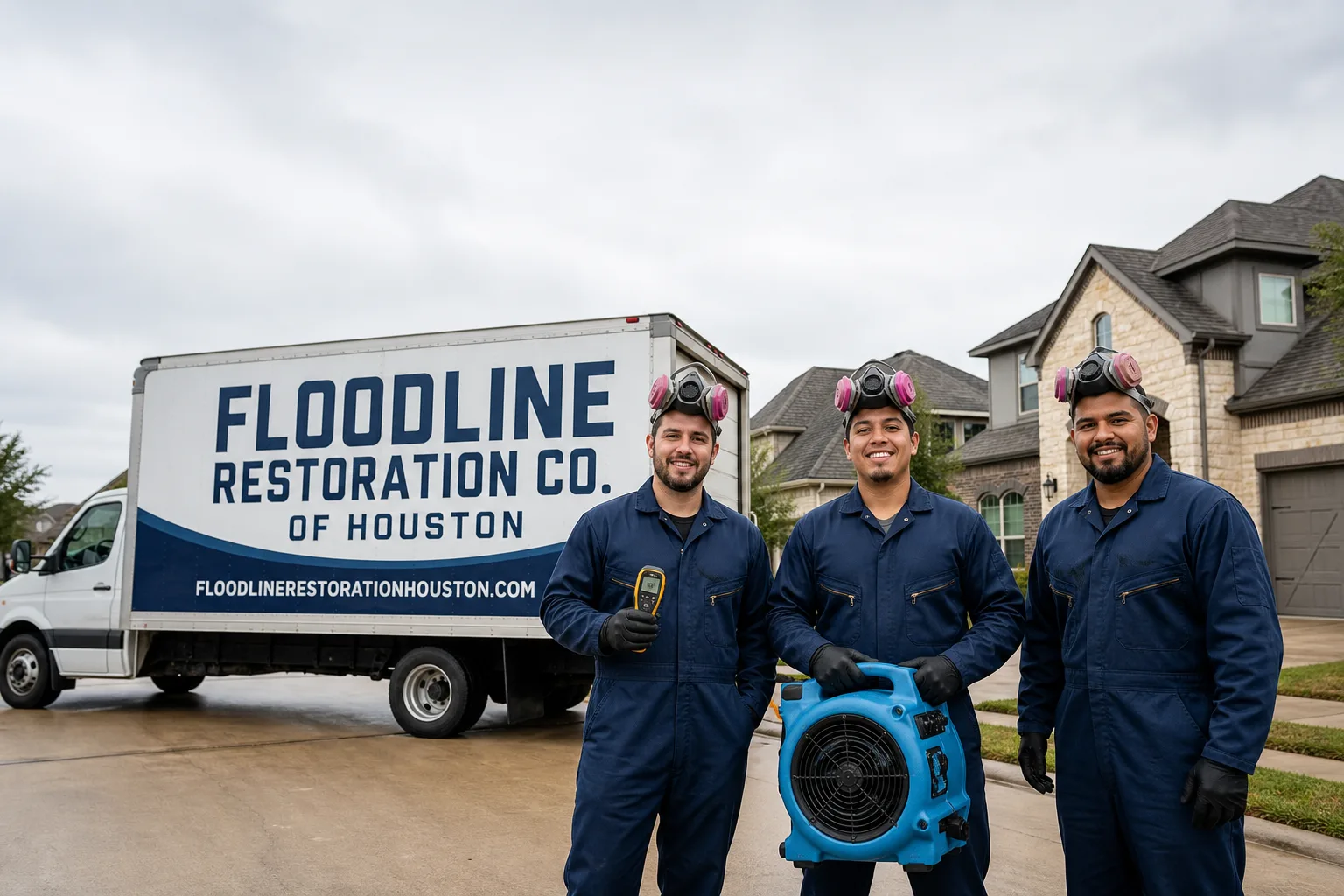
Fast, Reliable Water Damage Restoration Across Houston
Water damage restoration in Houston typically runs $2,400-$7,800 for a standard Category 2 or 3 water loss in a 1,500-2,500 sq ft home, with emergency extraction alone averaging $800-$1,900. Most jobs can be started same-day with a certified crew on site within 60-90 minutes from our Houston dispatch office. We answer the phone with a live person at 2 a.m., because in this city, a slow response means mold gets a 24-hour head start. Call (888) 977-4690 and we’ll be there when we say.
Key Takeaways
- Houston’s 90%+ humidity means mold colonizes saturated drywall within 24-48 hours; extraction alone is never enough
- Slab-on-grade homes built 1960s-1990s across Katy, Pearland, and Sugar Land trap floodwater in in-slab ductwork that standard equipment cannot reach
- Pier-and-beam homes in the Heights and Montrose dry differently than slab homes; a one-method approach fails on one side of Loop 610
- We use Injectidry, Dri-Eaz, and Phoenix equipment to dry hidden cavities; every job backed in writing by the 90-Day Done Right Promise
Why Floodline Restoration Co. of Houston Is Houston’s Preferred Water Damage Restoration Company
We’ve worked both sides of Loop 610 long enough to know that a 1920s pier-and-beam home in the Heights floods and dries completely differently than a 1978 slab-on-grade tract house in Sugar Land. That local knowledge changes how we extract, where we place drying equipment, and what we document for your insurance carrier. Houston homeowners call us because we don’t run a generic playbook. We read the moisture map, not the clock.
Every job gets background-checked, uniformed technicians certified to IICRC, RIA, and IFA standards. The same crew that extracts standing water on day one handles daily moisture readings until the dry standard is met. No mid-job handoff, no inherited crew from a subcontractor, no playing messenger between us and your adjuster. We bill your carrier directly and hand you the moisture log. Phone answered by a live dispatcher, 24/7, every day. That’s the Floodline Restoration Co. of Houston way, and we’ve been doing it since Curt Bowman founded the company in 2010.
Our Water Damage Restoration team works Houston neighborhoods from Meyerland to Kingwood, and most water losses are completed in a single visit. The 90-Day Done Right Promise, our Keystone Standard, is given to every homeowner in writing. If it’s not done right, we make it right. No arguing, no paperwork battles. That’s how we’ve earned a strong local reputation in Houston, and it’s why homeowners who plan to stay in their houses twenty more years call us first.
Our Water Damage Restoration Services in Houston
Emergency Water Extraction
When water is standing in your living room at 3 a.m., the first call should be to a company that picks up. Our Houston dispatch is live around the clock, and an extraction crew typically reaches most Houston neighborhoods within an hour of your call. We pull standing water with professional-grade truck-mounted and portable extractors, then immediately map moisture in walls, flooring, and subflooring. In Houston, the clock starts the moment water enters; extraction in the first hours dramatically reduces what mold can do later.
Structural Drying & Dehumidification
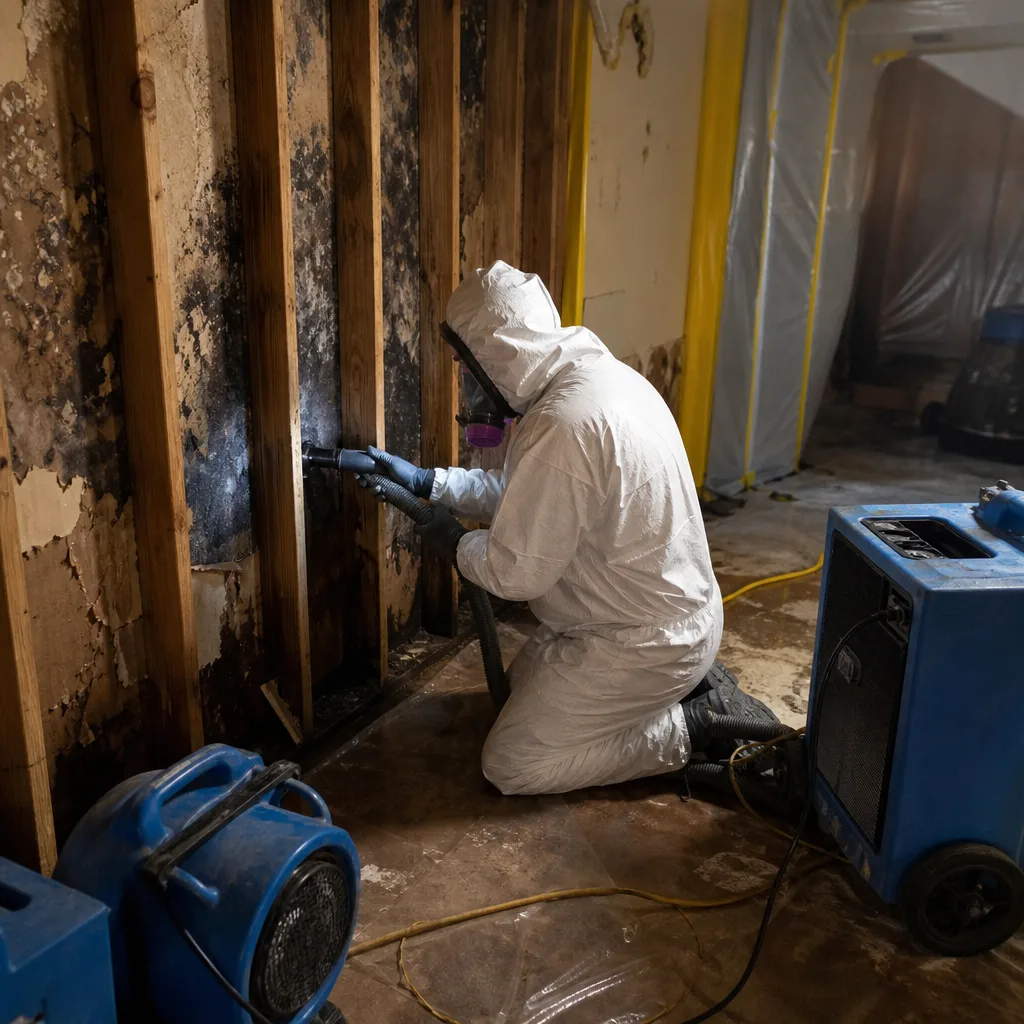
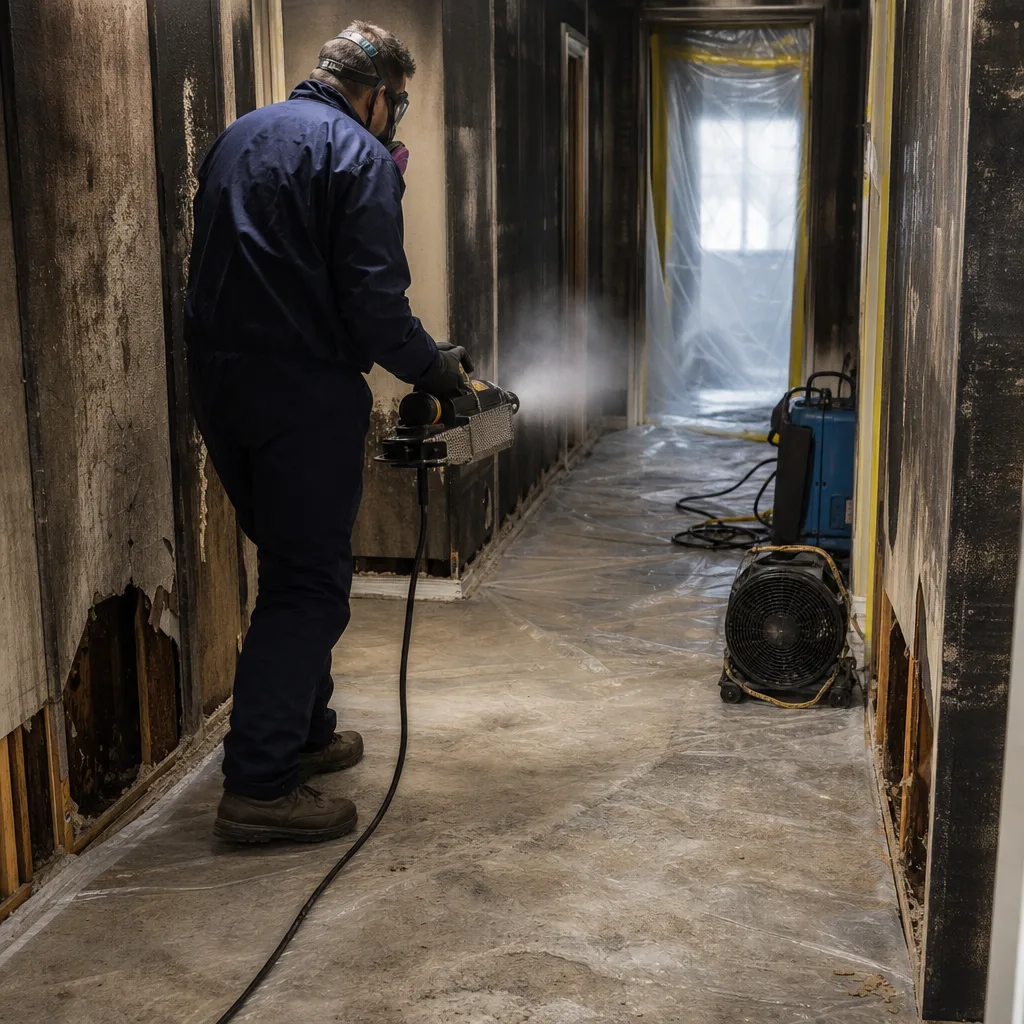
Houston air is routinely 90%+ humidity, which means open windows and box fans don’t dry a flooded house. They pull more wet air in. We deploy Dri-Eaz and Phoenix dehumidifiers with axial fans to create a controlled drying environment, then log daily moisture readings against the dry standard. But the real problem in Houston is hidden cavities: behind baseboards, under tile, and especially in slab ductwork. We use Injectidry systems to pull water from spaces that standard extraction equipment cannot reach. If your home is slab-on-grade built between the 1960s and 1990s, that step is not optional. It’s the difference between a dry house and a musty one six months later.
Flood Cleanup
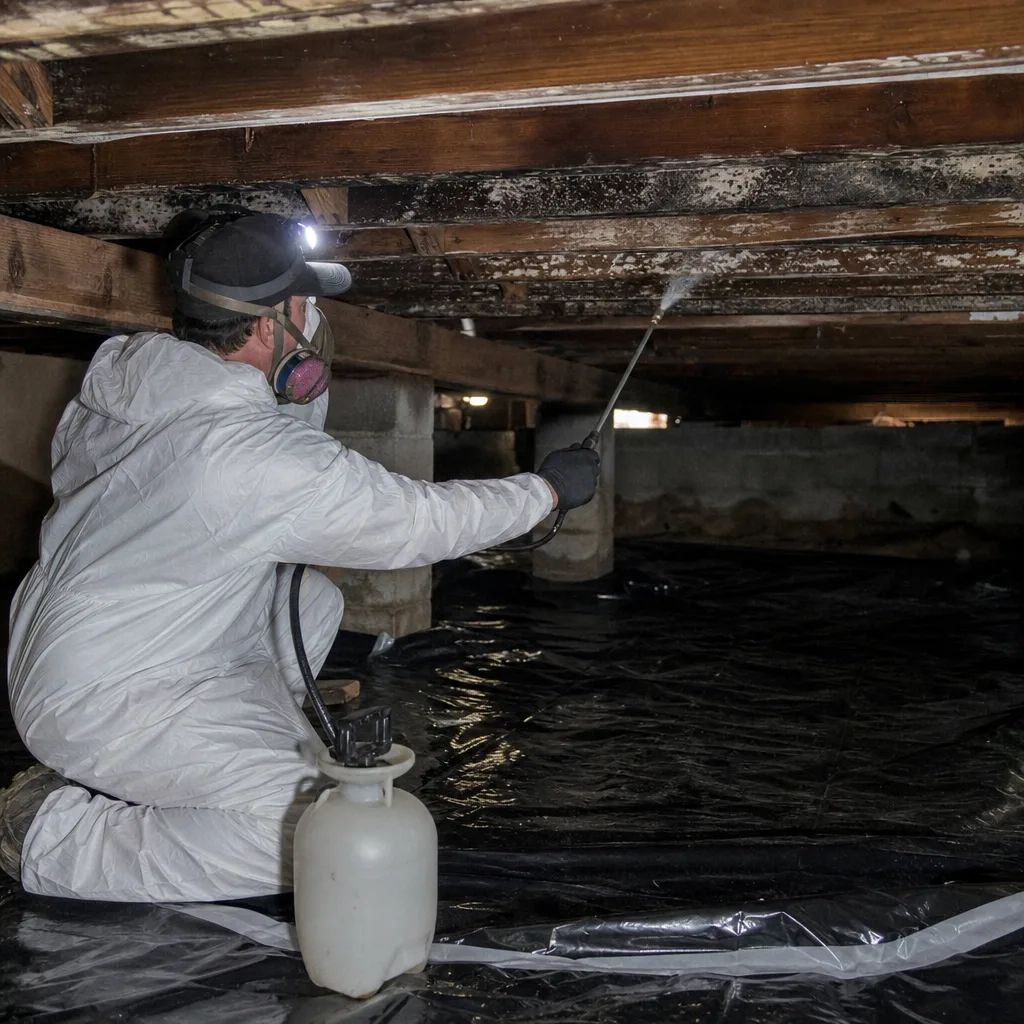
Houston has seen three federally-declared “500-year” flood events in three consecutive years: the Memorial Day Flood of 2015, the Tax Day Flood of 2016, and Hurricane Harvey in 2017. Flooding here is not an anomaly. It’s an operational reality. When bayou water overtops its banks and sits against slab foundations in Meyerland or Bellaire, the water carries silt, sewage, and chemicals that demand Category 3 protocols. We remove contaminated materials, sanitize affected surfaces, and dry the structure to the standard your insurance carrier will accept. Photo documentation and direct adjuster coordination come standard, because flood claims in Houston get scrutinized, and you shouldn’t be the one explaining dry logs to an adjuster.
Burst Pipe Restoration
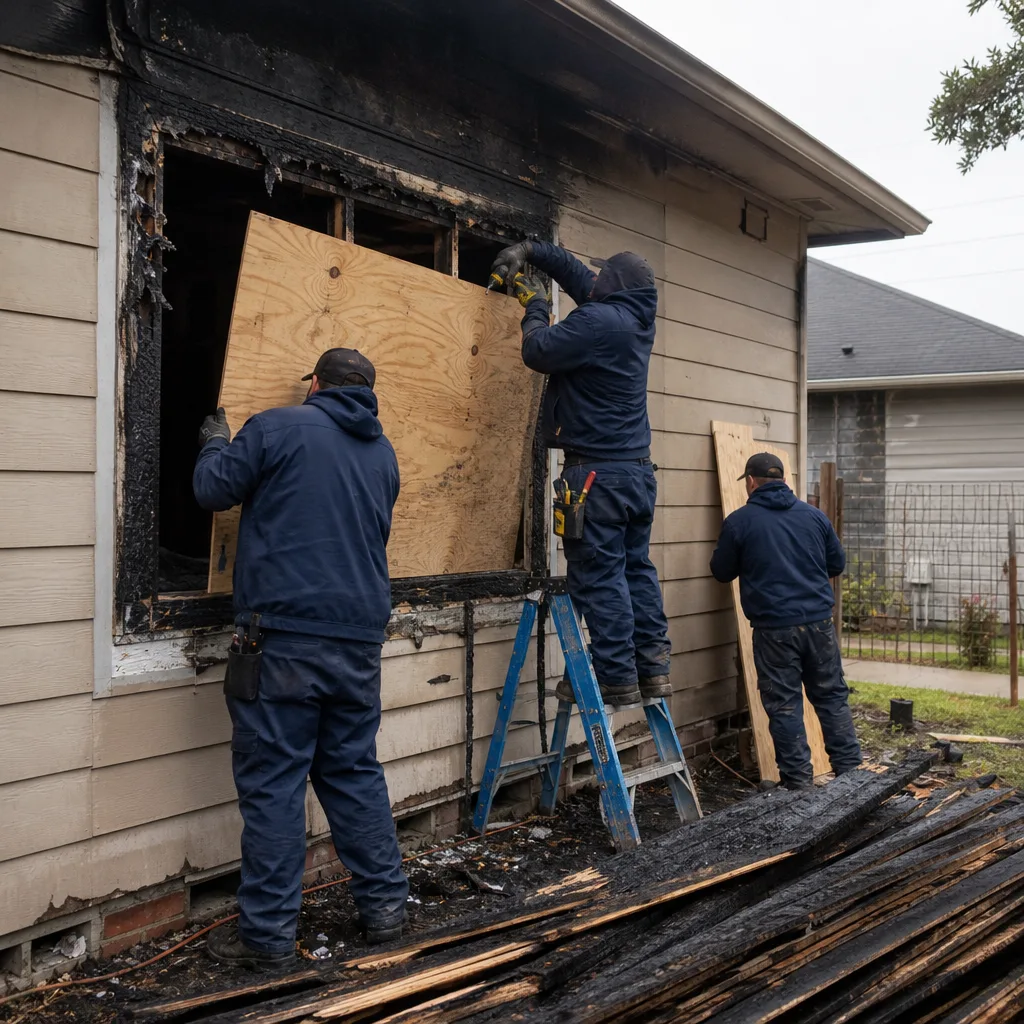
A burst supply line behind a kitchen wall in a Houston pier-and-beam home behaves differently than a slab leak in Pearland. The water travels downward through wall cavities and under the house, but pier-and-beam construction allows some air movement that slab homes simply don’t get. We identify the failure point, stop the source, extract, and dry the structure. We also document everything the carrier needs. If your pipe froze during an unusual Houston cold snap, or failed from age and pressure, we’ll restore the damage and the documentation in the same visit, most of the time.
What happens when you call
- 1
A real person answersNo phone trees - you reach a local pro.
- 2
You get an upfront price rangeHonest numbers before anyone is dispatched.
- 3
A background-checked tech heads outLicensed & insured, dispatched right away.
- 4
You approve before work beginsNothing starts until you say go.
How Houston’s Climate and Construction Change the Water Damage Game
Houston sits on a near-flat coastal plain underlaid by expansive Beaumont clay. The city averages over 50 inches of rain a year and lies directly in the Gulf of Mexico’s primary tropical cyclone track. Flat drainage gradients mean water doesn’t run off; it pools. Clay soils shed water rather than absorbing it, pushing runoff against slab foundations. Some west Houston areas sank several feet during the 20th century from groundwater withdrawal, further warping drainage. The result: even a 6-8 inch overnight rain event, which Houston sees regularly, can push bayous over their banks and into homes.
But the real wild card in Houston’s housing stock is what’s under the slab. The city’s absence of municipal zoning and its post-WWII suburban explosion produced a massive inventory of 1960s-1990s slab-on-grade tract homes across corridors like Katy, Pearland, and Sugar Land. In many of these houses, HVAC ductwork is embedded in or run beneath the slab. When floodwater saturates those ducts, standard extraction equipment cannot reach them. Water sits in those cavities for days. With Houston’s humidity, mold colonizes saturated drywall and insulation within 24-48 hours. A contractor who doesn’t understand in-slab duct drying will leave a hidden mold colony growing under your floors, and you won’t know until the musty smell starts months later.
Older inner-loop neighborhoods like the Heights and Montrose hold 1920s-1950s pier-and-beam construction. These homes flood, but they dry faster because air moves beneath the floor framing. That creates a two-track restoration approach: a slab home in Sugar Land needs targeted in-slab drying with Injectidry equipment, while a pier-and-beam home in the Heights may dry adequately with sub-floor airflow and dehumidification. A contractor who treats both the same wastes time on one and leaves water on the other.
In serial-flood neighborhoods like Meyerland along Brays Bayou, many homes have been fully gutted and rebuilt two or three times since 2015. Our crews routinely encounter post-rebuild flood-mitigation retrofits: elevated electrical panels, flood-vented foundation walls, and lifted mechanical equipment installed by a previous contractor. Those retrofits have to be documented and worked around, or repaired if damaged, before standard drying protocols can even begin. Failing to identify them means a crew can damage an elevated panel during extraction or waste time drying a space that’s already dry. We photograph everything, note every retrofit, and communicate it directly to your adjuster.
One job north of Katy stands out. In a 1970s slab-on-grade home, our crew extracted standing water from the living areas within hours of the call. But our thermal imaging revealed hidden saturation in the in-slab ductwork that standard extraction equipment could never reach. We deployed the Injectidry system to pull water from those cavities while running Phoenix axial fans and Dri-Eaz dehumidifiers. That step cut hidden mold risk before it could take hold in the 90%+ humidity. If we hadn’t looked below the slab, the homeowner would have had a dry carpet and a mold problem in the walls six months later.
Trusted Equipment Brands We Use in Houston
We don’t rent whatever’s available. We run Dri-Eaz dehumidifiers, Phoenix axial fans, B-Air air movers, and Injectidry drying systems, all maintained in-house and stocked for Houston jobs. When your adjuster asks for a drying log with daily moisture readings, we hand it over with manufacturer-specified equipment and IICRC-standard documentation. Your home gets professional-grade drying, not a stack of box fans from a big-box store. Done right, and backed in writing.
Common Water Damage Restoration Problems We See in Houston Homes
- In-slab ductwork saturation: In 1960s-1990s slab homes across Katy, Pearland, and Sugar Land, floodwater enters HVAC ducts run beneath the slab. Standard extractors can’t reach it, and mold grows in 24-48 hours. We use Injectidry to pull water from those cavities.
- Un-documented flood retrofits in Meyerland: Homes rebuilt after the Tax Day and Harvey floods often have elevated electrical panels, flood-vented walls, and lifted mechanical equipment. Crews that don’t identify these can damage them during extraction or misread moisture in already-dried spaces.
- Misapplied drying for pier-and-beam homes: The Heights and Montrose have 1920s-1950s pier-and-beam homes that dry faster than slab construction. Relying on air movers alone in a flat, clay-shedding lot doesn’t fix the problem; targeted structural drying and dehumidification does.
- Surface-only drying after bayou flooding: Water that overtopped Brays Bayou and sat against a slab foundation for days isn’t a carpet problem. It’s a structural drying problem. If the contractor only treats the surface, hidden moisture remains behind walls and under flooring.
Pricing for Water Damage Restoration in Houston, TX
What you pay for water damage restoration in Houston depends on the category of water, square footage affected, and whether hidden cavities like in-slab ductwork are involved. Here’s what we see across the Houston market:
- Emergency water extraction: $800-$1,900 for a typical 1,500-2,500 sq ft home
- Structural drying and dehumidification: $1,200-$3,400 depending on square footage and cavity drying requirements
- Full Category 3 flood cleanup: $3,500-$8,500 for contaminated water, including material removal, sanitizing, and drying
- Burst pipe restoration: $2,200-$6,500 depending on wall, floor, and duct saturation
Every job starts with a free on-site assessment and a written scope of work, so you know the number before equipment enters your home. We bill your insurance carrier directly and document everything they need. Current standing offers: $50 off any repair over $250, and a 5% discount for seniors and veterans, always. Call (888) 977-4690 for a free estimate.
We Also Serve Cities Near Houston
Our crews regularly work Houston neighborhoods and the surrounding communities, including Bellaire, West University Place, Galena Park, and Jacinto City. If you’re in any of those areas and water is rising, call us. We’ll be there when we say.
Serving Houston, TX - Our Local Coverage Area
We’re based in the Houston area and know this community well. Use the map below to see our service coverage - if you’re nearby, we can almost certainly help.
FAQs - Water Damage Restoration in Houston
The hidden water is almost certainly in your in-slab ductwork. 1960s-1990s slab-on-grade homes in Katy and neighboring corridors often have HVAC ducts run beneath the slab, where floodwater sits in cavities standard extraction equipment cannot reach. Within 24-48 hours in Houston’s 90%+ humidity, mold colonizes those hidden spaces, and the musty smell is your first sign. We use the Injectidry system to pull water from in-slab ducts, then log daily moisture readings until the dry standard is met. If you smell must, don’t wait; call (888) 977-4690 for a free assessment.
Yes, and we document every retrofit before we start. Meyerland homes rebuilt after 2015 often have elevated electrical panels, flood-vented foundation walls, and lifted mechanical equipment installed by a previous contractor. We photograph and map each one, work around them during extraction, and include them in the moisture log we hand to you and your carrier. The drying plan changes too: a flood-vented slab home may dry differently than an unvented one. Call (888) 977-4690 and we’ll assess it free.
Easier in most cases. Pier-and-beam homes built from the 1920s to the 1950s in neighborhoods like the Heights and Montrose have air movement beneath the floor framing, which accelerates drying and gives us access to sub-floor moisture. Slab homes in Sugar Land trap water in and beneath the slab, and in-slab ductwork can extend drying timelines significantly. That’s why we run different equipment and different protocols depending on which side of Loop 610 you’re on. For a free assessment, call (888) 977-4690.
Mold can begin colonizing saturated drywall and insulation within 24-48 hours in Houston’s year-round 90%+ humidity. That means extraction alone is never enough. We start structural drying the same visit, with professional-grade Dri-Eaz, Phoenix, and Injectidry equipment, and we log daily moisture readings until the dry standard is met. The faster we start, the less mold has a chance to establish. If water has been sitting for more than a day, call (888) 977-4690 immediately.
Yes, and it’s what’s under the slab that matters most. In Pearland’s slab-on-grade homes, water that came up through the slab often settles in in-slab HVAC ducts, subfloor cavities, and wall base plates. Standard extraction gets the surface water. Targeted drying with Injectidry and dehumidification gets the hidden water. Given Houston’s humidity, those hidden cavities breed mold within 24-48 hours. Our thermal imaging and moisture mapping find what surface drying misses. Call (888) 977-4690 for a free on-site assessment.
Call Floodline Restoration Co. of Houston Today
Water doesn’t wait, and in Houston, neither does mold. If you’ve had water come into your home, from a burst pipe, a slab leak, or bayou flooding, call (888) 977-4690 now. A live dispatcher answers at any hour, and a certified crew can usually reach your Houston home within an hour. We’ll assess the damage free, put the scope in writing before work starts, bill your carrier directly, and back everything with the 90-Day Done Right Promise. Floodline Restoration Co. of Houston. Done right, and backed in writing.