
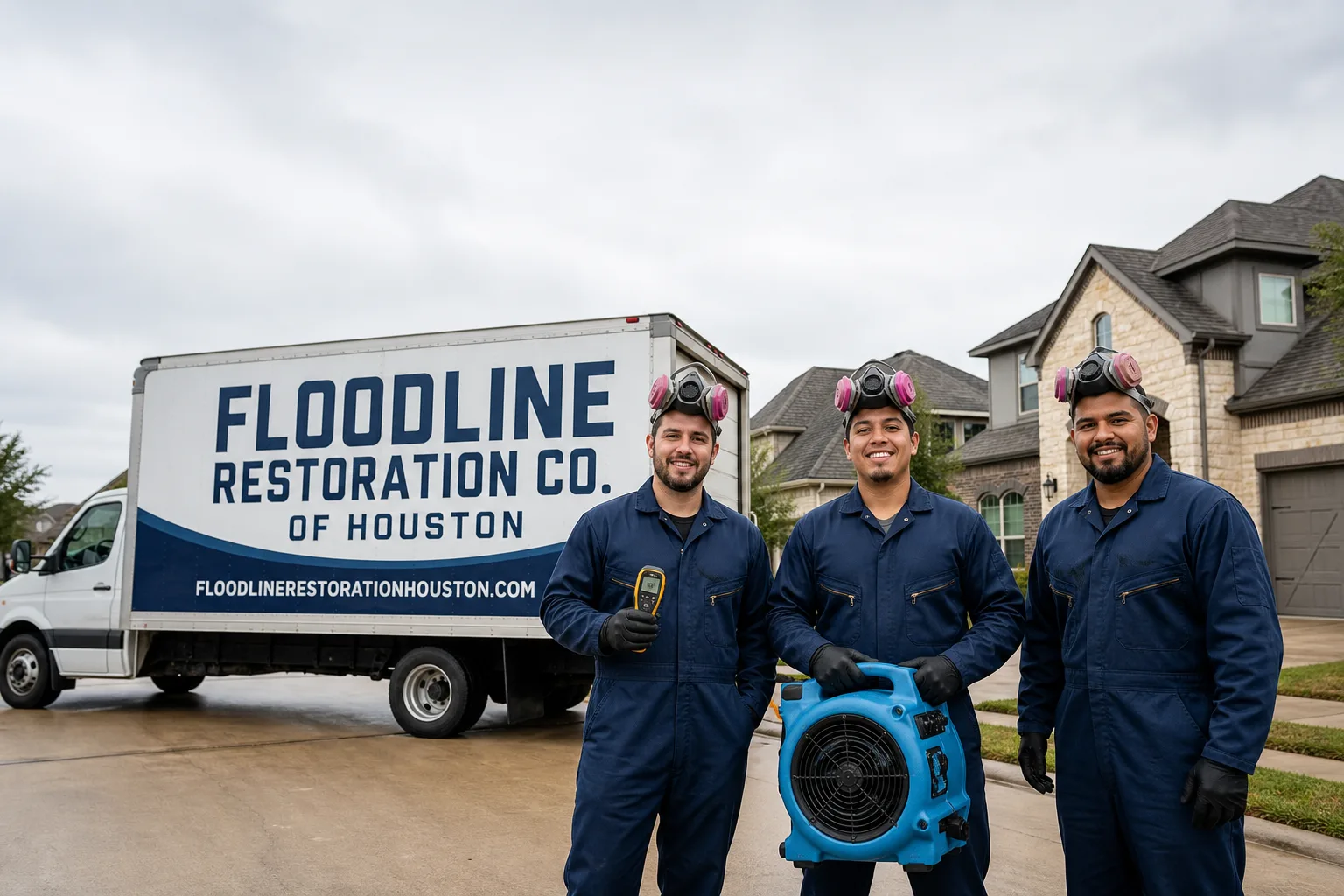
Fast, Reliable Water Damage Restoration Across Cleveland
Water damage restoration in Cleveland, TX means dealing with the East Fork San Jacinto River, and everything that comes with it. Floodwater here doesn’t behave the way it does in Houston or along the coast. It rises slowly, crests days after the rain stops, and sits against pier-and-beam subfloors and manufactured home belly boards long enough to cause a different kind of damage. When you call Floodline Restoration Co. of Houston at (888) 977-4690, you get a live person, not a recording, and a certified crew that understands Cleveland’s flood cycles from the first moisture reading to the final rebuild.
We’ve been answering calls from Cleveland homeowners for years, including the nights when the river keeps rising after the rest of the watershed has gone to bed. Our technicians know SH 105, the feeder roads down toward Plum Grove, and the acreage properties where a flooded workshop matters just as much as the house. This page tells you what to expect when the San Jacinto floods your pier-and-beam or manufactured home a second time days after you thought the water was gone, and exactly how we handle the trapped moisture and early mold that generic water damage pages never mention.
Key Takeaways
- The San Jacinto often crests at Cleveland 2 to 4 days after rain ends elsewhere, so a second flood cycle is common here. Drying must account for that, not just the first receding water.
- Mold establishes in Cleveland’s humidity within 24 to 48 hours of flood contact. Extraction and mold treatment have to happen together, not in sequence.
- Pier-and-beam subfloors and manufactured home underbellies trap floodwater in ways slab homes never do, and they need professional-grade drying panels and dehumidifiers to dry properly.
- We answer the phone 24/7 with a live dispatcher. A certified crew can reach Cleveland the same day you call.
Why Floodline Restoration Co. of Houston Is Cleveland’s Water Damage Restoration Choice
Cleveland homeowners don’t have time for a company that treats their house like a job number. They want a name they can hold accountable, a crew that shows up in uniform, and a written guarantee they don’t have to argue about later. That’s how we’ve built our reputation in Liberty County. Curt Bowman founded Floodline Restoration Co. in 2010 around a dispatch board, not a sales desk, and he built it to answer the phone at 2 a.m. with a person who can actually send a crew.
Our Cleveland customers know two things about us: we finish what we start, and we stand behind it in writing. The 90-Day Done Right Promise, what we call the Keystone Standard, goes on paper with every job. If the work isn’t done right, we make it right. No paperwork battles, no arguing. It’s the same guarantee on a small ceiling leak off FM 1010 as it is on a whole-house flood extraction near the high school.
Response time to Cleveland matters because the river doesn’t wait, and neither does mold. We dispatch from Houston, but our crews work Cleveland regularly. We schedule for the same day whenever possible, and our live dispatchers coordinate routing through New Caney and up US 59 so the truck that reaches your driveway is equipped for a full extraction and drying setup on the first visit. Most jobs are completed in a single visit, using professional-grade Dri-Eaz, Phoenix, and Injectidry equipment, with the same crew handling the moisture map on day one and the daily readings until the dry standard is met.
Every technician who steps onto a Cleveland property is background-checked, uniformed, and trained to IICRC, RIA, and IFA standards. That’s not a sales pitch. It’s what allows us to hand you a moisture log your insurance carrier will accept, and to bill the carrier directly so you never play messenger between us and the adjuster.
Our Water Damage Restoration Services in Cleveland
Water damage in Cleveland takes specific forms, and our Water Damage Restoration crews are equipped for every one of them. Here’s what we handle most often across the 77327 and 77328 zip codes.
Emergency Water Extraction
Standing water in a pier-and-beam home off SH 105 isn’t just on the floor. It’s settled into the joist bays, soaked into the subfloor, and wicking up the bottom plate of every interior wall. Our emergency extraction crews arrive with truck-mounted and portable extraction units sized for rural properties, including detached workshops and outbuildings that slab-home companies in the city don’t think to check. We extract the standing water, then start the drying plan immediately, because in Cleveland’s humidity, every hour of delay is measurable in future mold growth.
Structural Drying & Dehumidification
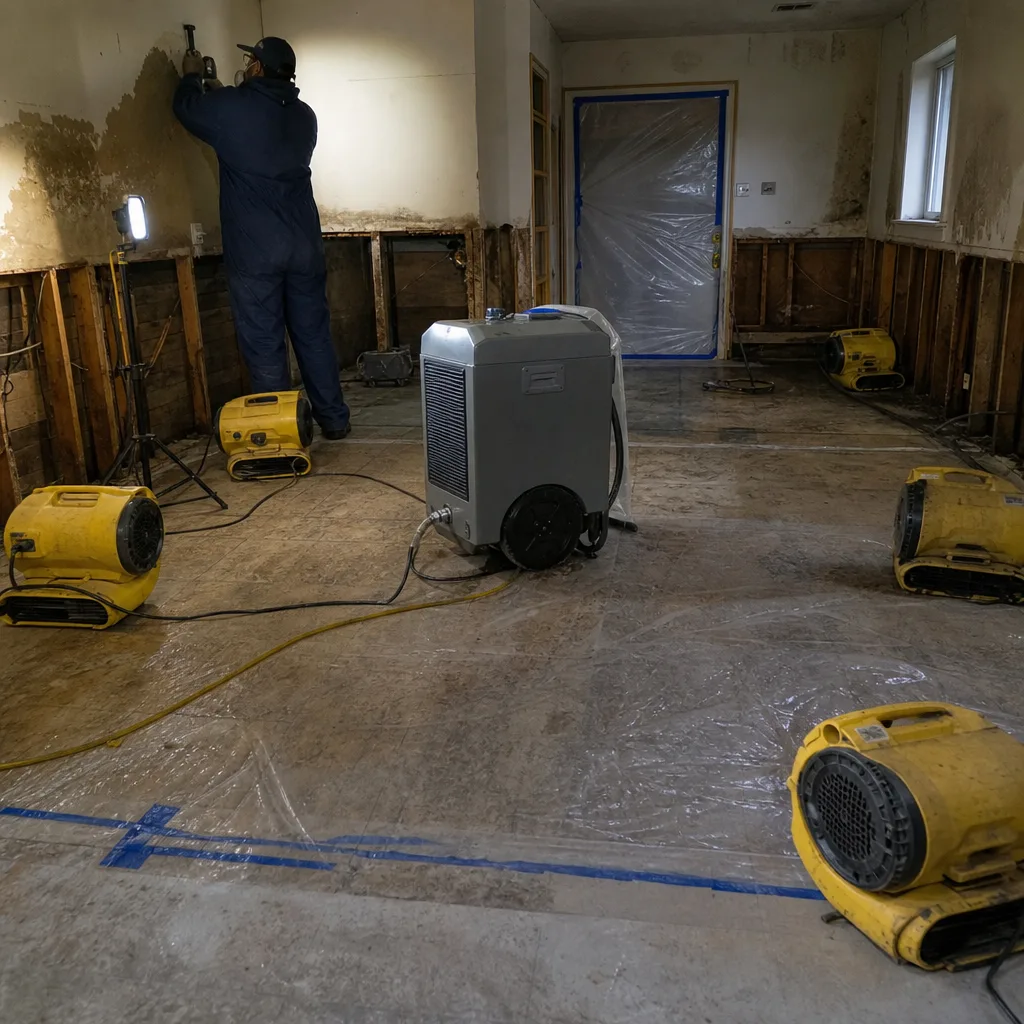
Drying a Cleveland home after river floodwater means drying materials that rarely see water in a normal house. Subfloor cavities, sill plates, floor joists, and the hidden space under manufactured home belly boards all hold moisture long after the visible water is gone. We use Injectidry panels to pull water from structural cavities and Dri-Eaz dehumidifiers sized for the cubic footage of the affected space. We log daily moisture readings and hand that log to you and your carrier, so the dry standard isn’t a guess. It’s a documented number.
Flood Cleanup
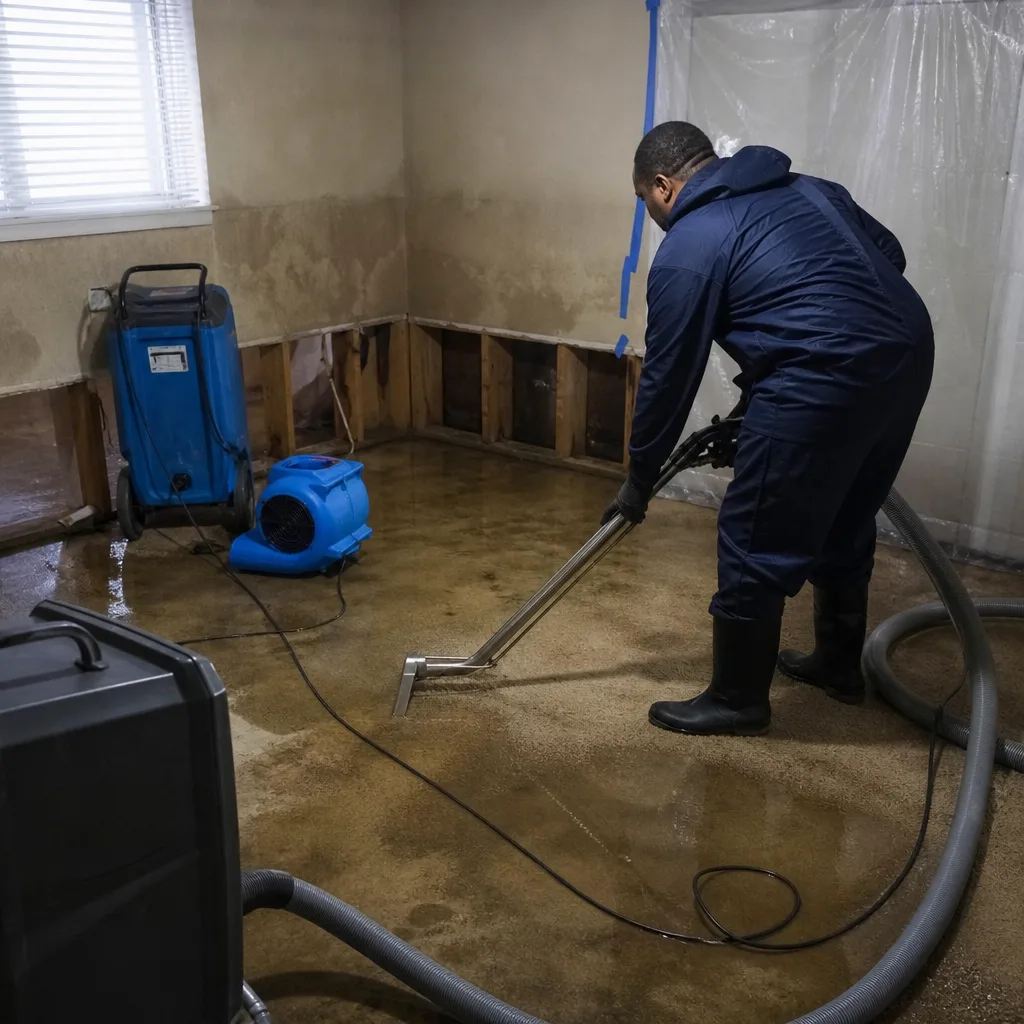
Cleveland floodwater is river water, and river water carries silt, sewage, agricultural runoff, and whatever else the East Fork picked up upstream. Flood cleanup here starts with removing contaminated materials, not just drying them. Then we treat surfaces, dry the structure, and prepare the space for whatever rebuild is needed. Because the San Jacinto can crest days after the rain stops, we check the weather and river gauge forecasts before we finalize a drying plan. A job that looks done on day three can be reintroduced to water on day five, and that changes the scope. We plan for it up front.
Burst Pipe Restoration
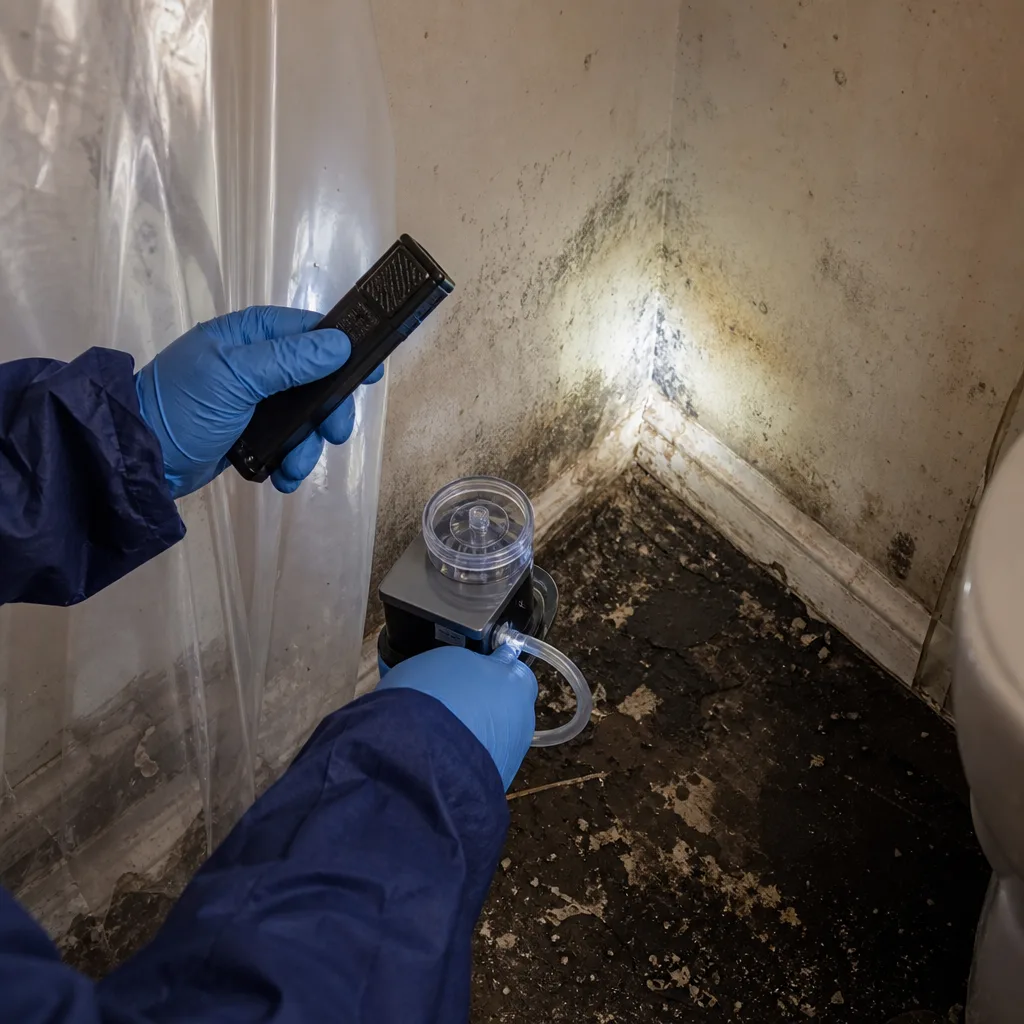
Cleveland’s older wood-frame homes, many built from the 1950s through the 1980s, have plumbing systems that have been through decades of East Texas temperature swings. That includes hard freezes that can split pipes in pier-and-beam crawlspaces, and the resulting leaks often go unnoticed until a floor feels soft or a ceiling stains. We locate the source, stop it, extract the water, and dry the affected structure to standard. We also coordinate directly with your plumber if needed, so the repair and the restoration don’t work against each other.
What happens when you call
- 1
A real person answersNo phone trees - you reach a local pro.
- 2
You get an upfront price rangeHonest numbers before anyone is dispatched.
- 3
A background-checked tech heads outLicensed & insured, dispatched right away.
- 4
You approve before work beginsNothing starts until you say go.
Trusted Brands We Service in Cleveland
We do restoration, not appliance repair, but we know Cleveland homes run on specific equipment. For homeowners who also need water heater service, softener repair, or sump pump replacement, we reference the brands most common in Liberty County: Rheem and AO Smith water heaters, Whirlpool and GE appliances, and Goulds and Zoeller pumps. If your flood event involved a failed appliance, we’ll document it for your insurance claim and help you get the right local contractor involved while we handle the water damage. Our focus stays on the water and the structure, but we don’t leave you guessing about what else needs attention.
Common Water Damage Restoration Problems We See in Cleveland Homes
- Second flood cycles that reintroduce water into partially dried cavities. The river can crest days after the rain ends, and a homeowner who started drying on their own often has walls opened and subfloor exposed when the second crest arrives. We’ve walked into homes where DIY drying was well underway, then the water came back and soaked everything again, drastically expanding the mold risk.
- Pier-and-beam subfloors that hold water long after the surface feels dry. Wood subfloor systems from the 1950s through the 1980s have cavities that trap moisture. Surface moisture meters don’t read deep enough. We use penetrating probes and in-cavity drying panels to get the structure actually dry, not just dry on top.
- Manufactured home belly boards hiding standing water and early mold. HUD-code homes throughout rural Liberty County have underbelly cavities that collect floodwater. By the time you see staining at the floor edges, mold has often been growing underneath for days. We open, extract, dry, and treat the underbelly cavity as standard practice on manufactured home flood jobs.
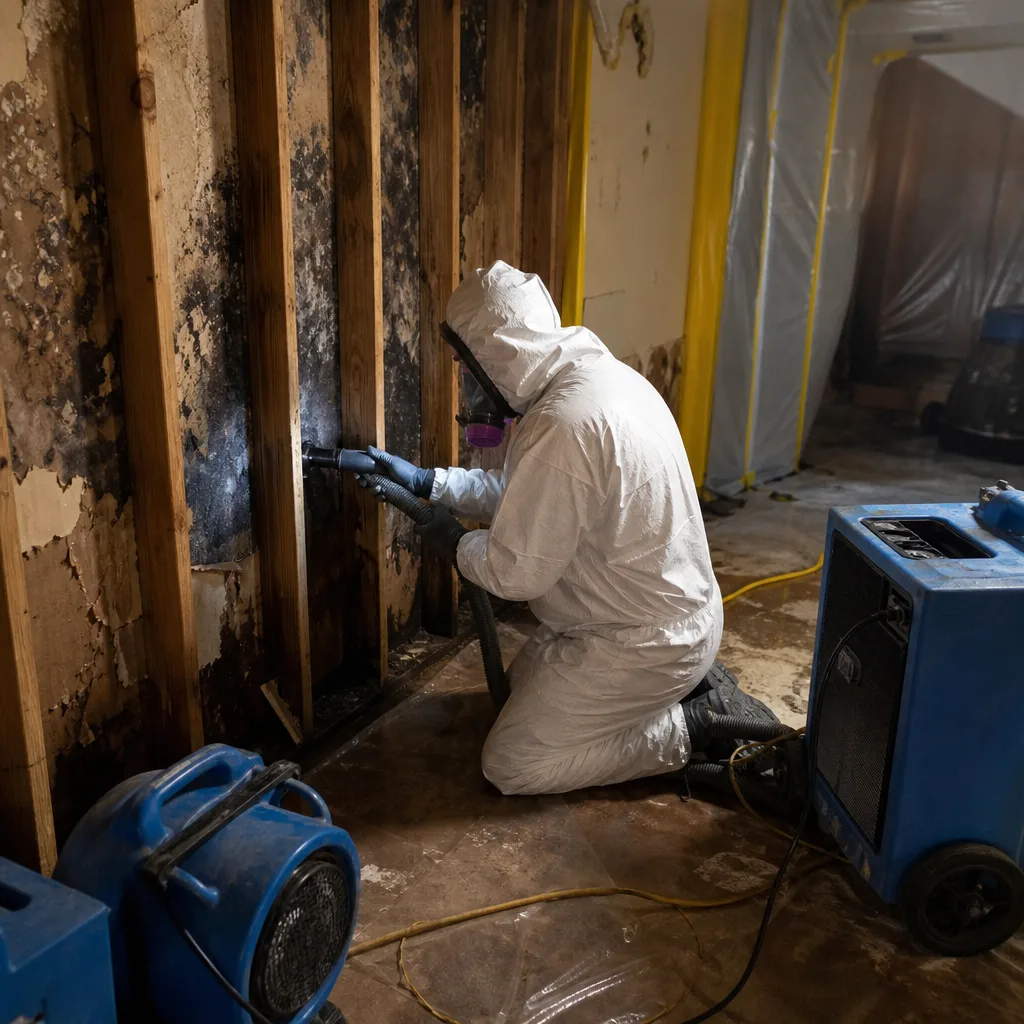
- Mold already blooming inside walls within 24 to 48 hours. Cleveland’s Piney Woods humidity sits above 75 percent most of the year. Floodwater plus that humidity means mold colonization begins fast. We treat mold remediation as a concurrent step with extraction and drying, not a later add-on, because waiting in this climate means a bigger job by the time you get to it.
Pricing for Water Damage Restoration in Cleveland, TX
What should you expect to pay in Cleveland? Here are realistic ranges for the work we do most often:
- Emergency water extraction: $350 to $900 for a single room, $1,200 to $3,500 for a whole-house river flood extraction in a typical Liberty County home.
- Structural drying and dehumidification: $1,000 to $4,000 depending on square footage, number of floors, and whether the subfloor cavity or manufactured home underbelly needs in-cavity drying with Injectidry panels.
- Flood cleanup and sanitation: $800 to $3,000 for contaminated water removal, surface treatment, and disposal of flood-damaged materials, before rebuild.
- Burst pipe restoration: $600 to $2,800 depending on how long the leak ran, whether the subfloor is involved, and how many rooms were affected.
What affects the cost most in Cleveland: whether the river introduced contaminated water, how long the water sat before extraction began, and whether your home is pier-and-beam or manufactured, because both require cavity drying that slab homes don’t. We give you a written scope before work starts, with a square deal and no surprises on the bill. Estimates are free. Call (888) 977-4690 and we’ll put a number in writing.
We Also Serve Cities Near Cleveland
Our crews cover the surrounding communities throughout Liberty County and north Harris County. We’re in Conroe, Willis, Atascocita, and West Livingston regularly, and our dispatch team can route a crew to your door from whichever of those areas our trucks are already working. Water Damage Restoration in Cleveland is our priority when you call, but we serve the whole corridor around the East Fork San Jacinto.
Serving Cleveland, TX - Our Local Coverage Area
We’re based in the Cleveland area and know this community well. Use the map below to see our service coverage - if you’re nearby, we can almost certainly help.
FAQs - Water Damage Restoration in Cleveland
You need extraction started within 24 hours of the water receding, because mold begins colonizing in Cleveland’s humidity within 24 to 48 hours. In a pier-and-beam home, the subfloor cavity is already trapping moisture against wood joists, which accelerates the timeline. Call (888) 977-4690 the day the water leaves your floors, and we’ll have a crew to you the same day in most cases.
Stop opening new areas, document everything with photos, and call us before the second crest arrives. The partially dried cavities you’ve opened are exactly where the second flood will reintroduce water, and the moisture trapped between the first dry layer and the new floodwater creates ideal mold conditions. We’ll assess what’s already been opened, what’s still wet, and design a drying plan that accounts for the second crest.
Cleveland’s damage is riverine, not storm surge. The water arrives slowly, crests days after the rain, and sits against wood-frame and manufactured homes longer. In Houston, crews deal with flash flooding that recedes quickly. Here, prolonged inundation plus high Piney Woods humidity means mold is already active by the time the water drops, and the restoration plan has to treat mold and drying as one process, not two steps.
Manufactured homes have a belly board cavity underneath the floor that traps floodwater and hides it from view. The subfloor insulation wicks water, the framing holds it, and the enclosed space stays humid enough to grow mold for weeks. Site-built slab homes let water run off. We open the belly, extract, dry the cavity with forced air and dehumidification, and treat the framing before resealing. Skipping that cavity work means the home still smells musty and tests positive for mold months later.
No. In Cleveland’s humidity, waiting to treat mold means it spreads behind walls, under flooring, and into ductwork while the structure dries. By the time you finish drying and get around to mold, the affected area is often triple what it was at first inspection. We treat mold remediation as a concurrent step from the moment extraction begins, because that’s the only way to hand you a house that’s actually clean, not just dry.
Call Floodline Restoration Co. of Houston for Cleveland Water Damage Restoration
When the river rises, the water sits, and the mold starts, you need a crew that answers the phone at any hour and shows up knowing exactly what a Cleveland flood does to a house. Floodline Restoration Co. of Houston is that crew. We extract the water, dry the structure, treat the mold, and rebuild what needs rebuilding, with the same certified team from start to finish and a written 90-Day Done Right Promise in your hands.
Call (888) 977-4690 now for a free estimate and a live person who can dispatch a crew to Cleveland today. Done right, and backed in writing.
Written by Curt Bowman, Owner at Floodline Restoration Co. of Houston.