
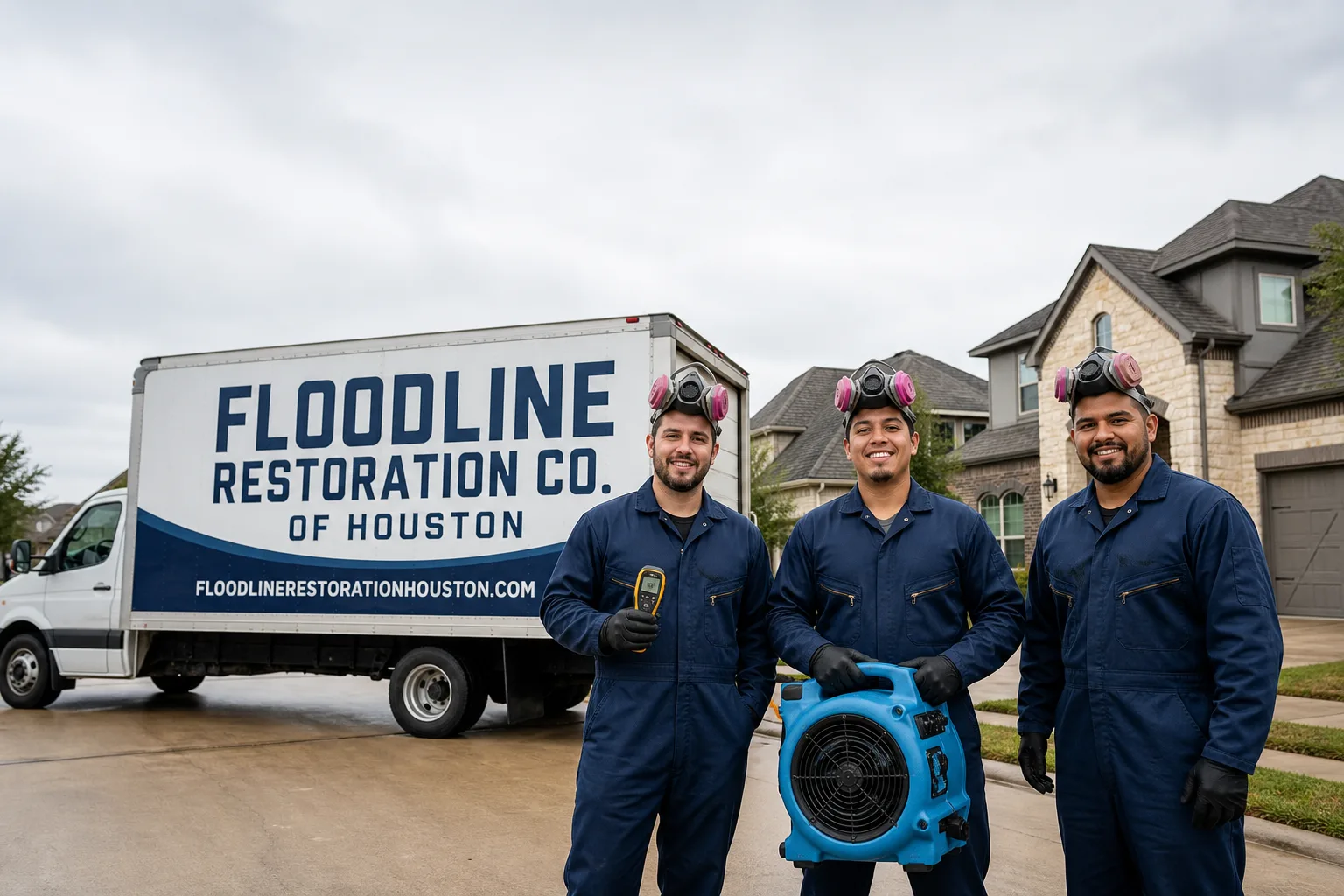
Fast, Reliable Storm & Disaster Restoration Across Katy
Storm damage in Katy doesn’t wait for business hours, and neither do we. Floodline Restoration Co. of Houston answers the phone with a live person at 2 a.m. and has certified crews dispatched to Katy ZIP codes 77450, 77491, 77492, and 77493 the same visit, with extraction equipment running before sunrise. Storm damage restoration in Katy typically costs $2,800-$7,500 depending on water volume, affected square footage, and whether reservoir-release flooding is involved. Call (888) 977-4690 right now if water is moving through your house.
We know Katy’s flood profile better than most restoration companies ever will. Homes along Mason Road, subdivisions off Fry Road, and the master-planned communities around Grand Lakes and Cinco Ranch all sit on the flat Katy Prairie, where clay soils shed water instead of absorbing it. When a storm drops six inches in four hours, that water doesn’t soak in. It moves. We’ve been called to brick-veneer homes where sheet-flow runoff pushed eighteen inches of water through a side door in under an hour. That’s the reality of storm restoration in Katy, and we plan for it before the first truck rolls.
Why Floodline Restoration Co. of Houston Is Katy’s Preferred Storm & Disaster Restoration Company
Forty-two years of standing behind our work shapes how we approach every Katy job. We don’t hand off mid-project, we don’t leave homeowners playing messenger with their insurance carrier, and we put our 90-Day Done Right Promise in writing before we leave. That guarantee, which we call the Keystone Standard, means if it’s not done right, we make it right. No paperwork battles. No arguing. The same applies whether we’re drying a flooded living room or rebuilding a storm-damaged roof structure.
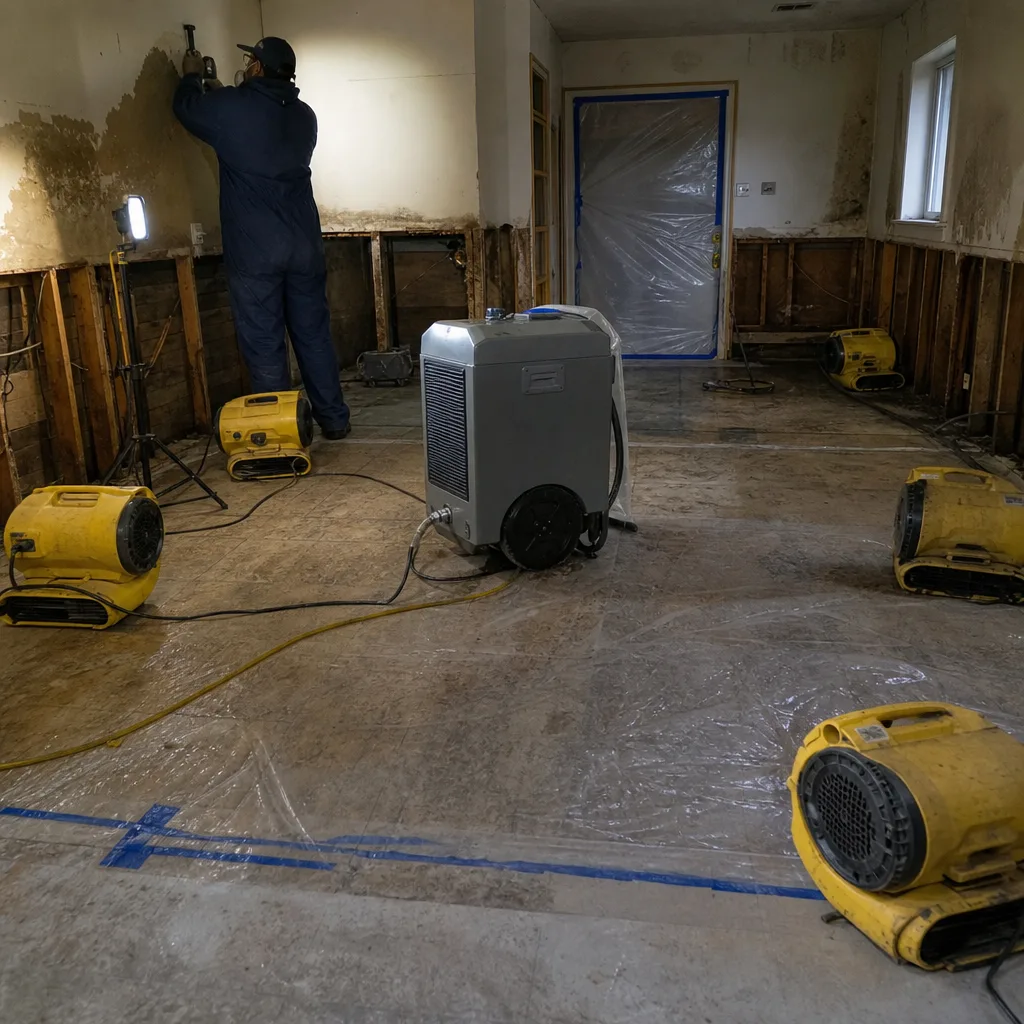
Our technicians arrive in uniform, background-checked, and trained to IICRC standards. They carry professional-grade Dri-Eaz and XPOWER equipment, not rental-shop gear, and they log moisture readings daily until the dry standard is met. Katy homeowners who’ve been through a storm know the difference between a crew that shows up to look busy and a crew that shows up to finish the job. We’re the second one.
We also bill your insurance carrier directly. We photograph every step, document every reading, and coordinate with your adjuster so you never have to translate restoration work into insurance language. For Katy homeowners inside the Addicks or Barker reservoir pools, that documentation is the difference between coverage and denial. More on that below.
Our Storm & Disaster Restoration Services in Katy
Storm Damage Cleanup
When wind tears shingles off a Katy roof or hail punches through a skylight off Westheimer Parkway, the first job is stopping the water from doing more damage. We handle emergency board-up, debris clearing, and structural drying in one coordinated response. Our crews know that Katy’s brick-veneer homes hide water in wall cavities behind the brick, where it won’t show on the surface for days. We check those cavities with moisture meters, because missing one means mold takes root before your adjuster ever sees the claim.
Flood Damage Restoration
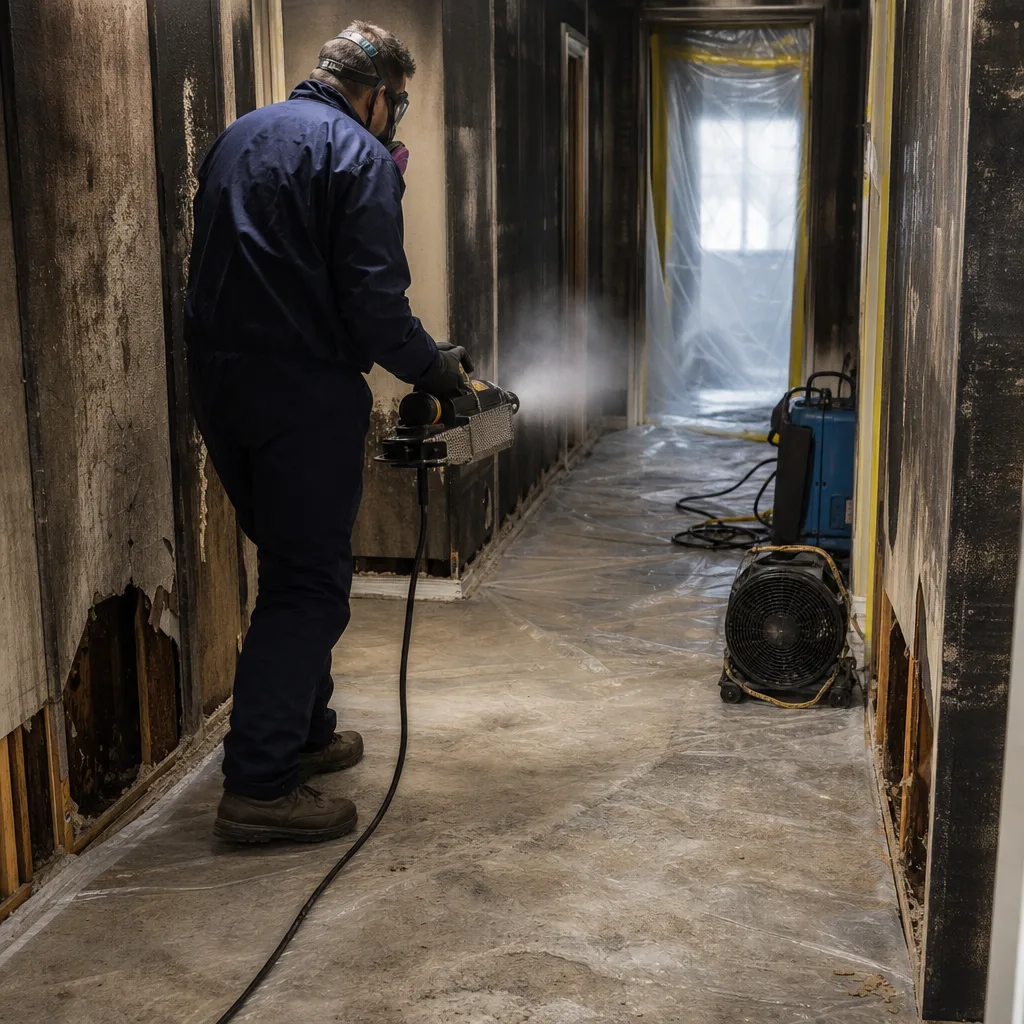
Katy flooding is rarely simple. Homes in 77449 and 77450 can flood from direct stormwater or from controlled releases at the Addicks and Barker reservoirs, and the restoration approach differs depending on which one hit you. Direct stormwater intrusion is what most adjusters expect. Reservoir-release flooding, though, requires a documented mitigation report that distinguishes backflow from sheet-flow runoff. Our Storm & Disaster Restoration team has handled both in Katy, and we know what documentation each scenario demands before the first piece of drywall is cut.
Emergency Board-Up
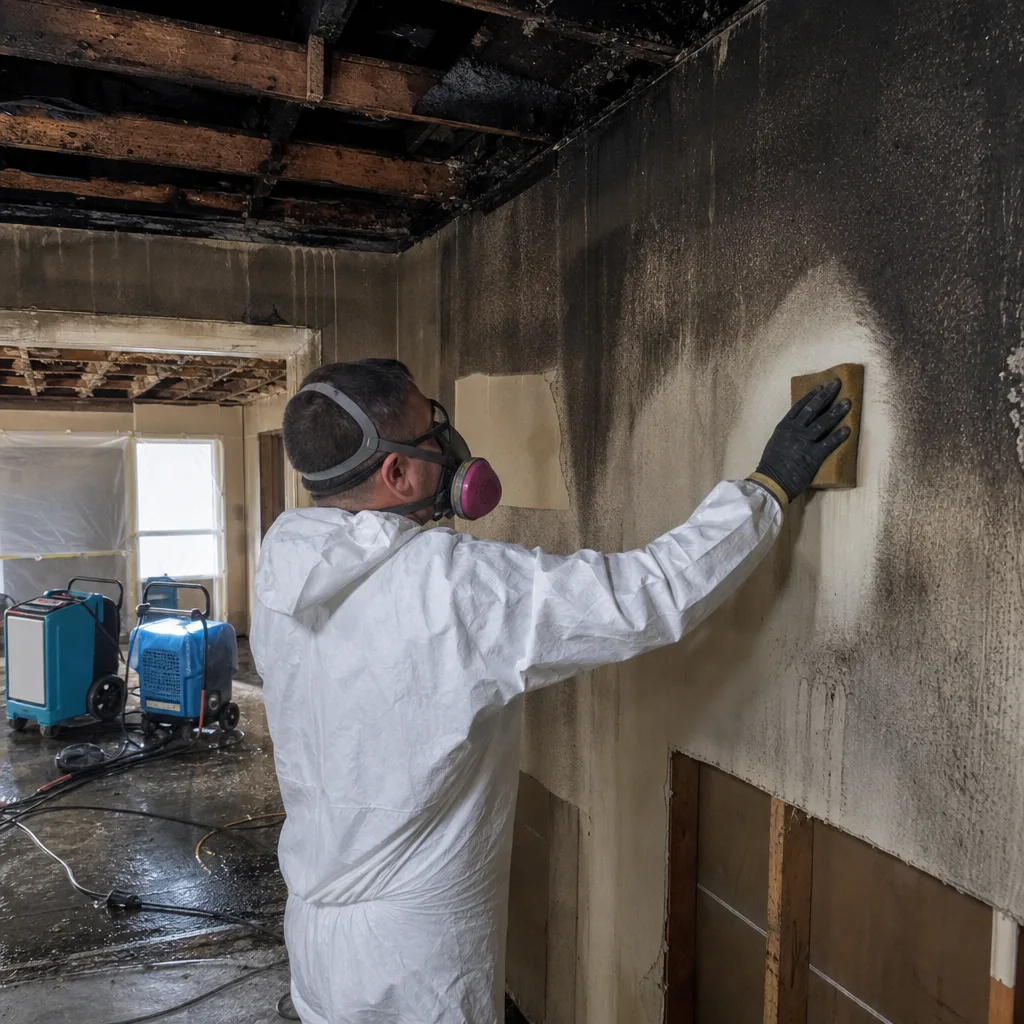
A broken window or storm-damaged door on a Katy home off Fry Road is an open invitation to looting, animals, and more rain. We board up openings with plywood that’s actually secured to the structure, not just wedged in place, and we tarp roofs so a passing thunderstorm doesn’t turn a small leak into a ceiling collapse. This is fast work, but it’s also careful work. A board-up that traps moisture inside a flooded Katy house creates a mold problem worse than the original storm damage.
Roof Tarping
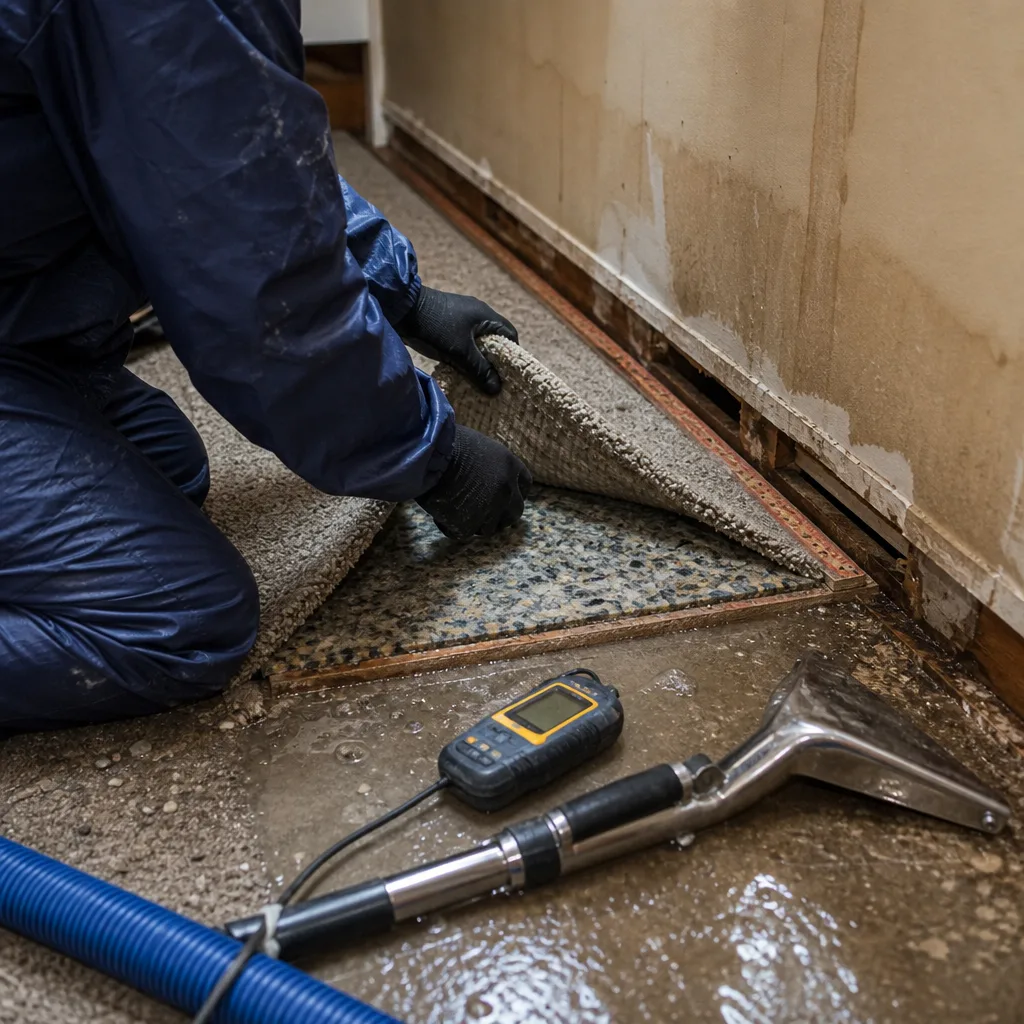
When wind lifts shingles or a tree branch punches through decking in Cinco Ranch or Grand Lakes, the clock starts immediately. Katy’s humidity sits above 80% most of the year, and water that gets into an attic starts condensing on ductwork and insulation within hours. We tarp roofs the same day we’re called, using temporary tarps that stay put through Katy’s afternoon thunderstorms until permanent repairs can be scheduled. The tarp is temporary. The water damage it prevents would be permanent.
What happens when you call
- 1
A real person answersNo phone trees - you reach a local pro.
- 2
You get an upfront price rangeHonest numbers before anyone is dispatched.
- 3
A background-checked tech heads outLicensed & insured, dispatched right away.
- 4
You approve before work beginsNothing starts until you say go.
Trusted Brands We Service in Katy
We run Injectidry systems for hard-to-reach wall cavities, XPOWER air movers for large open areas, and B-Air dehumidifiers where residential units won’t keep up. These aren’t consumer machines. They’re professional-grade equipment sized for Katy’s slab-on-grade homes and detached workshops, where cubic footage runs higher and there’s no shared HVAC return to help with drying. Our techs keep parts and equipment staged for rapid deployment to Katy, so response time doesn’t depend on a supply run from across Harris County.
Common Storm & Disaster Restoration Problems We See in Katy Homes
- Slab-shifting on expansive Katy clay. Katy’s slab-on-grade foundations sit on clay that swells when wet and contracts when dry. After a flood, that clay heaves. A dry-out that skips post-flood slab leveling leads to new drywall cracks and door jams that bind within six months. We monitor with a laser level during drying and catch differential movement before it ruins the rebuild.
- Reservoir-release confusion with adjusters. Homes inside the Addicks or Barker pool boundaries in 77449 and 77450 often carry a flood claim that adjusters want to deny as “controlled release.” If the mitigation report doesn’t document pre-existing stormwater intrusion versus reservoir backflow, coverage gets denied. Our documentation process handles this distinction from the first hour.
- Under-sized drying plans for detached structures. Katy acreage properties often have detached workshops or garage apartments with large cubic footage and no shared HVAC. A single air mover and small dehumidifier stall out while the main house finishes drying. We size equipment for each structure individually, because the 24-48 hour mold window doesn’t reset just because the garage is separate.
- Latent mold from post-Harvey reconstruction. Many Katy homes in 77494 were rebuilt quickly after Hurricane Harvey, when demand overwhelmed qualified crews. We regularly find substandard drywall replacement and sealed-up wall cavities that still harbor mold years later. When we open a wall for storm restoration, we check for what the last crew left behind.
Pricing for Storm & Disaster Restoration in Katy, TX
Actual numbers, because Katy homeowners deserve them. Storm damage cleanup on a single room runs $2,800-$5,200 when extraction and drying start the same day. A whole-house flood restoration in Katy, including flood cuts, cavity drying, and slab monitoring, lands between $6,500 and $12,000 depending on square footage. Emergency board-up and roof tarping typically runs $350-$900 for materials and labor. Detached workshop drying adds $1,200-$2,800 depending on cubic footage and equipment hours. The variables are water volume, how quickly we’re called, and whether reservoir documentation is required. The estimate is always free, always in writing, and always before work starts. Call (888) 977-4690.
We offer $50 off any repair over $250, an $89 seasonal tune-up, and a 5% senior and veteran discount on every job. No fine print. Those offers stand for Katy customers year-round.
We Also Serve Cities Near Katy
From our dispatch hub in Houston, our crews regularly run storm restoration jobs in Cinco Ranch, Fulshear, Pecan Grove, and Brookshire. If your home is outside Katy proper but still in the west Houston storm corridor, Katy is where our local knowledge runs deepest, and we extend the same response time and written guarantee to every neighboring community.
For a full look at our storm and flood response capabilities, including how we handle reservoir-release flooding specifically, visit our Storm & Disaster Restoration page.
Serving Katy, TX - Our Local Coverage Area
We’re based in the Katy area and know this community well. Use the map below to see our service coverage - if you’re nearby, we can almost certainly help.
FAQs - Storm & Disaster Restoration in Katy
Check your FEMA flood map designation. Homes in Katy ZIPs 77449, 77450, and 77494 that sit inside the Addicks or Barker pool boundaries carry a specific post-Harvey map code. If you’re not sure, we check it for you during our initial assessment, because it determines whether your flood claim falls under standard stormwater coverage or reservoir-release language, and that changes everything about how we document the mitigation. Call (888) 977-4690 and we’ll look your address up before we even arrive.
Yes, and it’s the single biggest reason Katy homeowners get claims denied. Direct stormwater intrusion is straightforward flood damage. Reservoir-release flooding is technically a controlled water event, and adjusters routinely deny coverage unless the mitigation report specifically documents stormwater intrusion versus reservoir backflow. We photograph, log, and report the distinction from the first visit. Every reading in your moisture log supports the adjuster conversation. That’s the difference between a covered rebuild and a denied claim.
In Katy’s climate, mold colonization in wall cavities and subfloor assemblies can begin within 24-48 hours of water intrusion. The window is tighter here than in drier parts of Texas because Southeast Texas humidity stays above 80% most of the year. That’s why we dispatch same-visit to Katy and why we start extraction equipment before doing paperwork. A delay of one day can mean the difference between drying out and cutting out.
Yes. Detached structures have larger cubic footage per square foot of floor space, no shared HVAC return to move air, and often no vapor barrier under the slab. We use Injectidry systems for workshop wall cavities and XPOWER air movers sized for the structure’s volume, not a rule of thumb. If a workshop is under-dried, mold spreads between studs and into stored equipment. If it’s over-dried too fast on Katy clay, the slab shifts. Our techs calculate the right balance for each building.
Katy sits on expansive Katy Prairie clay that swells when saturated and contracts as it dries. When floodwater soaks under a slab-on-grade foundation and then extraction removes the surface water, the clay heaves unevenly. That differential movement cracks drywall, binds doors, and separates millwork. Homes in Sugar Land or Cypress have their own soil profiles, but the reactive clay under Katy is specific and demanding. We monitor slab movement with a laser level during dry-out and document it for your adjuster. Skipping that step is how a “dried” home needs a structural repair six months later.
After a June storm dropped nine inches on Katy, our crew was called to a brick-veneer home in the Grand Lakes section of 77494. Sheet-flow runoff from the Katy Prairie had pushed twenty inches of water through a detached workshop’s side door. We used Dri-Eaz LGR 7000XLi dehumidifiers and Phoenix AirMax fans to stabilize the workshop’s wall cavities before any demolition. Because the slab-on-grade foundation sat on expansive Katy clay, we monitored for post-flood slab movement with a laser level during the entire dry-out. We caught a 3/8-inch differential that would have cracked the new drywall if we’d buttoned up in one trip. That’s the kind of thing you only catch when you’ve watched Katy clay move before.
Katy sits directly adjacent to the Addicks and Barker flood-control reservoirs. During Hurricane Harvey in 2017, the Army Corps released water from both reservoirs at capacity, inundating entire subdivisions in ZIP codes 77449, 77450, and 77494 that had never flooded before. Restoration work in Katy uniquely must account for this dual threat: direct stormwater intrusion AND controlled reservoir-release flooding. That risk profile simply does not exist in Sugar Land or Cypress. It changes the triage we do in the first hour, the documentation we build for your adjuster, and the questions we ask before touching a single piece of drywall.
If your Katy home has storm damage, call (888) 977-4690. A live dispatcher answers. A certified crew heads your way. And the work is backed in writing.
Written by Curt Bowman, Owner at Floodline Restoration Co., serving Katy and the greater Houston area with storm and disaster restoration since 2010.