
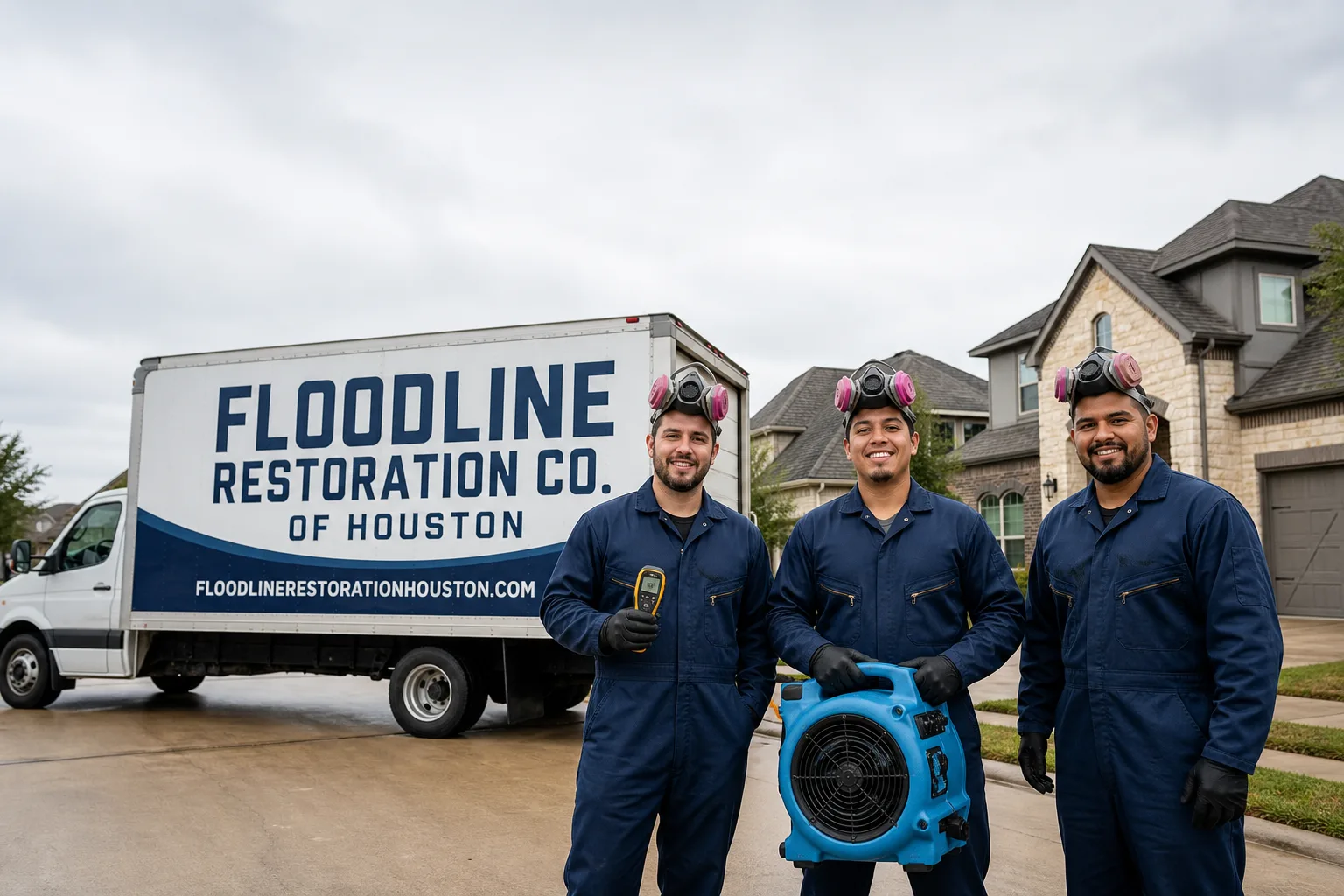
Fast, Reliable Storm & Disaster Restoration Across Houston
When a storm tears through Houston, you need a crew that knows the difference between a Katy slab home with water trapped in the ducts and a Heights pier-and-beam that dries faster but hides moisture in the floor framing. Floodline Restoration Co. of Houston has worked both sides of Loop 610 for years. We answer the phone with a live person at 2 a.m. when Brays Bayou jumps its banks, and our Storm & Disaster Restoration team reaches your door ready to extract, contain, and dry before mold gets its 48-hour head start. Call (888) 977-4690 any hour.
Why Floodline Restoration Co. of Houston Is Houston’s Storm Restoration Choice
Houston homeowners have earned the right to be skeptical. After the Memorial Day Flood in 2015, Tax Day in 2016, and Harvey in 2017, plenty of out-of-state contractors blew through, collected checks, and vanished. We stayed. Curt Bowman founded this company in 2010 around a dispatch board, not a sales desk, and our Houston crews are background-checked, uniformed, and certified to IICRC, RIA, and IFA standards.
Houston’s serial-flood history means we’ve walked into homes in Meyerland that have been gutted and rebuilt twice since 2015. We know what a post-rebuild flood-mitigation retrofit looks like, because we’ve installed and worked around them. Our 90-Day Done Right Promise, the Keystone Standard, is in writing. If it’s not done right, we make it right. No arguing, no paperwork battles. That’s the square deal Houston homeowners in Bellaire, West University Place, Galena Park, and Jacinto City ask for, and it’s what we deliver.
Our Storm & Disaster Restoration Services in Houston
Flood Damage Restoration
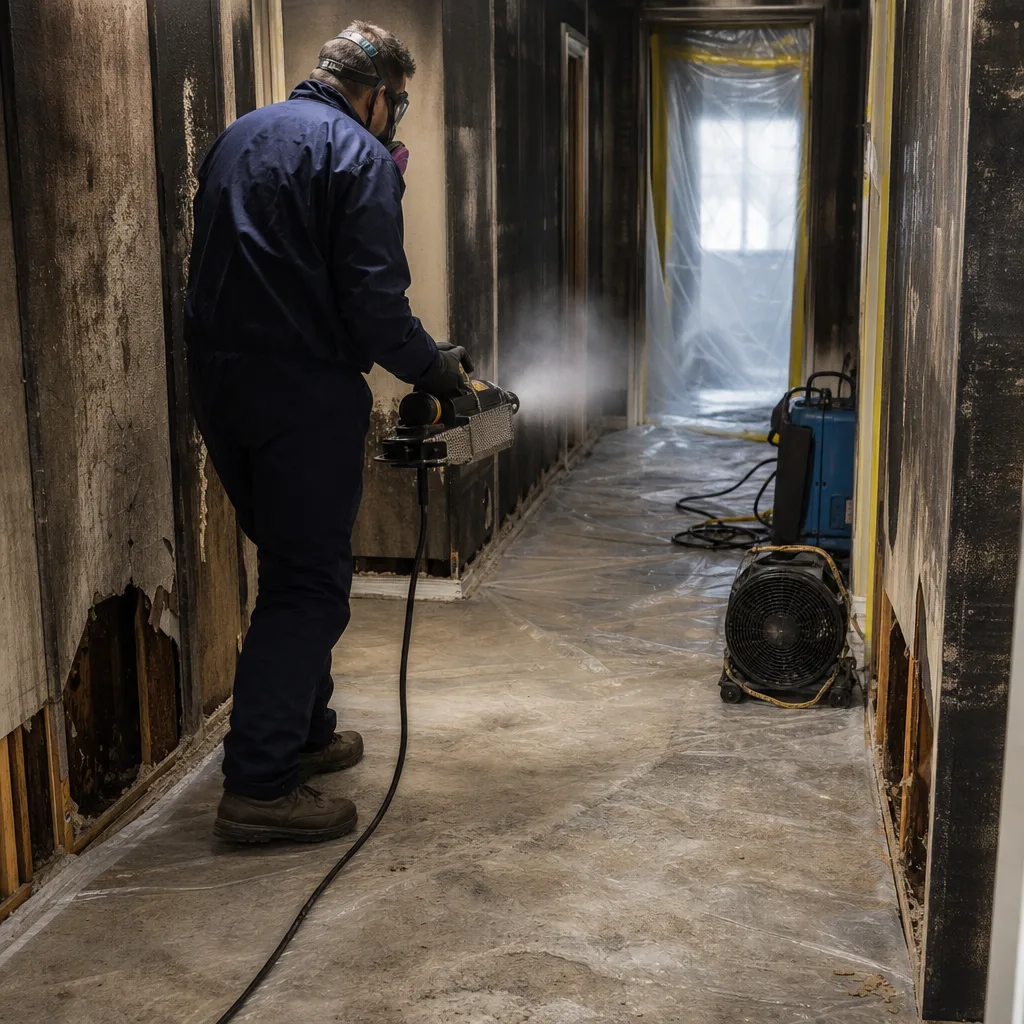
Houston averages over 50 inches of rain a year and sits directly in the Gulf’s tropical cyclone track. When 8 inches falls overnight and the bayous rise, our flood damage restoration crews in Houston start with a moisture map and a written scope, then extract, set containment, and run professional-grade Dri-Eaz, XPOWER, and B-Air equipment until the dry standard is met. We log daily readings and hand that log to you and your carrier. No homeowner plays messenger between Floodline and the adjuster.
Storm Damage Cleanup
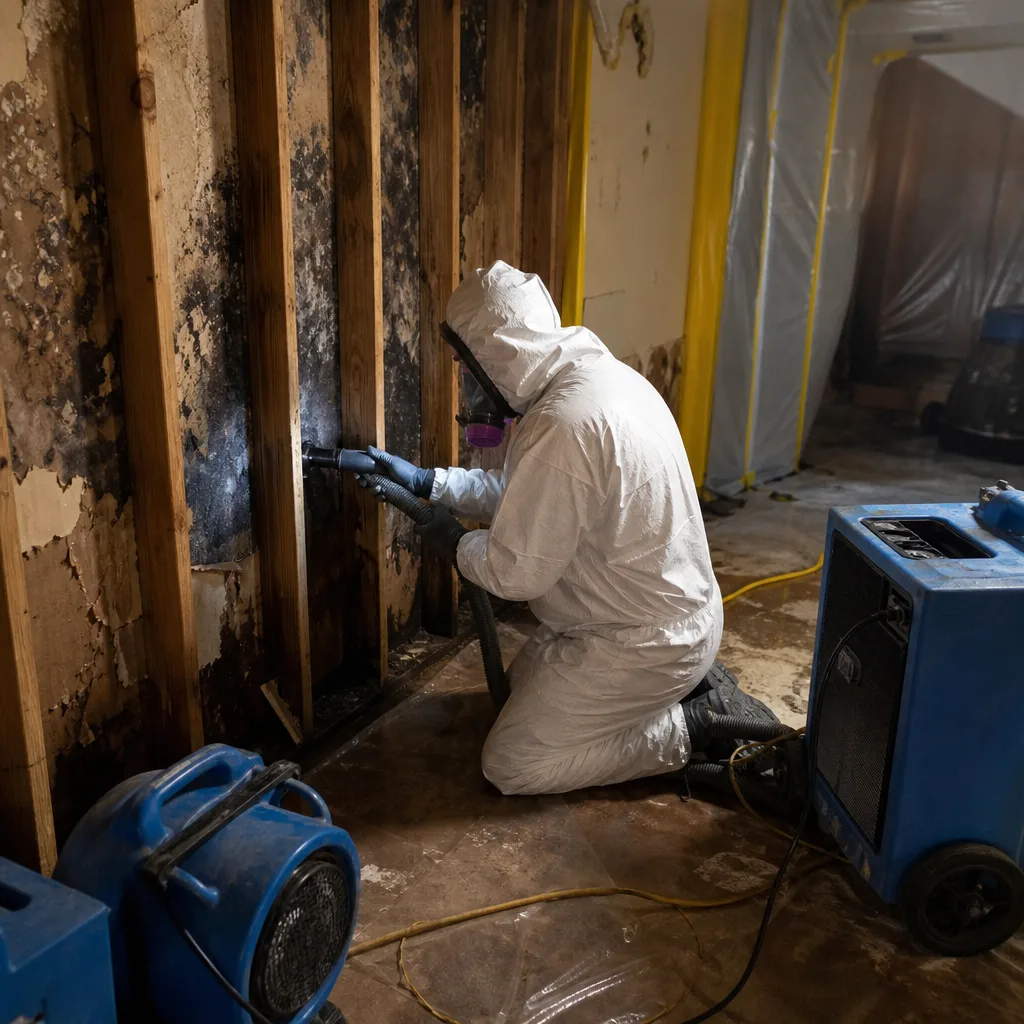
Wind-driven rain, roof punctures, and bayou overflow leave Houston homes with soaked drywall, ruined insulation, and standing water in places you can’t see. Our Houston storm damage cleanup includes debris removal, water extraction, structural drying, and sanitizing, handled by the same certified crew from first visit to final rebuild. Most jobs are completed in a single visit, and we bill your insurance carrier directly.
Emergency Board-Up
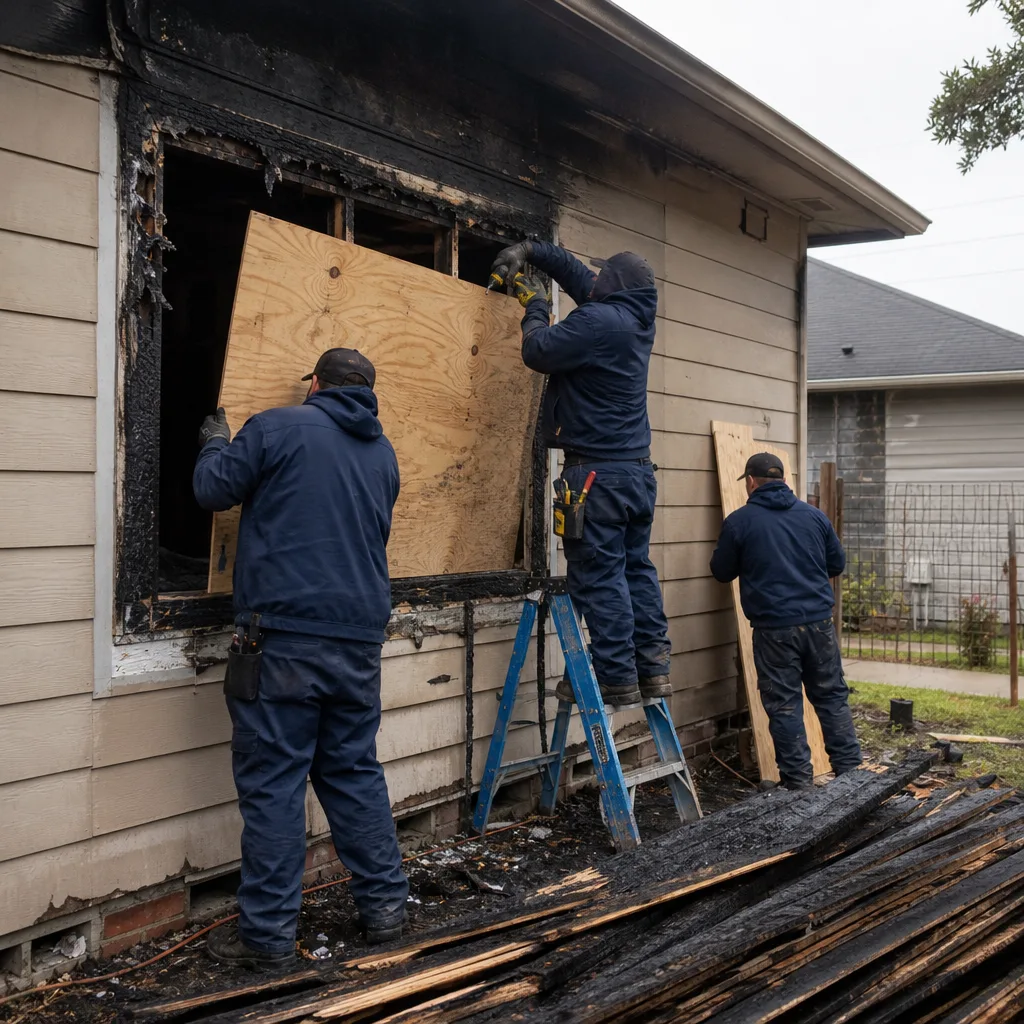
After a Houston storm blows out windows or compromises a wall, your home is open to more rain, pests, and trespass. Our emergency board-up service secures openings with heavy plywood, weather-sealed and properly anchored. We respond quickly across Houston, from the 610 Loop to the suburban corridors. A boarded home is a protected home, and it buys your adjuster time to assess the damage without the clock running against you.
Roof Tarping
Before the next named storm makes landfall on the Gulf coast, a tarp on a damaged roof can prevent thousands in interior water damage. Our Houston roof tarping crews use heavy-duty, UV-stabilized tarps and secure them to manufacturer spec. We’ll get to you before the bands arrive, and we’ll document everything for your carrier. Call (888) 977-4690 and a live dispatcher will route the nearest certified crew.
What happens when you call
- 1
A real person answersNo phone trees - you reach a local pro.
- 2
You get an upfront price rangeHonest numbers before anyone is dispatched.
- 3
A background-checked tech heads outLicensed & insured, dispatched right away.
- 4
You approve before work beginsNothing starts until you say go.
How Houston’s Housing Stock Changes the Restoration Job
Houston is the only major U.S. city to experience three federally declared “500-year” flood events in three consecutive years: the Memorial Day Flood 2015, Tax Day Flood 2016, and Hurricane Harvey 2017. That’s not a run of bad luck. It’s the city’s geography and geology. Houston sits on a nearly flat coastal plain underlaid by expansive Beaumont clay that sheds water rather than absorbing it. Add decades of land subsidence in west Houston, where groundwater withdrawal sank some areas several feet during the 20th century, and even ordinary rain events push bayous over their banks and into slab foundations.
That history shaped Houston’s housing stock. The post-WWII expansion produced thousands of 1960s to 1990s slab-on-grade tract homes across Katy, Pearland, and Sugar Land. Many of those homes have HVAC ductwork embedded in or running beneath the slab. When floodwater fills those cavities, standard extraction wands and mats can’t reach it. The water stays hidden, re-wetting the structure days later and feeding aggressive mold colonies. In Meyerland along Brays Bayou, our crew responded to a slab-on-grade 1970s tract home where floodwater had filled the in-slab HVAC ducts. After standard extraction showed no standing water, our techs used Injectidry vacuum panels on the duct runs and placed Dri-Eaz LGR 2800i dehumidifiers with XPOWER air movers to pull trapped moisture before mold colonized within 48 hours. We documented prior flood-mitigation retrofits, an elevated panel and flood-vented foundation walls, and worked around them without disturbing sealed penetrations.
Older inner-loop neighborhoods like the Heights and Montrose tell a different story. Those 1920s to 1950s pier-and-beam homes flood, but the crawlspace underneath dries faster than a slab. If a crew applies the slab protocol to a pier-and-beam, they over-dry some areas and miss moisture trapped in floor framing. Houston restoration requires a two-track approach, and our crews know which protocol applies before the next bayou crest.
Mold Moves Fast in Houston’s Humidity
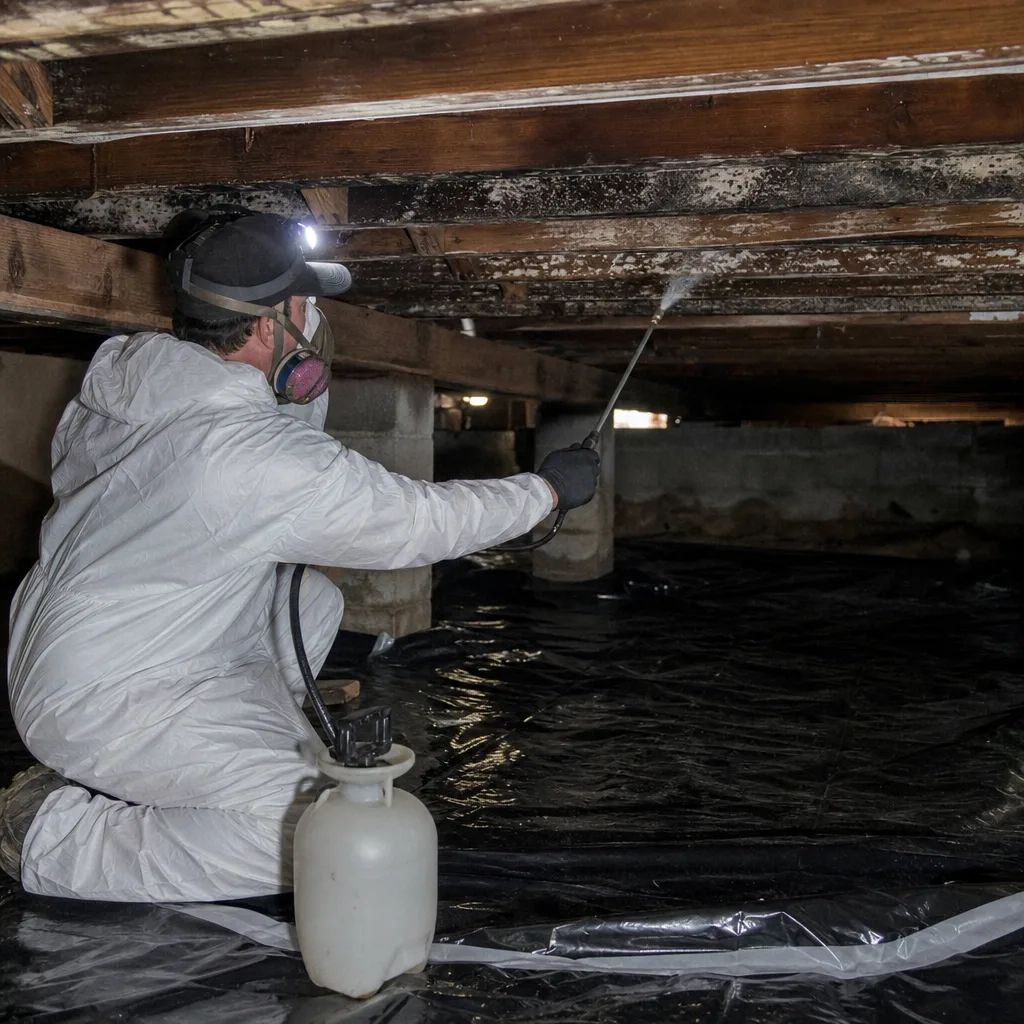
Houston’s ambient humidity routinely exceeds 90%. That’s not an inconvenience. It’s the single biggest reason storm restoration in Houston is a race. Mold can colonize saturated drywall and insulation within 24 to 48 hours. In a slab home with water in the ducts, the clock starts before you see any standing water. In a pier-and-beam, the visible water may be gone but the framing is still wet. You won’t see the problem until the musty smell arrives, and by then the colony is established.
Our Houston crews set containment and run dehumidification on the first visit, not the second. We use professional-grade Dri-Eaz, Phoenix, XPOWER, B-Air, and Injectidry equipment, moisture-mapped from day one, with daily readings logged until the dry standard is met. That log goes to you and your carrier. The 90-Day Done Right Promise means if mold returns from incomplete drying, we return and fix it. In writing.
Common Storm & Disaster Restoration Problems We See in Houston Homes
- In-slab duct flooding in 1970s Katy and Sugar Land tract homes: Floodwater fills duct runs that standard extraction equipment can’t reach. Hidden reservoirs re-wet the structure days after visible drying, and mold takes hold before homeowners realize the problem.
- Over-drying pier-and-beam framing in the Heights: A crawlspace dries faster than a slab, but crews using the slab protocol often over-dry some framing while missing moisture trapped against floor joists. Different airflow and monitoring are required.
- Post-rebuild flood-mitigation retrofits in Meyerland: Homes rebuilt after repeated floods often have elevated electrical panels, flood-vented foundation walls, and lifted mechanical equipment. These must be documented and worked around without disturbing sealed penetrations.
- Hurricane-driven roof damage before landfall: High winds strip shingles and expose decking ahead of the main rain bands. Without emergency roof tarping, interior water damage compounds by the hour.
Pricing for Storm & Disaster Restoration in Houston, TX
Here are honest ranges for Houston’s market. Storm damage cleanup in a typical Houston home runs $3,500 to $12,000 depending on square footage and how far water traveled. Flood damage restoration with full structural drying typically runs $5,000 to $18,000. Emergency board-up in Houston runs $450 to $1,200 per opening. Roof tarping runs $500 to $1,500 depending on roof pitch and the number of tarps required. What changes the number is the housing type. A slab-on-grade Katy tract home with flooded ducts costs more to dry than a pier-and-beam in the Heights, because the water is trapped where only Injectidry panels and extended dehumidification can reach it. We give you a written scope before work starts, bill your carrier directly, and offer $50 off any repair over $250, plus a 5% senior and veteran discount. Call (888) 977-4690 for a free estimate.
We Also Serve Cities Near Houston
Floodline Restoration Co. of Houston serves the whole metro, from Bellaire and West University Place inside the Loop to Galena Park and Jacinto City to the east. If your home sits on a slab in Pearland or a pier-and-beam in the Heights, our Houston crews know which drying protocol applies before we arrive. See our full Storm & Disaster Restoration in Houston coverage area or call (888) 977-4690.
Serving Houston, TX - Our Local Coverage Area
We’re based in the Houston area and know this community well. Use the map below to see our service coverage - if you’re nearby, we can almost certainly help.
FAQs - Storm & Disaster Restoration in Houston
Mold can colonize saturated drywall and insulation within 24 to 48 hours in Houston’s 90%+ ambient humidity. That’s why we set containment and run dehumidification on the first visit, with daily moisture readings logged until the dry standard is met. If you see water or smell must, call (888) 977-4690 now.
Yes. We use Injectidry vacuum panels on duct runs and place Dri-Eaz LGR dehumidifiers with XPOWER air movers to pull trapped moisture before mold colonizes. Standard extraction wands can’t reach those cavities. This is a Houston-specific problem we see regularly in slab-on-grade homes built between the 1960s and 1990s.
Yes. We photograph and document every pre-existing retrofit, elevated panel, flood-vented foundation wall, lifted mechanical, before we start work. That protects you and your carrier from confusion about what was already there, and it ensures our drying protocol works around sealed penetrations without disturbing them.
Yes. A pier-and-beam crawlspace dries faster than a slab, so the airflow and monitoring schedule differs. Applying the slab protocol to a pier-and-beam can over-dry some framing while missing moisture trapped against floor joists. Our Houston crews adjust approach based on which side of Loop 610 the home sits on.
Yes. A live dispatcher answers at (888) 977-4690 24/7, and we route the nearest certified Houston crew. We use heavy-duty, UV-stabilized tarps secured to manufacturer spec, and we document the work for your insurance carrier. Call as soon as you know a storm is coming, not after the rain starts.
Written by Curt Bowman, Owner at Floodline Restoration Co. of Houston.