
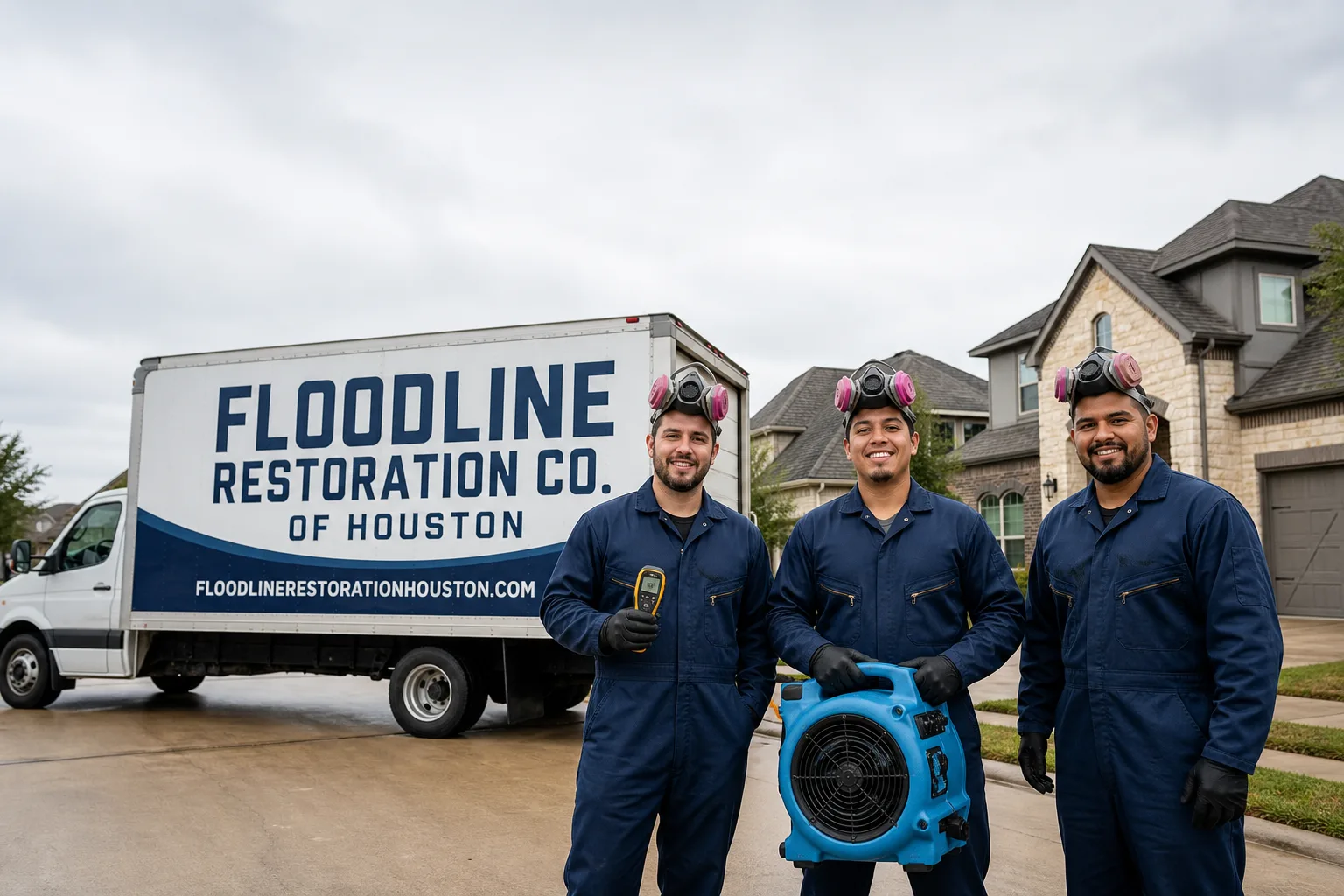
Fast, Reliable Storm & Disaster Restoration Across Galveston
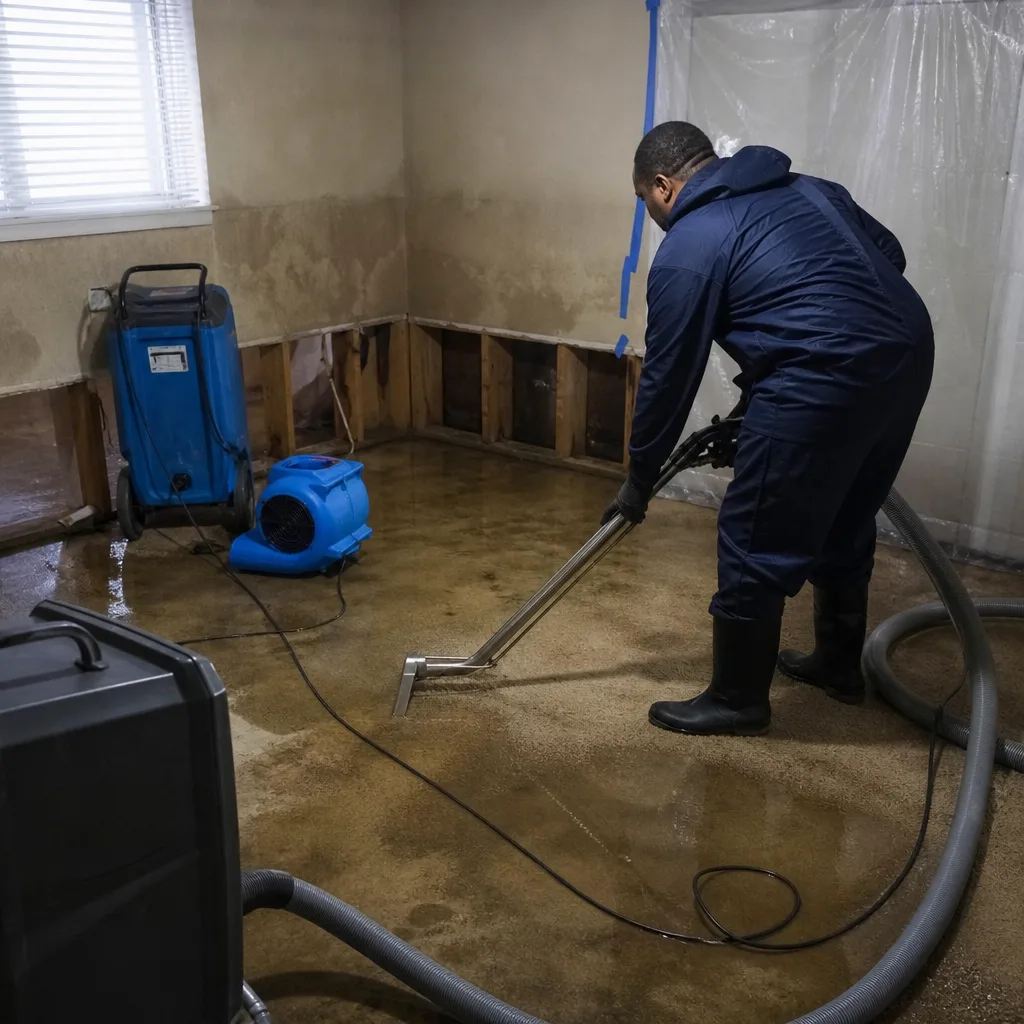
Storm damage in Galveston moves fast, and so do we. Floodline Restoration Co. of Houston runs certified crews into 77550, 77553, 77554, and 77555 around the clock, with a live dispatcher answering at (888) 977-4690 no matter the hour. Most storm calls in Galveston begin with saltwater surge, not a burst pipe or a roof leak, and treating Gulf water demands a different protocol from the first extraction. We carry saltwater-specific antimicrobials, stage equipment along the elevated Seawall Boulevard corridor, and work inward toward the bay side where flooding hits hardest. When you call, you get a person. When we arrive, extraction starts the same visit.
Why Floodline Restoration Co. of Houston Is Galveston’s Preferred Storm & Disaster Restoration Company
Galveston homeowners have seen enough contractors vanish after the storm clears to be wary of anyone with a magnetic sign and a ladder. Floodline Restoration Co. has been standing behind work since 2010, and every job here ends with the 90-Day Done Right Promise in writing. It is not a slogan. If it is not done right, we make it right, with no paperwork battles and no arguing. That is the Keystone Standard, and it applies to every Galveston job, from a Seawall-side condo down to a raised cottage off Broadway.
The crews we send into Galveston are background-checked, uniformed, and trained to IICRC, RIA, and IFA standards. They know the island. They know that a bay-facing home in 77550 floods before a Gulf-facing home in 77554 during the same named storm, because the historic Galveston Seawall protects the south side and leaves the north side open to surge. That knowledge changes where we stage equipment, how we sequence extraction, and which antimicrobials we use. Our Storm & Disaster Restoration team plans around the island’s actual failure patterns, not a generic playbook from Houston.
We bill insurance carriers directly and hand you a moisture log with daily readings from day one until the dry standard is met. No playing messenger between your adjuster and a restoration crew. You get photo documentation for every claim, a written scope before work starts, and one crew from first extraction through finished rebuild. The line the water left is where we start.
Our Storm & Disaster Restoration Services in Galveston
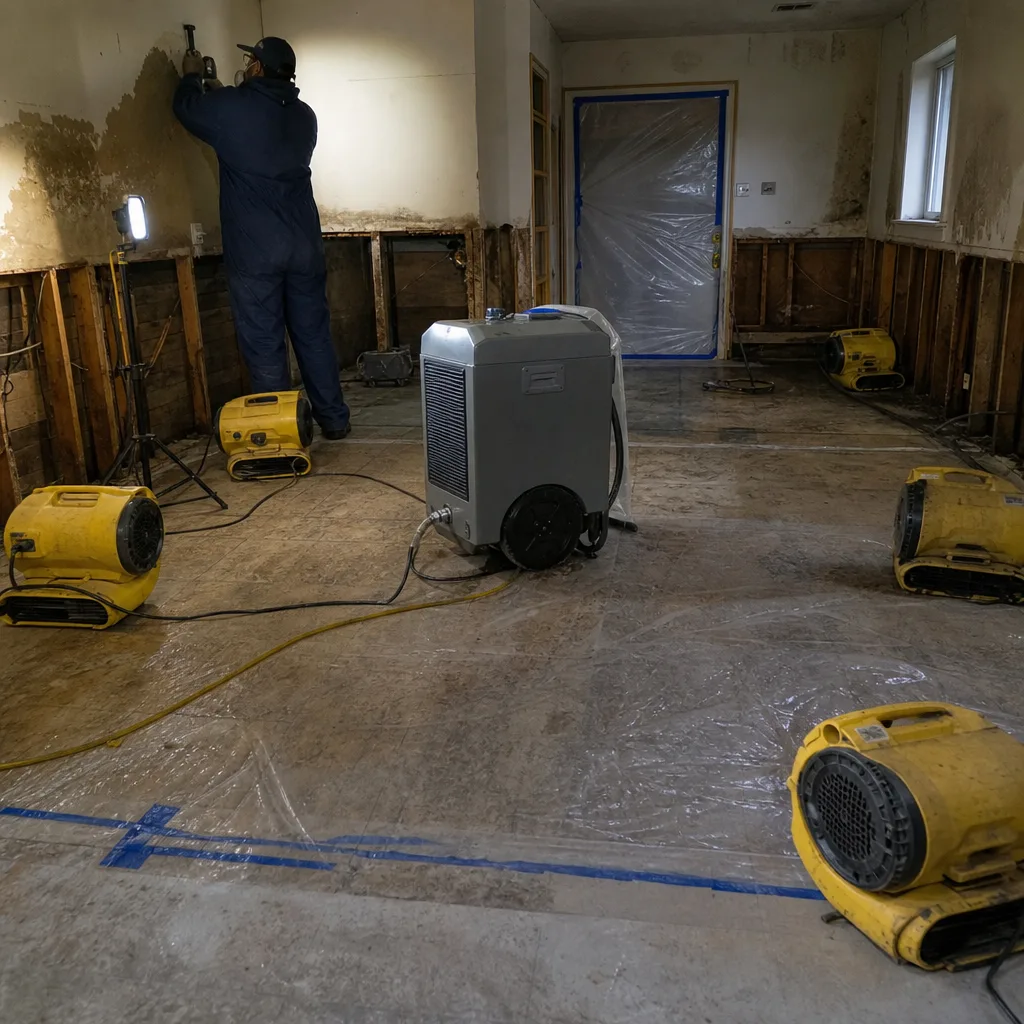
Every sub-service below is delivered by the same certified crew, using Dri-Eaz, Phoenix, XPOWER, B-Air, and Injectidry equipment. We read the moisture map on day one, log daily readings until dry, and rebuild what needs rebuilding. Nothing gets handed off to a different outfit.
Storm Damage Cleanup
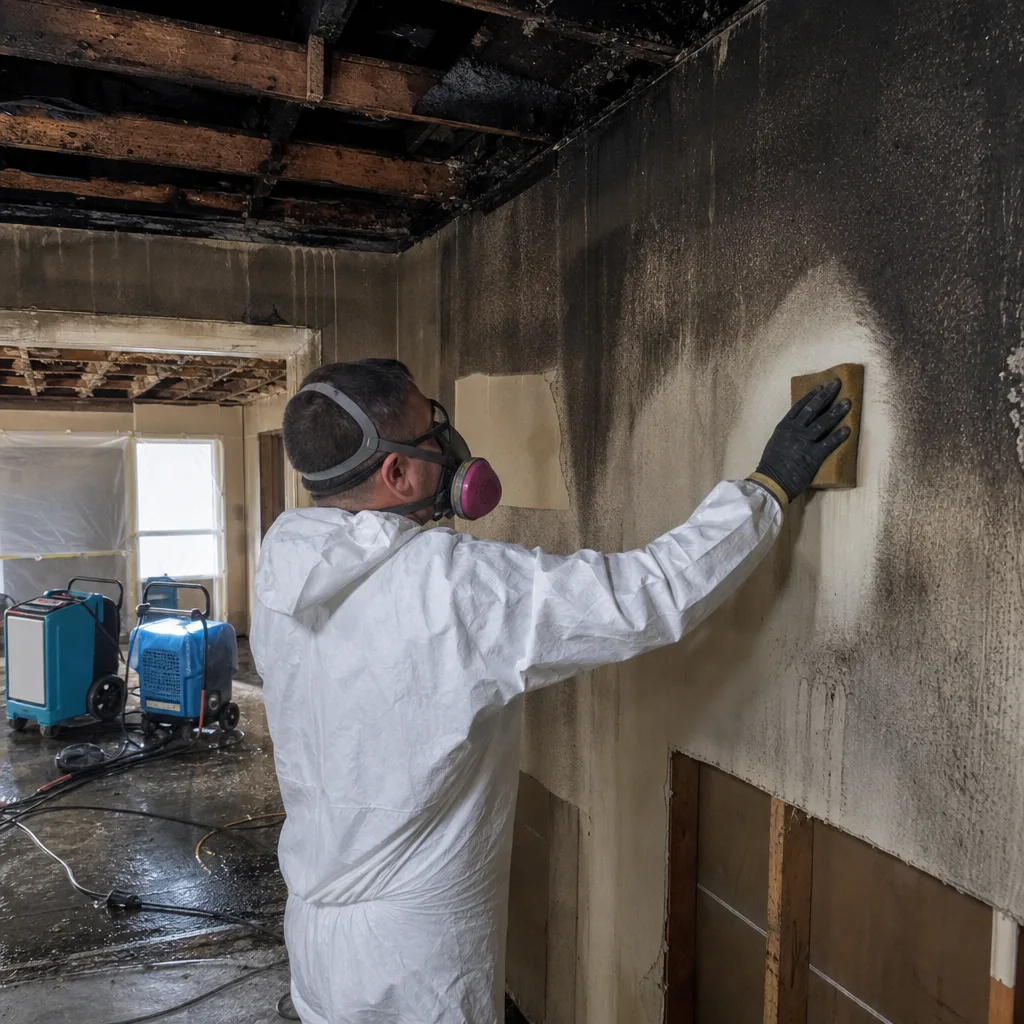
Storm cleanup in Galveston means dealing with salt, sand, and debris driven by Gulf wind, not just standing water. Salt residue left in wall cavities and on structural metal corrodes fasteners and framing within days, which is why we rinse affected surfaces with saltwater-specific treatments before drying begins. We also remove storm debris from yards, drives, and door channels before it turns into a secondary hazard.
Flood Damage Restoration
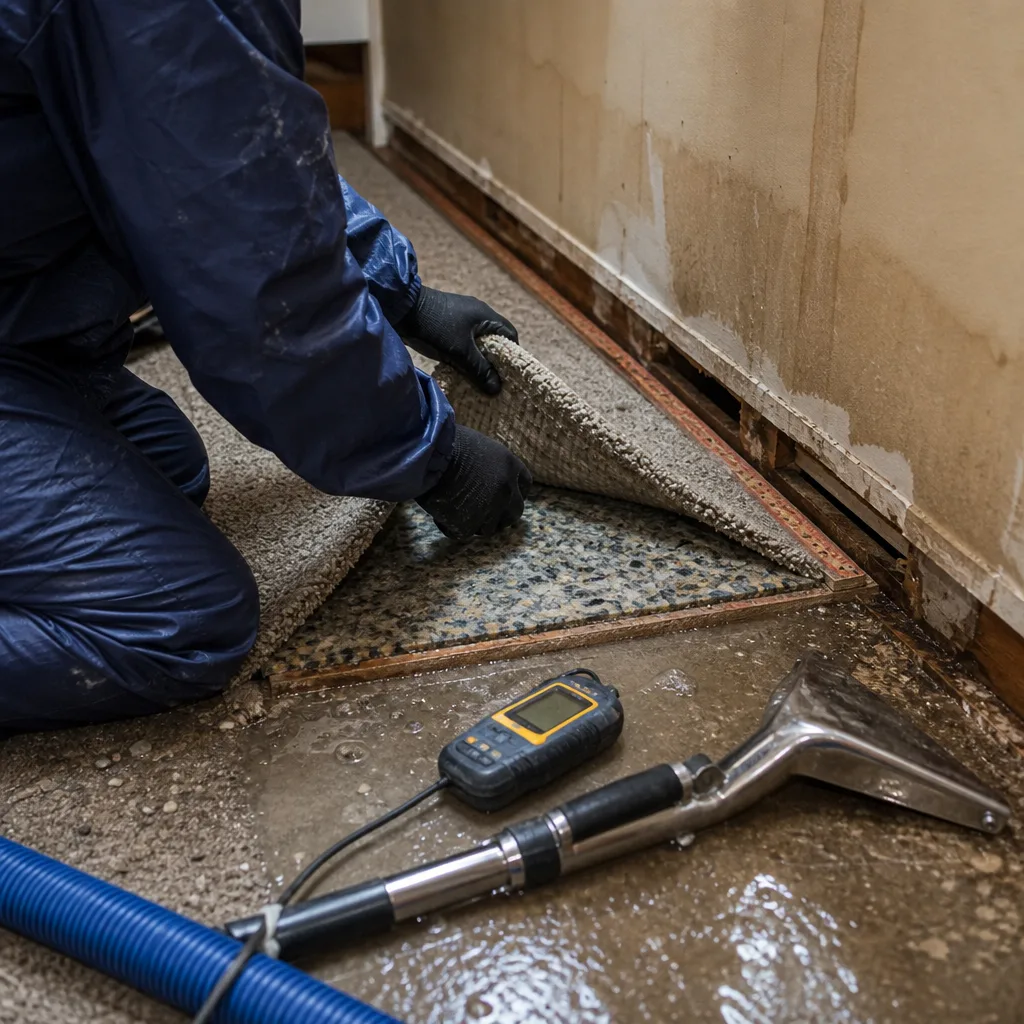
Bay-side flooding in Galveston carries marine-sourced fungi and bacteria that standard freshwater antimicrobials cannot kill. Our flood restoration protocol on the island includes saltwater-specific antimicrobial treatment, cavity drying with Injectidry systems, and moisture mapping of pier-and-beam foundations where saltwater wicks up through old longleaf pine sills. We document every reading for your carrier.
Emergency Board-Up
Broken windows and blown-out doors on a Galveston storm night need to be secured before the next rain band moves through. We board up openings with measured, anchored panels, not quick nails into trim. For the West End’s elevated homes, we also secure ground-level enclosures and garage openings, which are often the first points of failure on post-Ike construction.
Roof Tarping
Wind-driven rain finds every loose shingle on a Galveston roof. We tarp damaged roof sections with heavy-duty poly secured to fascia and sheathing, not just weighted with sandbags. In salt air, exposed tarp edges corrode cheap fasteners quickly, so we use coated hardware that holds through the claim cycle. Same-visit tarping means the interior stops taking water while you wait on the adjuster.
What happens when you call
- 1
A real person answersNo phone trees - you reach a local pro.
- 2
You get an upfront price rangeHonest numbers before anyone is dispatched.
- 3
A background-checked tech heads outLicensed & insured, dispatched right away.
- 4
You approve before work beginsNothing starts until you say go.
How Salt Air and Bay Flooding Damage Galveston Garage Doors
Most restoration companies treat a garage door as an afterthought. On Galveston, it is often the first piece of hardware to fail after a storm, and the reason is plain: the island is a low-lying barrier island averaging just 8 feet above sea level, surrounded by salt water on three sides. Year-round salt air accelerates corrosion of springs, hinges, tracks, fasteners, and opener chains at a rate that surprises even experienced Houston contractors. Galvanized torsion springs on bay-facing homes in 77550 and 77551 routinely snap within 3 to 5 years of installation, not the 10 to 15 you would expect inland. Often they snap right after a storm, when a swollen door frame binds and a homeowner or crew member tries to force the door up by hand.
This is not a maintenance nuisance. It is a safety issue. A snapped torsion spring under tension can seriously injure anyone standing nearby, and a swollen, salt-corroded door is exactly the kind of situation that creates that risk. We recommend that homeowners never attempt to open a storm-swollen garage door by force and never work on high-tension springs themselves. A trained technician with the right tools can assess whether the door is safe to move. Our crew carries spring winding bars and knows the difference between a door that needs lubrication and one that needs new springs before it comes down on someone.
After a spring storm pushed a foot of saltwater into a raised cottage on the 1400 block of Postoffice Street in 77550, our crew found the garage-door torsion springs and steel track already flaking with rust from years of salt-air exposure before the flood even hit. We replaced the original springs with corrosion-coated galvanized units, swapped in stainless hinge fasteners, and installed nylon rollers. Then we treated the door channels with a saltwater-specific rinse before final drying with our XPOWER air movers and a Dri-Eaz dehumidifier. That sequence prevented the secondary corrosion that would have seized the opener chain within weeks. It is the same sequence we follow on every Galveston garage door we touch.
The bay-facing side of the island has no surge barrier. In 77550 and 77551, streets flood first and deepest during named storms. Restoration crews who know the island stage equipment on the elevated Seawall Boulevard corridor and work inward, because the worst water is usually on the inland-facing side, not the beach. That is a counterintuitive pattern to anyone who thinks of Galveston as a beach town only. It is the first thing we plan around on every storm call.
Common Storm & Disaster Restoration Problems We See in Galveston Homes
- Saltwater wicking in pier-and-beam cottages. The East End’s raised Galveston cottages, many built or elevated after the 1900 hurricane, sit on longleaf pine sills and piers that draw saltwater upward. Untreated saltwater wicked into the lower 2 feet of these walls keeps feeding mildew growth behind horsehair plaster, even after the surface looks and feels dry.
- Ground-level enclosure damage on West End elevated homes. Post-Ike beach houses on tall pilings in 77554 often lose only the ground-level breaker panel, opener motor, and enclosure framing to surge. Homeowners see the untouched living floor and assume there is no damage, while salt residue eats terminal screws and relay contacts within months.
- Corroded garage-door springs and tracks on bay-facing homes. Constant salt air shortens galvanized spring life to 3 to 5 years in 77550 and 77551. After a storm, swollen doors bind, and that is when weakened springs snap. We routinely replace original springs with corrosion-coated units and stainless hardware during restoration, not just after failure.
- Marine-sourced microbial growth after surge. Gulf surge water carries fungi and bacteria that standard freshwater antimicrobials do not address. Homes flooded on the bay side need saltwater-specific treatment in wall cavities, under floors, and inside door channels or the secondary growth returns weeks after drying is complete.
Pricing for Storm & Disaster Restoration in Galveston, TX
A typical emergency board-up in Galveston runs $250 to $600 depending on the number of openings. Roof tarping ranges from $350 to $900, with steeper Galveston roof pitches and two-story access on the upper end. Storm damage cleanup including debris removal and saltwater rinse generally lands between $800 and $2,500. Flood damage restoration with extraction, drying, antimicrobial treatment, and daily moisture logging typically runs $3,500 to $12,000 for a single-story cottage footprint, and more when the surge reached a West End elevated home’s ground-level enclosure and mechanicals. What moves the number is water classification, square footage, drying difficulty, and whether saltwater-specific treatment is required. Every Galveston quote starts with a free on-site assessment and a written scope before work begins. Call (888) 977-4690 and we will have a certified technician to you the same day.
Serving Galveston, TX - Our Local Coverage Area
We’re based in the Galveston area and know this community well. Use the map below to see our service coverage - if you’re nearby, we can almost certainly help.
FAQs - Storm & Disaster Restoration in Galveston
Galveston sits in a constant salt-air environment, with Gulf moisture and airborne salt attacking steel hardware year-round, unlike Houston’s inland and brackish-bayou air. Galvanized springs on the bay-facing side of the island typically snap within 3 to 5 years instead of the 10 to 15 you would get inland, and tracks rust through at seam welds and fastener points first. We replace vulnerable hardware with corrosion-coated galvanized springs, stainless fasteners, and nylon rollers as part of our storm restoration work.
Start at the bottom: pier-and-beam foundations, sill plates, and the lower 2 feet of wall cavities behind horsehair plaster, where saltwater wicks upward and feeds mildew growth even after the surface dries. Check garage-door tracks and opener chains for salt residue, and open the ground-level breaker panel only if you know the power is off and the panel has been professionally assessed. Saltwater corrodes terminal screws and relay contacts faster than most homeowners realize. Call (888) 977-4690 and we will moisture-map the entire envelope, not just the visible damage.
No, FEMA flood zones and your policy limits treat surge as surge regardless of which side it came from, but the contamination class and the restoration protocol are different for bay water. The north side of Galveston has no surge barrier, so bay flooding tends to be deeper, slower to drain, and higher in marine-sourced biologicals. We document that contamination class in writing for your carrier, and we bill them directly so you never play messenger between us and the adjuster.
Within the first week. The living floor on a post-Ike elevated home in 77554 may stay dry while the ground-level enclosure takes the surge, and that is exactly where the garage-door opener motor, wall outlets, and breakers live. Salt residue starts corroding terminal screws and relay contacts within days. A quick inspection with a moisture meter and a visual on electrical components catches the problem before it becomes a fire hazard or a failed opener. Same-week scheduling is normal for us in Galveston.
Usually not without inspection. Bracing hardware that has been submerged in saltwater loses its protective coating and starts corroding. Some load-rated bracing can be cleaned and reused if there is no pitting or deformation, but aluminum and steel components in contact with saltwater often need replacement to restore their rated strength. Our technicians assess bracing hardware as part of every Galveston storm restoration call and tell you in plain language what is safe to keep and what needs to go. Estimates are free. Call (888) 977-4690.
We Also Serve Cities Near Galveston
Beyond Storm & Disaster Restoration in Galveston, we run crews into Texas City, Hitchcock, La Marque, and Dickinson. The surge patterns and housing stock change from one town to the next, but the standard stays the same: a live person on the phone, a certified crew on-site, and a written guarantee at the end. If your home is in one of those communities and the water is rising, call (888) 977-4690 now.
Written by Curt Bowman, Owner at Floodline Restoration Co., serving Galveston since 2010.