
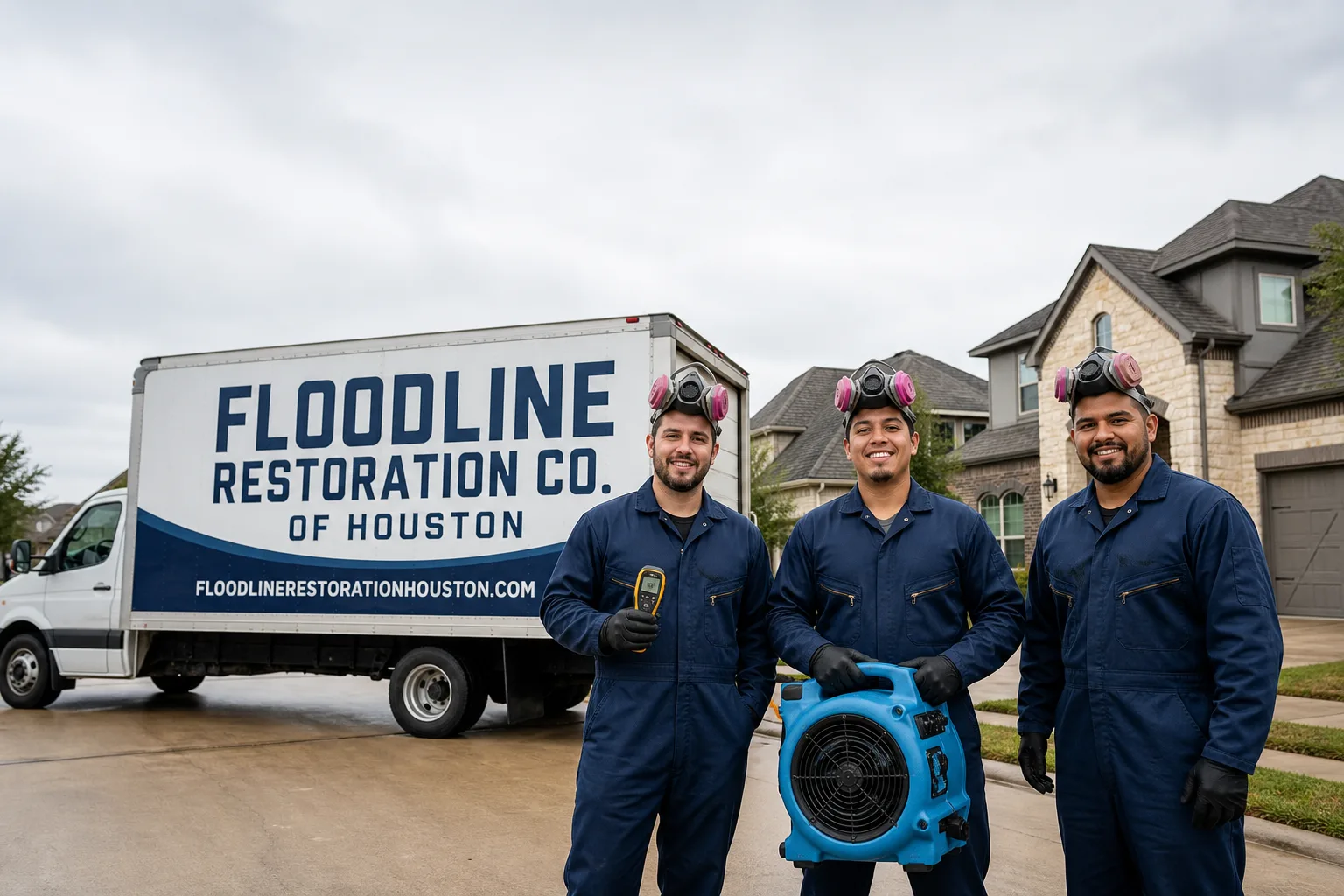
Fast, Reliable Mold Remediation Across New Territory
Mold remediation in New Territory usually runs $1,800-$6,500 for a typical 1990s slab-on-grade home, depending on how far moisture has wicked behind drywall and into ductwork. Most jobs in New Territory are completed within 5-10 days from first inspection to final air-quality clearance. If you’re seeing dark staining at the baseboards, catching a musty smell near the returns, or dealing with a pond backup that left water standing for more than 48 hours, call Floodline Restoration Co. at (888) 977-4690 and a live dispatcher will route a certified crew to your street the same day.
New Territory’s mold problems don’t look like the rest of Fort Bend County’s. They’re repeatable, street-wide, and tied to how this community was built. We understand that because we’ve worked it house by house since the major floods put this subdivision on the map.
Why New Territory’s 1990s Construction Makes Mold Worse Here
New Territory is a 1990s master-planned community in Fort Bend County built on the flat coastal prairie near the Brazos River corridor. That geography made it acutely vulnerable during Hurricane Harvey, when the Brazos crested well above flood stage and the engineered retention pond network, sized for typical Houston rain events, backed water uniformly across multiple subdivisions at once. A single storm can leave dozens of homes on the same street with identical waterlines at the same 18-inch mark.
The housing stock compounds the problem. Virtually all homes in New Territory date to the late 1980s through late 1990s, built on slab-on-grade foundations with brick veneer exteriors and standard paper-faced drywall interiors. Paper-faced drywall wicks moisture fast and feeds mold within 48-72 hours in this region’s persistent 70-90% relative humidity. When a pond overtops, water doesn’t just pool on floors. It runs into wall cavities, saturates the slab-edge channel where concrete meets brick, and climbs upward through shared stud bays by capillary action. By the time a homeowner sees staining at the baseboard, the colonization is already behind the wall.
Our crew worked three homes on the same street near the Brazos River corridor after a retention pond backup left identical waterlines at 18 inches. In each, the paper-faced drywall and fiberglass-backed vinyl were already colonized behind baseboards, and the Dri-Eaz drying logs showed humidity trapped in the slab-edge channel, requiring cut-and-remove down to the same stud bay before HEPA vacuuming and antimicrobial treatment. Same failure. Same floor plan. Same fix. That’s mold remediation in New Territory.
Why Floodline Restoration Co. Is New Territory’s Preferred Mold Remediation Company
Floodline Restoration Co. has served New Territory homeowners for over a decade, and the work here has a rhythm to it. The dispatch team knows that a pond failure on one street means calls from three more streets within the hour. The crews know the floor plans, the stud spacing, and where the HVAC returns pull spore-laden air from wet cavities in these specific homes. That local repetition means faster scoping, fewer surprises, and a written plan before any wall is opened.
We’re a full-cycle restoration company, not a mold-only subcontractor. The same background-checked, uniformed technicians who cut and remove the affected drywall handle the drying, the daily moisture readings, the antimicrobial treatment, and the rebuild of what needed removing. No mid-job handoff to a crew you’ve never met. No playing messenger between a mitigation company and a remodeler. One name, one standard, one written guarantee.
Every job in New Territory is backed by the 90-Day Done Right Promise, the Keystone Standard. If it’s not done right, we make it right. That’s in writing, no paperwork battles, no arguing. Curt Bowman founded this company in 2010 around a dispatch board, not a sales desk, and that’s still how it runs: a live person answers the phone at 2 a.m., every day, and a certified crew reaches New Territory the same visit.
Our Mold Remediation Services in New Territory
Mold Inspection & Testing
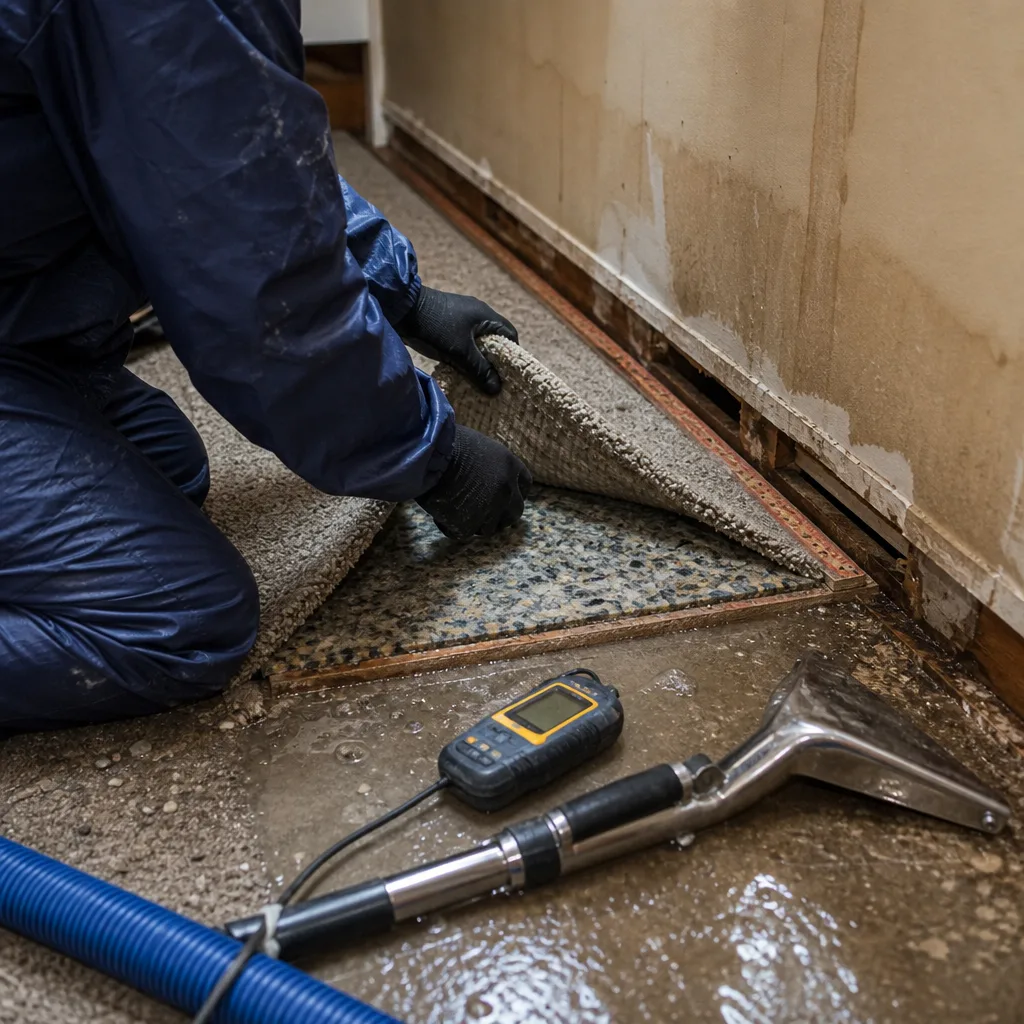
Before we cut anything, we map the moisture. In New Territory’s uniform 1990s construction, visible mold at one baseboard almost always means hidden growth in the stud bay, behind the brick veneer weep holes, and inside the nearest HVAC return. We use thermal imaging and moisture meters to trace the capillary rise, then take air and surface samples where they matter. You get a written scope with photos, a moisture map, and lab results before any remediation starts. No guesswork, no overselling.
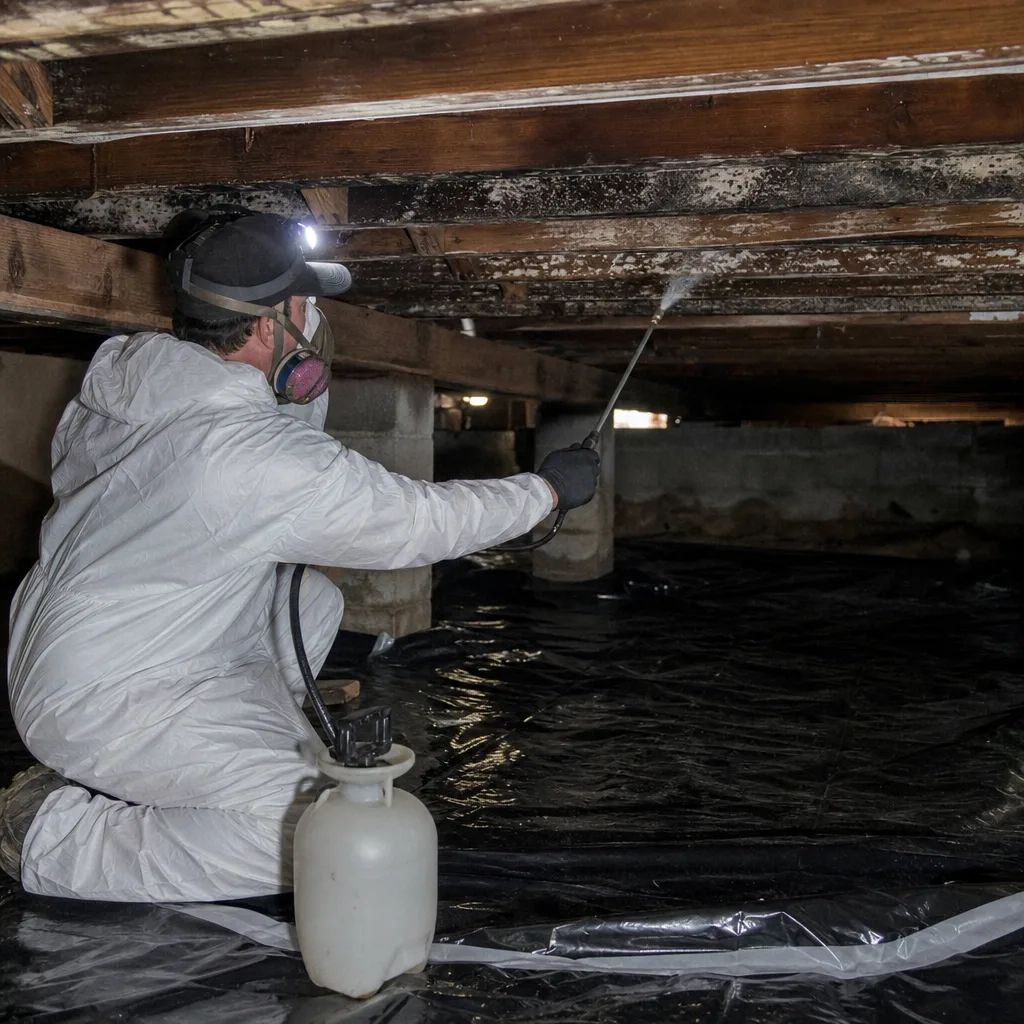
Mold Removal
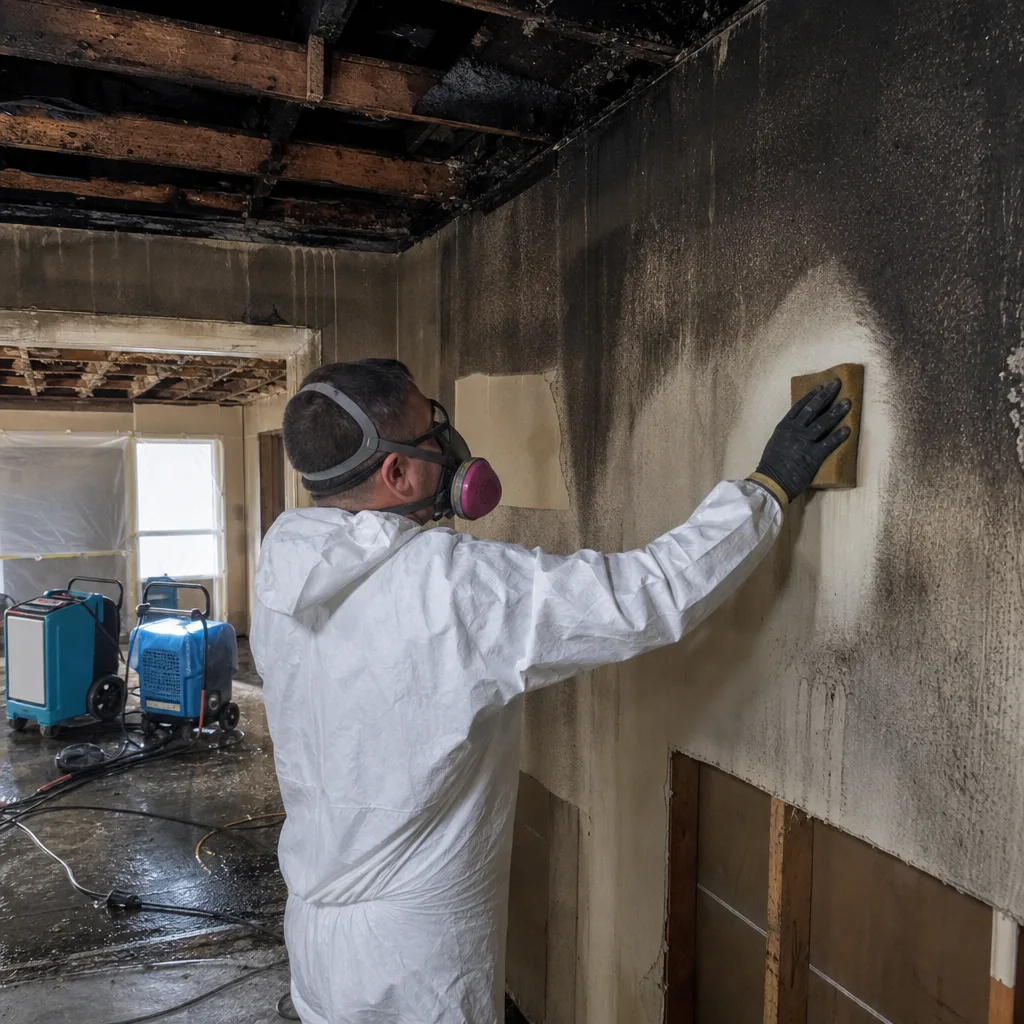
Mold removal in New Territory almost never means “wipe it down and paint over it.” The slab-edge channel in these homes traps humidity at the same elevation across every room, so we cut and remove affected drywall to the same stud bay line, bag it in containment, and dry the cavity to IICRC standards. HEPA vacuuming and antimicrobial treatment follow. This is the step where most cheap bids fall short, and it’s exactly the step that prevents the bloom from coming back next rain season. Our Mold Remediation team handles the full scope, from containment to clearance.
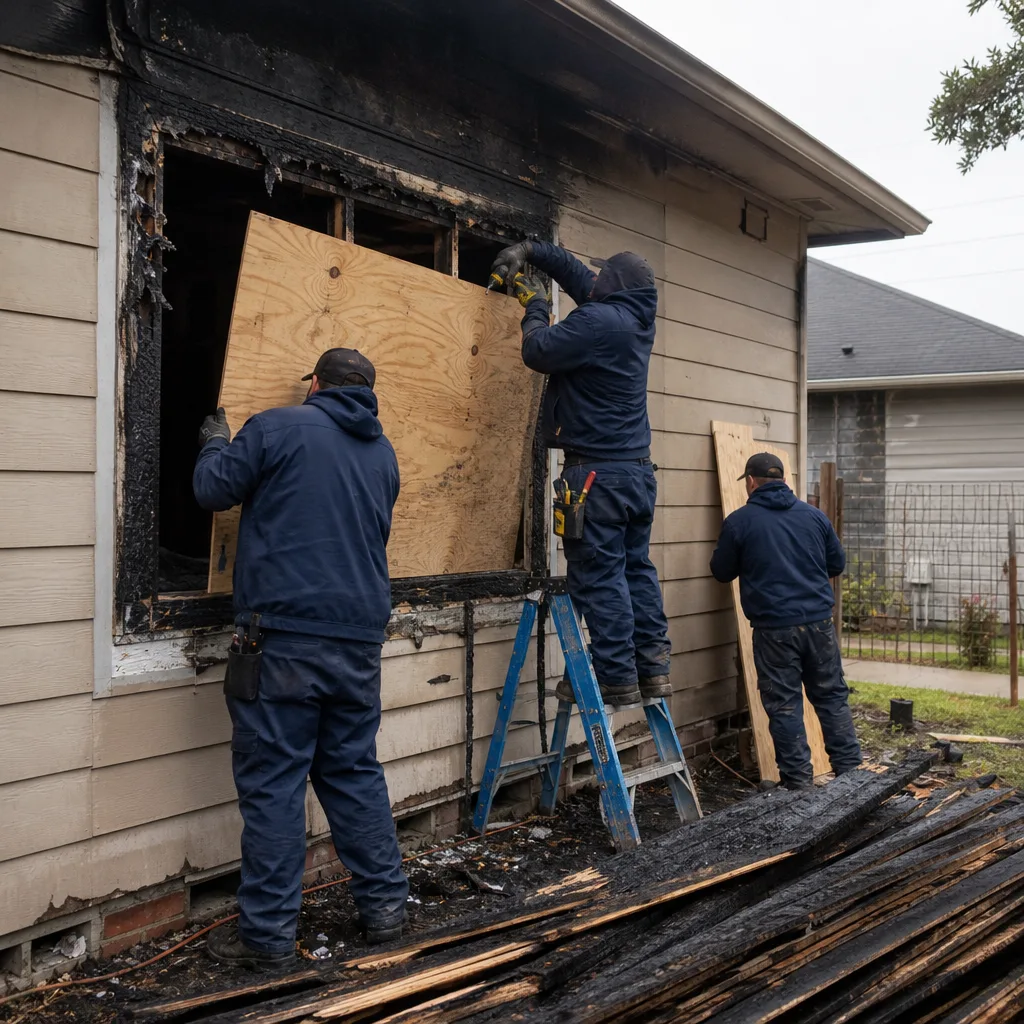
Black Mold Remediation
Black mold, typically Stachybotrys in this climate, thrives on the cellulose in paper-faced drywall after even a few inches of floodwater. It’s common in New Territory homes after pond overtopping because the water sits at the slab edge longer than the visible floodline suggests. We treat black mold as a full-containment job: negative air pressure, HEPA filtration, removal of all contaminated porous materials, and post-remediation verification testing. If you see dark green-black staining creeping up from the baseboard, don’t disturb it. Call and we’ll get eyes on it fast.
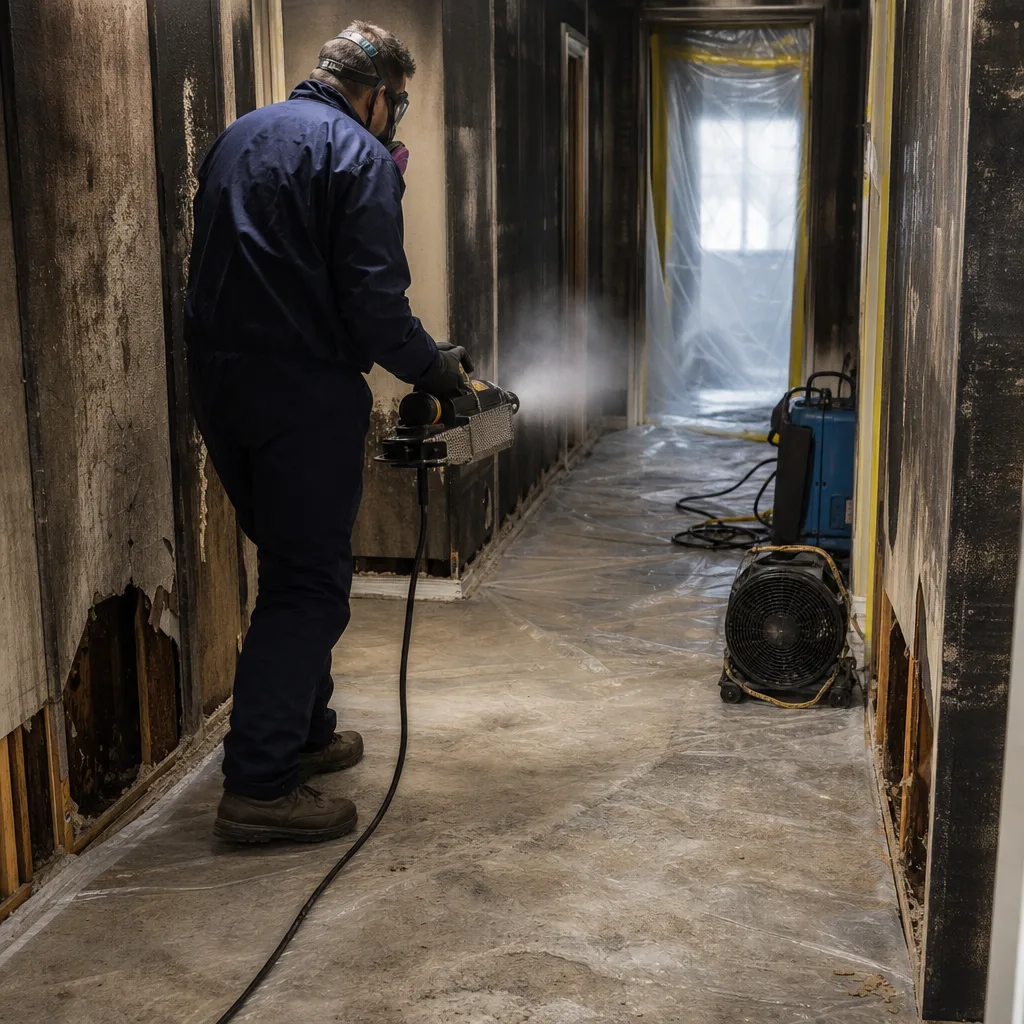
Air Quality Restoration
This is the service New Territory homeowners need most after a flood, because the identical slab-on-grade HVAC layouts here pull air from wall cavities into the supply plenums before visible growth ever appears. Mold spores from a wet stud bay can be in every room within 48 hours. We clean and sanitize the returns, supply ducts, coils, and plenums, then run HEPA air scrubbers until post-remediation air samples clear. If your house smells musty but you can’t see mold, check the air first. That smell is almost never “just old house” in New Territory.
Crawl Space Treatment
Some New Territory homes have partial crawl spaces at the slab transition, and after a pond backup those spaces hold moisture for weeks. Standing humidity there feeds mold under the floor system and pulls spores into the living space through the gaps around penetrations. We treat crawl spaces with moisture barriers, encapsulation where the structure allows, HEPA vacuuming, and antimicrobial application. The Dri-Eaz and Injectidry equipment we run in these spaces is the same professional-grade gear used on the big flood jobs.
What happens when you call
- 1
A real person answersNo phone trees - you reach a local pro.
- 2
You get an upfront price rangeHonest numbers before anyone is dispatched.
- 3
A background-checked tech heads outLicensed & insured, dispatched right away.
- 4
You approve before work beginsNothing starts until you say go.
Common Mold Problems We See in New Territory Homes
- Mold behind paper-faced drywall within 72 hours of pond overtopping. The slab edge meets brick veneer at the same elevation across uniform 1990s floor plans, and that’s where water sits longest. By the time baseboard staining appears, the cavity behind it is already colonized.
- HVAC contamination from wet wall cavities. Returns and supply plenums in these identical slab-on-grade homes pull spore-laden air from behind the walls. Visible growth in one room doesn’t mean the rest of the house is clean. It usually means the opposite.
- Recurring blooms from incomplete first treatments. Engineered retention ponds release water across whole subdivisions at once. A crew that treats only the visible waterline mark misses capillary rise in shared stud bays and under tile, and the mold comes back in three months.
- Slab-edge moisture trapping in brick veneer homes. The weep holes meant to drain brick veneer also let humid air reach the paper-faced drywall behind it. After any flood, that zone holds moisture longer than the open wall above it, so we always inspect and treat it.
Pricing for Mold Remediation in New Territory, TX
A straightforward mold removal in New Territory, one room with containment and HEPA cleanup, typically runs $1,800-$3,200. A whole-home remediation after a pond backup, with wall cut-and-remove, HVAC cleaning, and air quality restoration, falls in the $4,500-$6,500 range. Black mold jobs with full containment and post-remediation clearance testing land at the higher end, and crawl space treatments typically add $800-$1,500 depending on square footage and whether encapsulation is needed.
What drives cost here specifically is the slab-edge work. In New Territory’s uniform construction, we almost always have to remove drywall to the same stud bay line around exterior walls, and that’s additional cut, bag, and rebuild work that a “spray and walk” bid ignores. We give you a written scope with line items before any work starts, and we bill your insurance carrier directly. No surprises on the bill, and you never play messenger between us and the adjuster. Call (888) 977-4690 for a free estimate. Senior and veteran homeowners in New Territory always receive a 5% discount, and any repair over $250 qualifies for $50 off.
We Also Serve Cities Near New Territory
Floodline Restoration Co. of Houston provides Mold Remediation in New Territory and the surrounding communities. If you’re in Sugar Land, Stafford, Four Corners, or Mission Bend, the same certified crews, the same written scope process, and the same 90-Day Done Right Promise apply. Call (888) 977-4690 and a live dispatcher will route you to the nearest available crew.
Serving New Territory, TX - Our Local Coverage Area
We’re based in the New Territory area and know this community well. Use the map below to see our service coverage - if you’re nearby, we can almost certainly help.
FAQs - Mold Remediation in New Territory
Because New Territory’s 1990s homes are built with paper-faced drywall on slab-on-grade foundations, and the paper facing acts as a mold food source the moment it gets wet. Combined with Fort Bend County’s 70-90% relative humidity and minimal natural drainage on the flat coastal plain, mold colonization typically begins within 48-72 hours. The slab-edge channel where concrete meets brick veneer holds that moisture even longer, which is why growth appears behind baseboards before it shows on open walls. Call (888) 977-4690 the day the water recedes, not the day you see the stain.
The retention pond system creates street-wide, simultaneous water intrusion across homes with nearly identical construction. Instead of treating one isolated leak, remediation in New Territory means triaging dozens of same-model homes with moisture wicked to the same knee-high line and the same HVAC layouts pulling spores from wet cavities. That changes the approach: we scope for repeatable wall-cavity patterns, not one-off damage, and we check every home for slab-edge trapping even if the visible waterline looked shallow.
Yes, and it usually does before you ever see visible growth on the walls. In New Territory’s uniform slab-on-grade homes, the HVAC returns and supply plenums sit near the same wet wall cavities that floodwater enters first. The system pulls spore-laden air from behind the drywall and distributes it to every room within 48 hours. If you smell mustiness near a return vent after a pond event, treat it as an active HVAC contamination issue and call for air quality testing and duct cleaning. Estimates are free at (888) 977-4690.
In these homes black mold most often appears as dark green-black staining creeping upward from the baseboard line on exterior walls, especially where the brick veneer meets the slab. It may look dry or powdery at first, and it frequently smells earthy or musty before it becomes clearly visible. Don’t touch it, don’t scrub it, and don’t cover it with paint. Disturbing black mold releases spores and spreads contamination. Call us and we’ll contain it properly before removal.
If you notice a persistent musty odor in the floors or rooms above a crawl space, see condensation on ductwork or floor joists, or find white, gray, or green growth on wood framing, the crawl space likely needs treatment. In New Territory, the partial crawl areas at slab transitions hold humidity for weeks after a pond backup, and that trapped moisture feeds mold that eventually moves into the living space. We inspect with moisture meters and give you a written recommendation. Call (888) 977-4690 and a live person will schedule the visit.
Written by Curt Bowman, Owner at Floodline Restoration Co., serving New Territory, TX since 2010.