
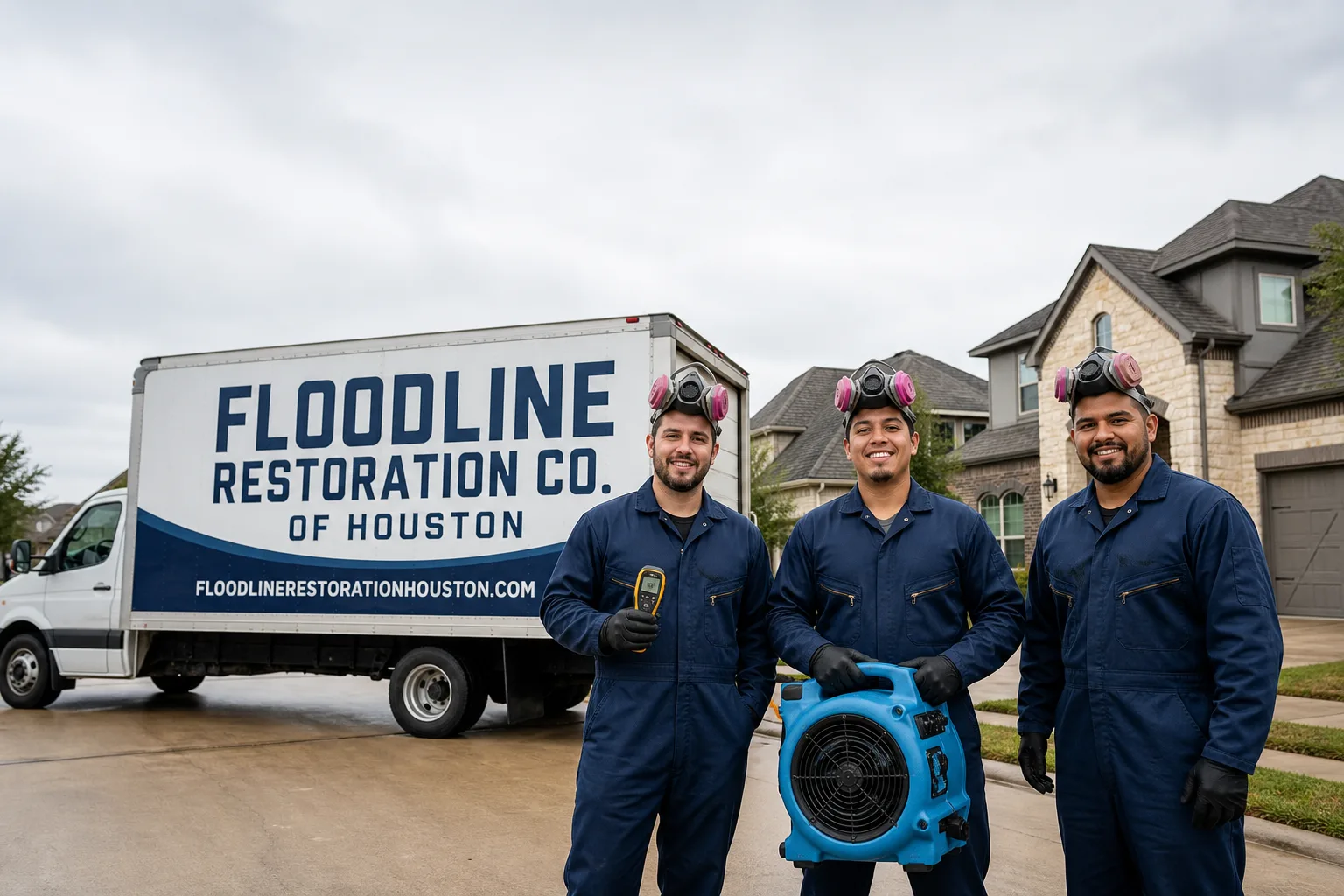
Fast, Reliable Reconstruction & Cleanup Across Houston
When a Houston home floods, the water recedes long before the real trouble shows up. Reconstruction and cleanup in Houston means pulling saturated drywall, opening walls that still look fine, and finding moisture where the eye can’t see it, often in slab ductwork or behind baseboards that were “dried” once before. Our crews cover every corner of Houston, from Meyerland to Kingwood, and we get to work the day you call. If you’re standing in a wet house right now, call (888) 977-4690 and a live person picks up, any hour, any day.
Why Floodline Restoration Co. of Houston Is Houston’s Preferred Reconstruction & Cleanup Company
Floodline Restoration Co. started in 2010, built around a dispatch board, not a sales desk. Curt Bowman founded this company with a simple idea: the same crew that extracts the water should be the crew that rebuilds the wall. That matters in Houston, where the difference between a good rebuild and a recurring mold problem is often a missed moisture reading or a handoff between companies that don’t talk to each other.
Houston homeowners have called us after hurricanes, after burst pipes in January freezes, and after slow leaks that rotted a bathroom floor over two years. The reviews that come back, whether from Bellaire or Galena Park, tend to mention the same things: the technicians showed up when they said, they were uniformed and background-checked, and the bill matched the written scope. That’s not an accident. It’s how we run every job.
Our Reconstruction & Cleanup team works with IICRC and RIA certified technicians who carry professional-grade equipment from B-Air and Injectidry on every truck. When a Houston homeowner calls at 2 a.m. with water running through a ceiling, a live dispatcher answers, and a crew reaches the house the same visit. We’re not a sales organization that subcontracts the work. We’re the company that stands behind it, in writing, for 90 days.
Our Reconstruction & Cleanup Services in Houston
Full-Service Reconstruction
Full-service reconstruction in Houston means taking a house from stripped studs back to finished rooms: framing, drywall, trim, paint, flooring, and fixtures. Houston’s housing stock makes this more complicated than it looks. A 1960s slab-on-grade home in Katy and a 1920s pier-and-beam bungalow in the Heights need completely different drying protocols before reconstruction can begin. We handle both. After catastrophic flooding, we reconstruct with materials that hold up to Houston’s humidity, and we never close a wall until the moisture log says it’s dry. The 90-Day Done Right Promise means if something isn’t right after we leave, we come back and fix it. No arguing.
Drywall & Flooring Repair
Saturated drywall in Houston has a short window: mold can colonize within 24 to 48 hours when ambient humidity sits above 90%. We don’t wait to see what happens. We cut and remove compromised drywall quickly, map the moisture behind it, and dry to the standard, not to a calendar. Flooring repair runs the same way. Houston homes with original hardwood over pier-and-beam foundations dry differently than engineered wood glued to a slab. We know which floors can be saved and which need replacement, and we document everything for the insurance claim.
Contents Restoration & Pack-Out
When a Houston home floods, the furniture, clothes, and keepsakes need somewhere dry to go while the house is rebuilt. We pack out contents, inventory them, clean what can be saved, and store them until reconstruction is complete. This is not a moving service. It’s a restoration process, with every item logged and photographed. For homes in serial-flood neighborhoods like Meyerland that have been through this before, we adjust: many residents have already inventoried their contents once, and we respect that, working from their existing documentation where it helps and adding our own where it doesn’t.
Carpet & Upholstery Cleaning
Floodwater in carpet is never just water. In Houston, it’s bayou overflow, silt, sewage, and whatever the storm carried in. We clean carpet and upholstery with professional extraction and cleaning methods that remove contaminants, not just visible stains. For homeowners who want to save carpet that wasn’t fully saturated, we assess honestly, clean thoroughly, and tell you plainly when replacement is the smarter call. No pressure, just a straight answer from someone who’s pulled a lot of muddy carpet in this city.
What happens when you call
- 1
A real person answersNo phone trees - you reach a local pro.
- 2
You get an upfront price rangeHonest numbers before anyone is dispatched.
- 3
A background-checked tech heads outLicensed & insured, dispatched right away.
- 4
You approve before work beginsNothing starts until you say go.
Trusted Brands We Service in Houston
Our Houston crews work with IICRC and RIA certified methods and run equipment from B-Air and Injectidry on jobs across the city. Having the right gear in the truck matters here, because Houston summers don’t allow for slow drying. A dehumidifier that underperforms in normal conditions may not keep up with 90% humidity and a slab that holds water like a bowl. We stock the consumables and parts our teams need locally, so a replacement filter or injection panel doesn’t mean a day lost waiting on a shipment. Fast turnaround in Houston isn’t a convenience. It’s the difference between saving a house and rebuilding one.
Common Reconstruction & Cleanup Problems We See in Houston Homes
- Mold in drywall within 48 hours. Houston’s 90%+ ambient humidity means saturated drywall and insulation colonize fast. By the time a wall looks wet, mold may already be working behind it. We pull and replace affected material quickly, and we treat framing before reconstruction begins.
- Floodwater trapped in slab ductwork. Many 1960s through 1990s Houston tract homes have HVAC ducts embedded in or run beneath the slab. Standard extraction equipment cannot reach those cavities. We use Injectidry and specialized drying techniques to address that hidden moisture before it becomes a recurring mold problem after the rebuild.
- Post-rebuild flood retrofits that complicate demolition. Homes in Meyerland and other Brays Bayou neighborhoods often have elevated electrical panels, flood-vented foundation walls, and lifted mechanical equipment installed by a previous contractor. If a crew doesn’t document those retrofits first, demolition can damage them. We document before we demo.
- The two-track drying problem. Pier-and-beam homes in the Heights and Montrose dry faster because air moves beneath the floor. Slab-on-grade homes in Katy, Pearland, and Sugar Land hold water longer. A restoration company that treats both the same will miss moisture in one of them. Our crews adjust drying protocols based on which side of Loop 610 we’re working.
Pricing for Reconstruction & Cleanup in Houston, TX
We Also Serve Cities Near Houston
Beyond Houston proper, our crews work regularly in Bellaire, West University Place, Galena Park, and Jacinto City. Each has its own housing stock and flooding patterns. Whether you’re in a 1950s bungalow in West University Place or a slab-on-grade tract home in Galena Park, our Reconstruction & Cleanup in Houston team knows the flood history of the neighborhoods and the drying routes that actually work. We’ll be there when we say.
Serving Houston, TX - Our Local Coverage Area
We’re based in the Houston area and know this community well. Use the map below to see our service coverage - if you’re nearby, we can almost certainly help.
FAQs - Reconstruction & Cleanup in Houston
Why does reconstruction in Houston require different drying protocols for pier-and-beam homes in the Heights versus slab-on-grade homes in Katy?
Pier-and-beam homes in the Heights sit on raised foundations with airflow beneath the floor joists, so water drains and evaporation happens faster. Slab-on-grade homes in Katy sit directly on a concrete slab, often with HVAC ductwork beneath it, and water has nowhere to go. A crew that uses the same drying protocol for both will under-dry the slab home and over-equip the pier-and-beam. We adjust based on foundation type, because closing a wall too early in Houston means mold behind it. Call (888) 977-4690 to schedule an assessment, and we’ll map the moisture in writing before any work begins.
How do you handle post-rebuild flood-mitigation retrofits like elevated electrical panels during a reconstruction project in Meyerland?
We document them before demolition starts. In Meyerland along Brays Bayou, it’s common to find elevated electrical panels, flood-vented foundation walls, and lifted mechanical equipment installed after Harvey or the 2015 and 2016 floods. Those retrofits are part of the house now. A crew that doesn’t check will hit them with a sledgehammer. Our supervisors photograph and note every retrofit, work around it where possible, and repair or re-install it if it’s damaged. The documentation goes to you and to your carrier. If you’ve got a home in Meyerland with prior flood retrofits, call (888) 977-4690 and we’ll inspect the structure before we touch anything.
What is the realistic timeline for mold to appear in Houston drywall after a flood, and how does that affect your reconstruction schedule?
Mold can colonize saturated drywall and insulation within 24 to 48 hours in Houston, especially from May through October when ambient humidity routinely exceeds 90%. That means reconstruction cannot wait for a convenient schedule. We pull affected drywall early, treat the framing, and verify the dry standard with daily moisture readings before installing new material. The drying phase usually adds 3 to 5 days to a reconstruction timeline in Houston, and cutting it short is how homes end up with a smell that never goes away. Our crews won’t close a wall on a calendar. They close it on the moisture log. For a realistic timeline on your specific property, call (888) 977-4690.
Can you rebuild a slab-on-grade home in Houston without addressing the HVAC ductwork that flooded?
You could, but you’d be rebuilding over a hidden mold source. Many 1960s through 1990s slab-on-grade homes in Houston have ductwork embedded in or running beneath the slab. When floodwater enters those ducts, standard extraction equipment can’t reach it. If a contractor rebuilds the walls and floors without drying or replacing that ductwork, the moisture stays, and the mold returns after the job is finished. We inspect ductwork on every slab home we reconstruct in Houston, dry what can be dried, and replace what can’t. It’s not an add-on. It’s part of doing the job right. Call (888) 977-4690 to have a technician assess your ductwork in person.
What makes contents restoration and pack-out different for Houston homes that have been flooded multiple times?
Houston homeowners in serial-flood neighborhoods like Meyerland have often been through contents restoration before. They may already have inventories from previous claims, and they know which items can’t be saved. We work with that. We don’t re-inventory from scratch when the homeowner has solid documentation; we verify, update, and add what’s missing. For items that have been through multiple floods, we give honest assessments: some things can be cleaned again, and some have reached the end of their useful life. Either way, the pack-out is documented with photographs for your carrier. Call (888) 977-4690 and we’ll walk you through the process, including direct billing to your insurance.
Contact Floodline Restoration Co. of Houston
If your Houston home has flood damage, a burst pipe, mold, or needs reconstruction after a loss, don’t wait to see what dries on its own. In this city, waiting 48 hours can mean the difference between a repair and a full gut. Call (888) 977-4690 right now. A live person answers, any hour, any day. We’ll schedule a certified crew to assess the damage, give you a written scope, and get to work, with direct insurance billing and the 90-Day Done Right Promise in your hands. Done right, and backed in writing. That’s the Floodline Restoration Co. standard in Houston.
Written by Curt Bowman, Owner at Floodline Restoration Co., serving Houston since 2010.