
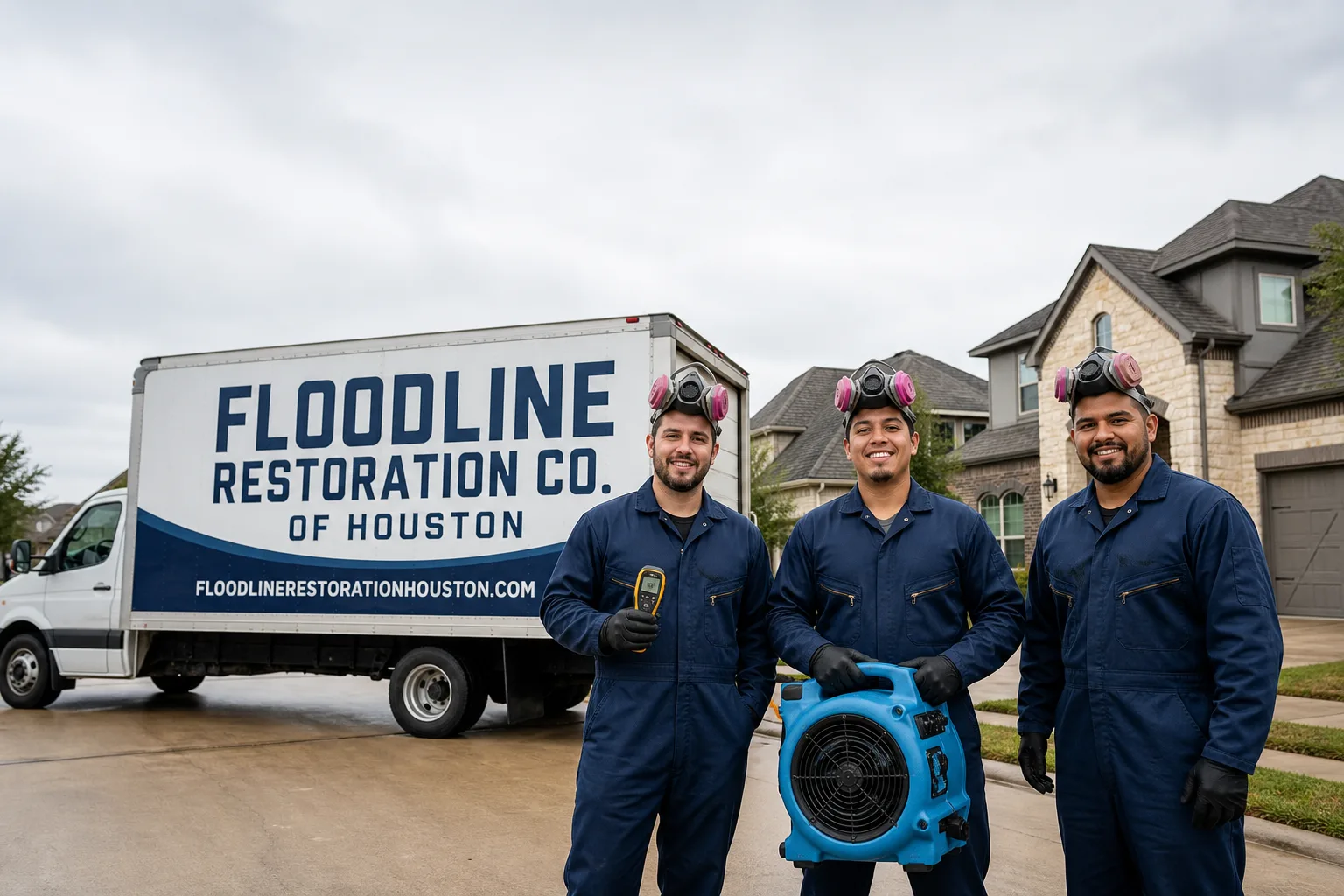
Fast, Reliable Mold Remediation Across Wharton
Mold remediation in Wharton, TX typically costs between $1,400 and $4,200 for a standard single-room job, with crawl space treatment running higher due to the access and moisture challenges of pier-and-beam construction. We reach homes across the 77488 zip code fast, because we know what a stalled response costs you here. When the Colorado River floods, mold starts colonizing within 48 hours. Call (888) 977-4690 and a live person answers, day or night.
Wharton sits on low Gulf Coast prairie where river flooding is a fact of life, not a fluke. Homes here, many of them wood-frame and pier-and-beam, built before modern flood-elevation codes, hold moisture in ways newer construction doesn’t. That’s why our crews treat every Wharton job with a local’s understanding of what river water does to a crawl space. We’re not just responding to visible mold. We’re hunting the moisture source that keeps bringing it back.
Why Floodline Restoration Co. of Houston Is Wharton’s Preferred Mold Remediation Company
We’ve worked in Wharton long enough to know that half the mold in this town lives where homeowners never look: under the floor. Our techs have pulled back access panels on Boling Highway homes and found standing water from a flood two seasons prior, still feeding colonies under the joists. That’s the difference between a company that treats what you can see and one that solves the problem. We do the second.
Every Wharton job gets the same standard: a written scope before work starts, a moisture log handed over at the end, and the 90-Day Done Right Promise in writing. That promise isn’t marketing. It’s our name on the line. If the mold returns inside 90 days because we missed something, we’re back to make it right, no paperwork battle, no argument. Curt Bowman built the company on that principle in 2010, and it hasn’t changed.
We answer the phone with a person at 2 a.m. because river flooding doesn’t wait for business hours. Our dispatchers coordinate from our Dallas-Fort Worth office, but the crews that knock on your door in Wharton are local, background-checked, uniformed, and trained to IICRC standards. They’ll walk your property, read the moisture map, and tell you plainly what needs done and what doesn’t.
Our Mold Remediation Services in Wharton
We offer the full scope of Mold Remediation work for Wharton homes, from first inspection to final clearance. Here’s how we approach the most common jobs in this area.
Mold Inspection & Testing in Wharton
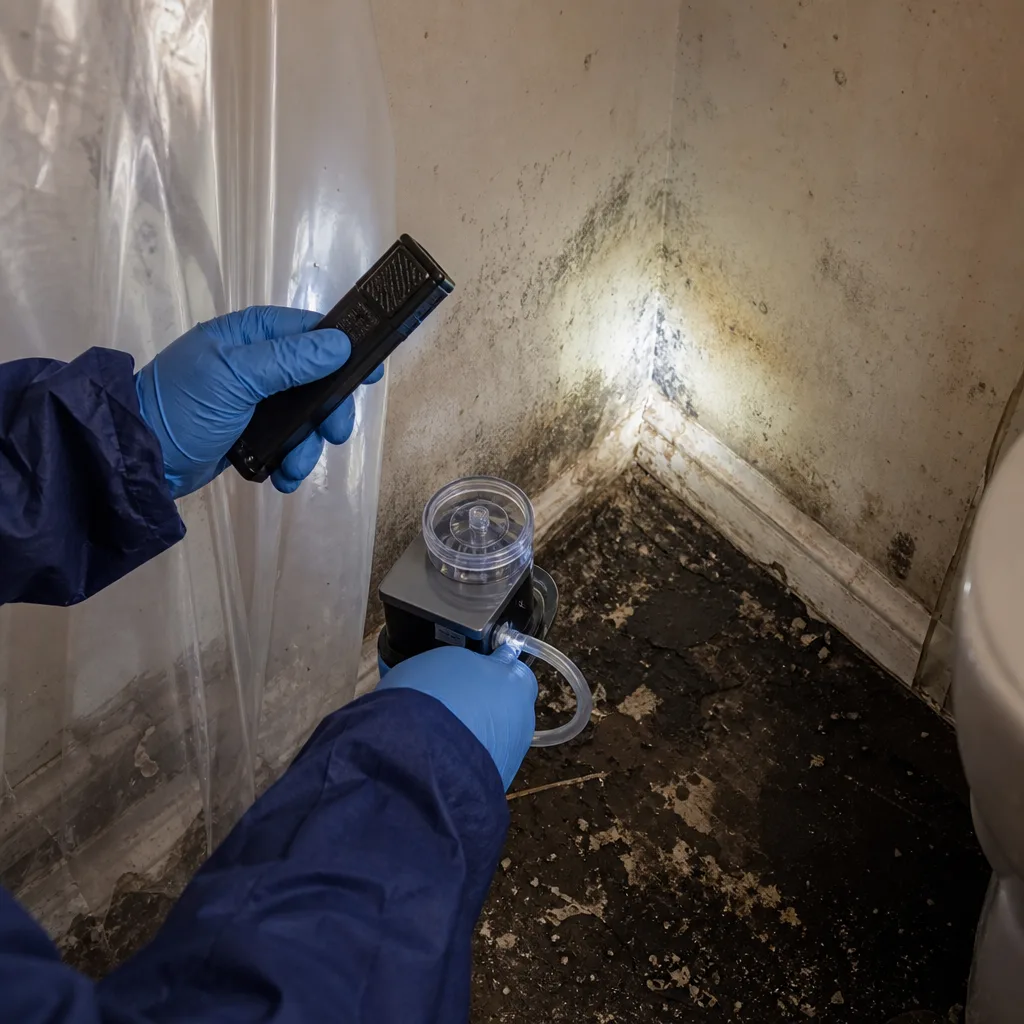
We inspect for moisture first and mold second, because in Wharton the two are never far apart. Our techs use moisture meters to map wet framing, check sill plates for rot, and sample air quality before and after remediation. You get a written report that tells you exactly what we found, where it is, and what it’ll take to fix it. No vague “you have a mold problem” hand-waving.
Crawl Space Treatment in Wharton
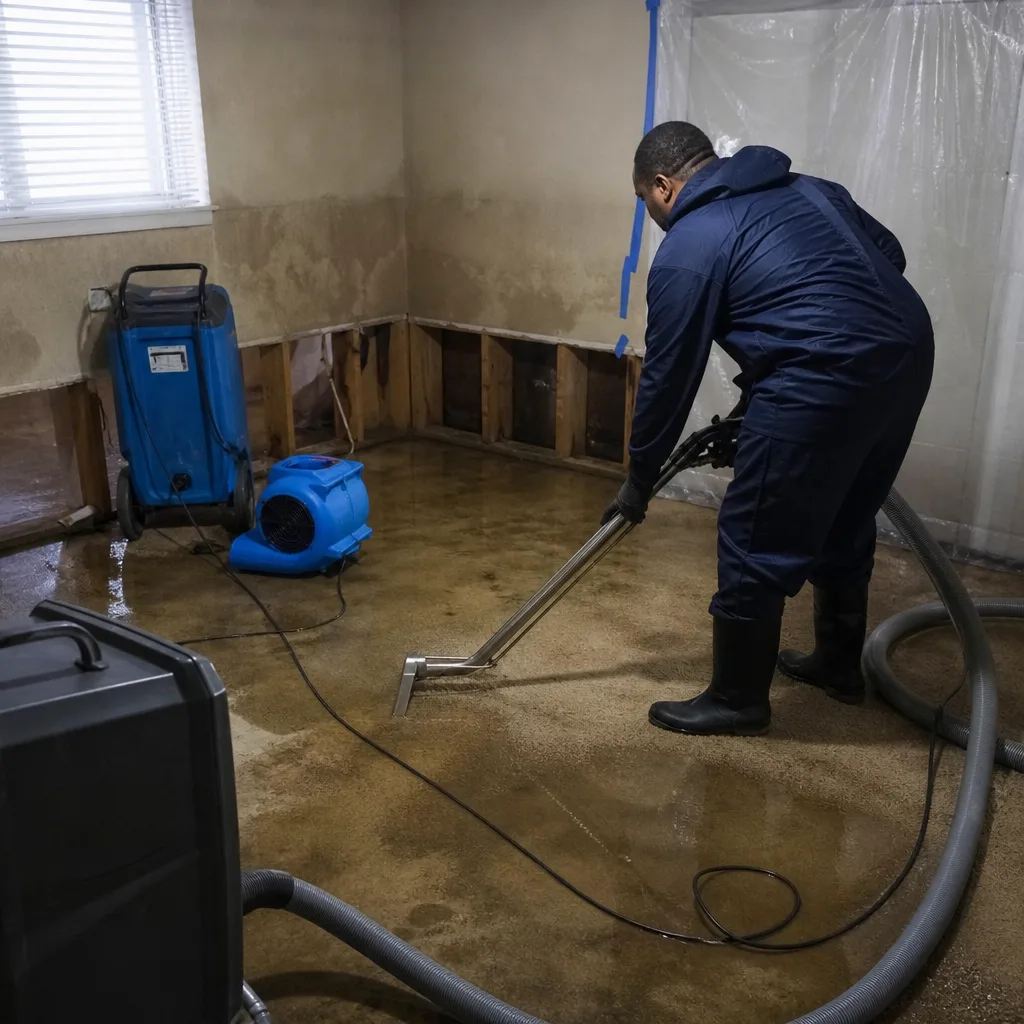
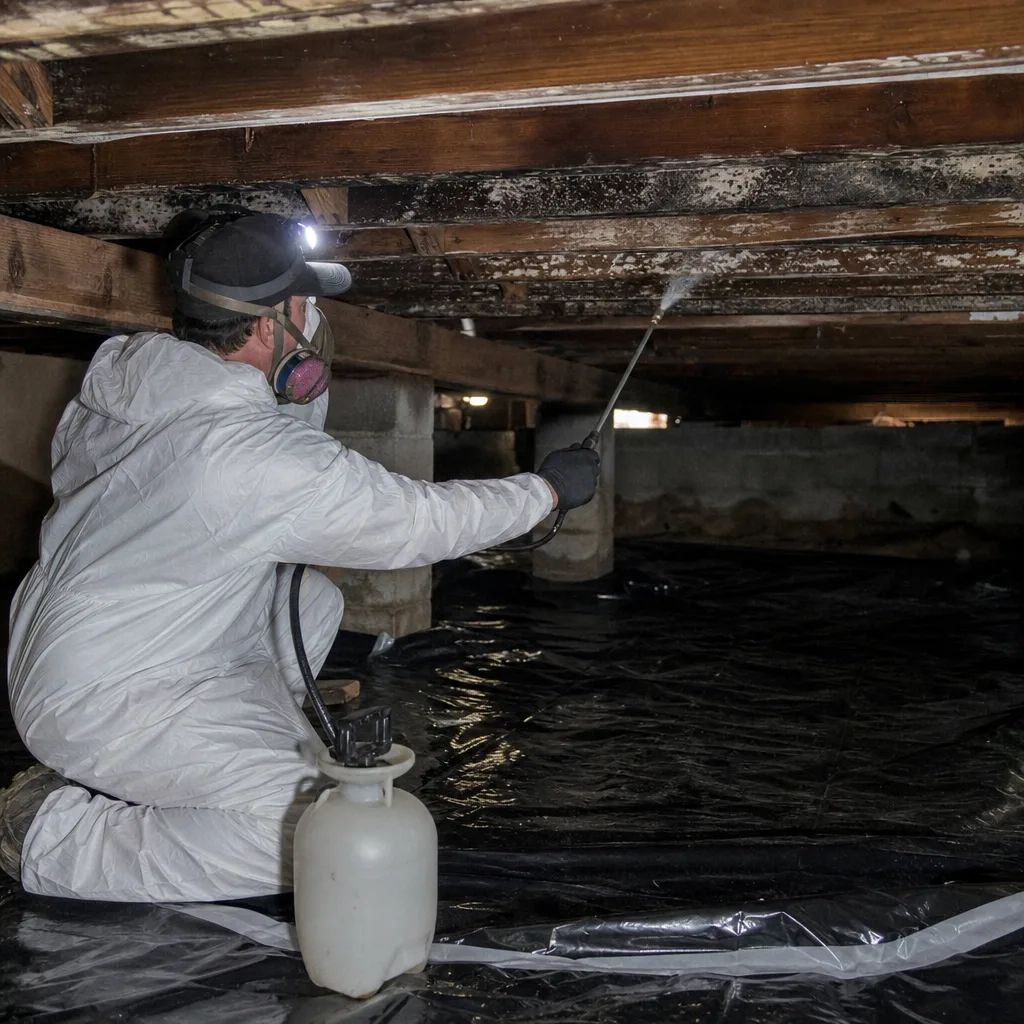
This is the service Wharton homeowners need most, and the one they rarely know to ask for. Pier-and-beam crawl spaces here act as humidity chambers after any flood event, even a minor one. We use Injectidry to pull moisture from subfloor sheathing and Dri-Eaz dehumidifiers to drive the space below 50% RH, then treat the wood framing with antimicrobials before sealing. Ignoring the crawl space is how you end up paying for mold remediation twice.
Black Mold Remediation in Wharton
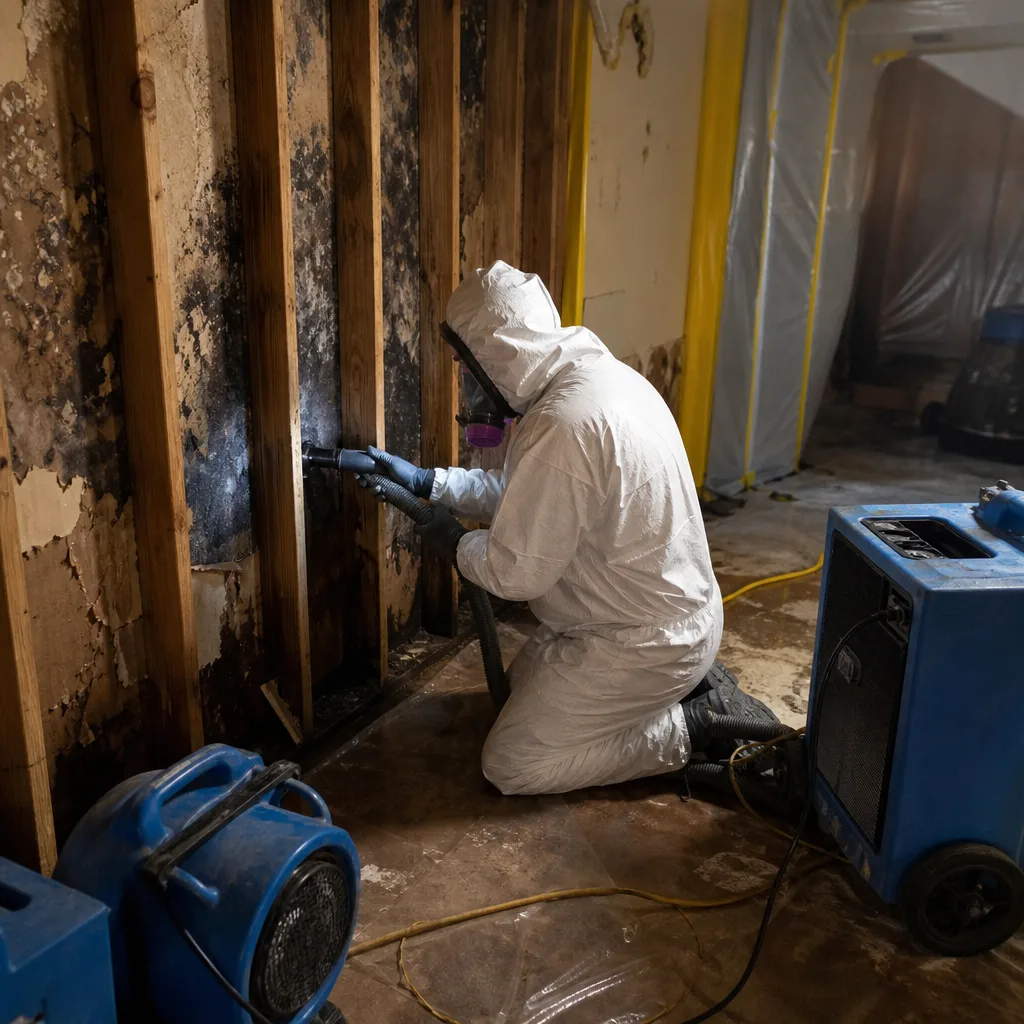
Stachybotrys, the “black mold” people worry about, thrives in the constant-damp conditions Wharton’s river flood cycles create. It’s common in the lower wall cavities and subfloor of homes that took even a few inches of Harvey water. We contain the affected area, remove contaminated material, treat the surrounding framing, and verify the air is clean before we leave. This isn’t a spray-and-walk job. It’s structural hygiene.
Air Quality Restoration in Wharton
After remediation, the air inside a Wharton home still carries mold spores unless it’s addressed directly. We run HEPA air scrubbers during the job and do a post-remediation air sample you can compare against the baseline we took at inspection. The goal is simple: the air in your house should test like the air outside. When it does, we’re done. When it doesn’t, we keep working.
What happens when you call
- 1
A real person answersNo phone trees - you reach a local pro.
- 2
You get an upfront price rangeHonest numbers before anyone is dispatched.
- 3
A background-checked tech heads outLicensed & insured, dispatched right away.
- 4
You approve before work beginsNothing starts until you say go.
Trusted Brands We Service in Wharton
Most of our Wharton work happens in mid-century wood-frame homes, not custom builds, and that shapes the equipment we bring. We run Dri-Eaz and XPOWER dehumidifiers sized for high-humidity Gulf Coast conditions, not the lighter-duty units that work fine inland. Our techs carry Injectidry mat systems for drying subfloor and wall cavities that box fans can’t reach. The brands matter because the moisture load here is different. Plain and simple.
Common Mold Remediation Problems We See in Wharton Homes
- Remediating visible mold but skipping the crawl space. River sediment water wicks up through piers and rots sill plates unseen. The wall mold you see upstairs is often feeding on moisture you can’t see under the floor.
- Using dehumidifiers sized for drier climates. Wharton’s summer relative humidity routinely exceeds 80%. Standard-capacity equipment can’t pull surfaces dry enough to prevent regrowth within days, so we bring higher-capacity gear.
- Treating only the visible flood line on walls. In wood framing, capillary action carries moisture two to three feet above the water line. That hidden moisture transports mold spores upward long after the visible staining is cleaned.
- Mistaking a dried-out surface for a dry structure. Sheetrock can feel dry to the touch while the studs behind it still hold 30% moisture content. We take daily readings until framing meets the dry standard, not until the wall feels okay.
Most of these problems trace back to one thing: Wharton’s river-flood pattern. When the Colorado River overtops its banks, water sits inside structures for days, not hours. That standing water degrades from Category 1 clean water to Category 3 contaminated water before extraction teams can respond. What started as rainwater becomes sewage-laced floodwater, carrying pathogens into your studs. Treating that properly means addressing the crawl space and the framing, not just the drywall.
Pricing for Mold Remediation in Wharton, TX
A typical single-room mold remediation in Wharton runs $1,400-$2,800. A full crawl space encapsulation and treatment on a pier-and-beam home generally falls between $3,500 and $7,500 depending on square footage and the extent of sill plate damage. Black mold remediation involving wall cavity removal adds $800-$1,500 per affected wall section. Air quality testing and post-remediation verification typically adds $350-$600.
What moves the number? Access. A crawl space with 18 inches of clearance costs less to treat than one with 8 inches. The condition of your sill plates matters too. If Harvey water sat against them for weeks, you may be looking at structural repair on top of mold removal. That’s the honest truth about Wharton homes. We give you a written scope with line-item pricing before any work begins, so you know the number standing on your porch and the number on your bill are the same.
We bill your insurance carrier directly when the job is covered. You don’t play messenger between us and the adjuster. We document everything with photos and moisture readings, then hand the file to the carrier. Current offers: $50 off any repair over $250, the $89 seasonal tune-up, and a 5% discount for seniors and veterans, always. Call (888) 977-4690 for a free estimate.
We Also Serve Cities Near Wharton
Our crews work throughout Wharton County and into the surrounding communities. If you’re in El Campo, Rosenberg, Greatwood, or Richmond and dealing with mold after a flood or humidity event, we’ll come out the same way: live dispatch, written scope, done right. You can reach us at the same number, (888) 977-4690. Read more about our Mold Remediation in Wharton coverage and nearby service areas.
Serving Wharton, TX - Our Local Coverage Area
We’re based in the Wharton area and know this community well. Use the map below to see our service coverage - if you’re nearby, we can almost certainly help.
FAQs - Mold Remediation in Wharton
Mold returns in Wharton homes because the moisture source was never eliminated. In pier-and-beam houses, floodwater trapped in the crawl space keeps feeding the subfloor and framing even after the visible wall mold is removed. The Colorado River flood pattern here means water sits long enough to soak into structural wood, not just surface materials. If your previous remediation didn’t address the crawl space and bring framing below 50% RH, the mold simply waited and regrew. Call (888) 977-4690 and we’ll map the moisture source before we treat anything.
Yes, in Wharton it usually does. Even when floodwater never enters the living space, groundwater surface flooding saturates the soil under your house, and that moisture evaporates upward into the floor system. With summer humidity above 80%, the crawl space becomes a mold growth chamber. We’ve treated dozens of Wharton homes where the only water entry was in the crawl space, and the visible mold upstairs was a symptom of that hidden saturation.
River flooding degrades water from Category 1 to Category 3 within 24 to 48 hours. The Colorado River carries sediment, agricultural runoff, and sewage overflow, and once that water sits in your home for more than a day, it’s treated as contaminated. That changes the remediation protocol: Category 3 requires full removal of porous materials like drywall and carpet, not just drying. It also means the crawl space framing that wicked up that water needs antimicrobial treatment, not just dehumidification.
Realistically, no. Wharton’s ambient humidity works against you. Box fans and open windows will dry drywall surfaces eventually, but the framing inside walls and under floors, where mold actually establishes, won’t drop below 50% RH without high-capacity dehumidification. The window for effective drying is roughly 48 hours. After that, you’re incubating mold rather than preventing it. We’ve pulled apart walls in Wharton homes that looked dry on the surface and found green colonies thriving against the studs.
The biggest mistake is treating the visible water line as the boundary of the damage. River sediment water wicks up through wood framing two to three feet beyond where the water actually reached. Homeowners paint over the stain, replace a few feet of drywall, and never address the capillary rise in the studs and sills. Within a season, mold is back, and now it’s inside the wall. A proper Wharton flood response means probing the framing, drying the cavity, and treating the subfloor, not just patching the drywall line.
If you suspect mold in your Wharton home, whether you see it or just smell that musty crawl space odor after a wet season, call us. We’ll send a crew, do a real assessment with moisture meters and air sampling, and tell you in plain English what needs doing. Estimates are free. The number is (888) 977-4690. A live person answers.
Written by Curt Bowman, Owner at Floodline Restoration Co. of Houston.