
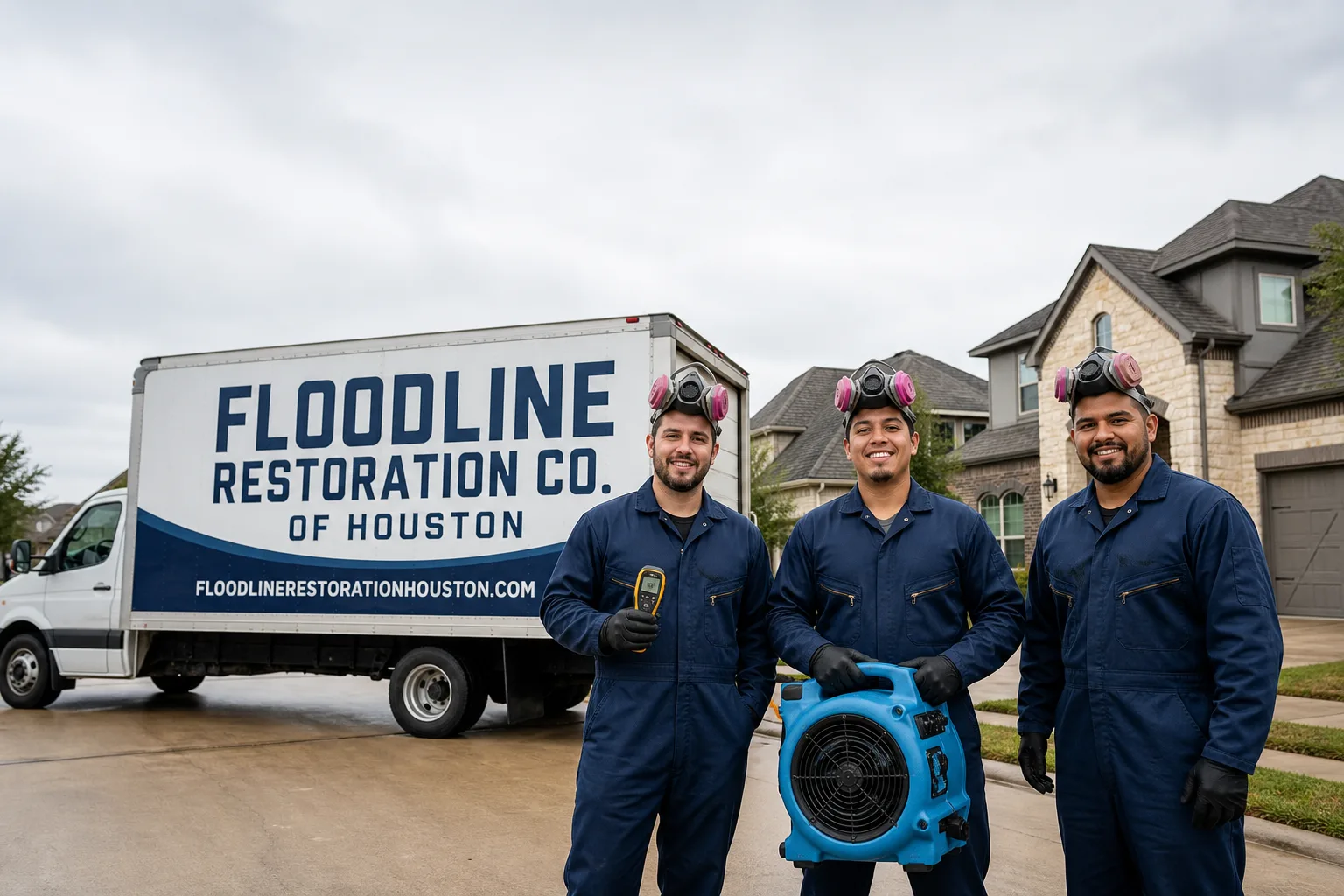
Fast, Reliable Mold Remediation Across Sealy
Mold remediation in Sealy typically costs $1,500-$6,000 depending on how far the growth has spread, and because we keep crews stationed within reach of Austin County, we can usually have a certified technician at your door within hours, not days. If you’ve spotted discoloration on baseboards, caught a musty smell in the hallway, or noticed warping around your pier-and-beam floor vents, call (888) 977-4690 now. We’ll walk you through what we’re seeing, what it’ll take to fix, and what your insurance carrier may cover.
We’ve worked inside enough Sealy homes to know that mold here rarely announces itself. It starts in the crawlspace, behind a kitchen cabinet, or under a bathroom vanity, feeding on moisture that lingers long after the rain stops. The flat, clay-heavy ground under Sealy holds water against piers and slab edges for days, and that’s where the trouble starts. Our crews know exactly what to look for before it spreads into living space.
Why Floodline Restoration Co. of Houston Is Sealy’s Preferred Mold Remediation Company
Sealy homeowners call us because we answer the phone with a live dispatcher at any hour, and because we show up with a written scope of work before any equipment comes off the truck. Curt Bowman founded this company in 2010 around a dispatch board and a simple rule: the same certified crew that reads the moisture map on day one handles the daily readings until the dry standard is met. No mid-job handoff. No inherited crew you’ve never met.
Our Mold Remediation team has walked through 1940s pier-and-beam cottages off North Meyer Street and newer slab homes along the I-10 corridor alike, and we know the difference in how each fails. That matters when your claim hinges on whether the moisture came from groundwater migration or a hairline pipe leak. Background-checked, uniformed technicians trained to IICRC, RIA, and IFA standards do the work, and every job carries the 90-Day Done Right Promise in writing. If it’s not done right, we make it right. No arguing.
Serving Sealy means understanding that the nearest big-contractor hubs sit 40-45 miles east in the Houston metro, and that during the same regional storm that floods your crawlspace, those resources get stretched thin. We coordinate dispatch and scheduling from our Dallas-Fort Worth office, but our crews work locally in Austin County. That means when you call us at 2 a.m. after a squall line rolls through, you’re not waiting on a crew fighting Beltway 8 traffic by dawn. We’ll be there when we say.
Our Mold Remediation Services in Sealy
Mold Inspection & Testing
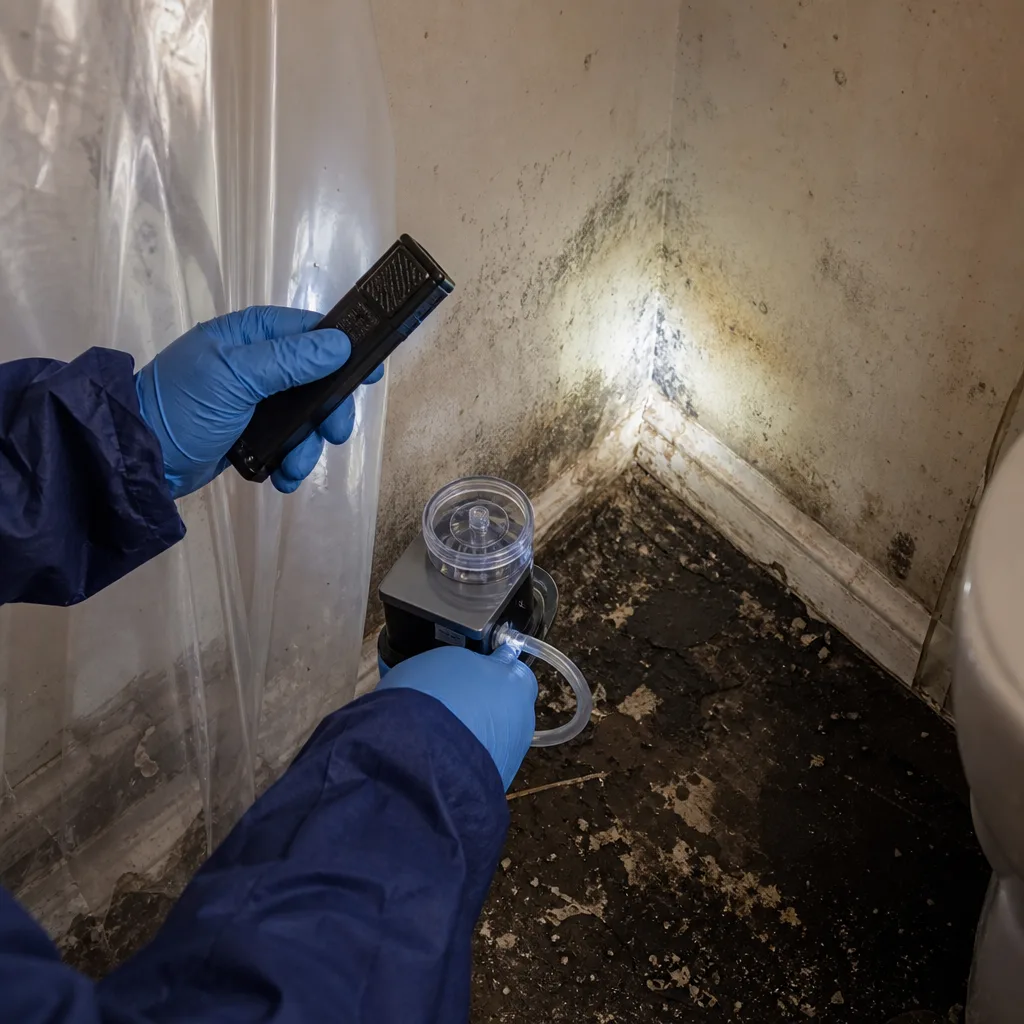
A proper mold inspection in Sealy starts with moisture mapping, not just a visual sweep. Because Austin County’s expansive clay soils wick water upward into crawlspaces and against slab edges for days after heavy rainfall, hidden reservoirs of trapped moisture are common even when walls and ceilings look dry. We use moisture meters and thermal imaging to find those reservoirs before they bloom into full colonization. If testing is needed, we take air and surface samples and send them to an independent lab. You get a written report that names the mold, the moisture source, and the scope of what needs to come out.
Mold Removal
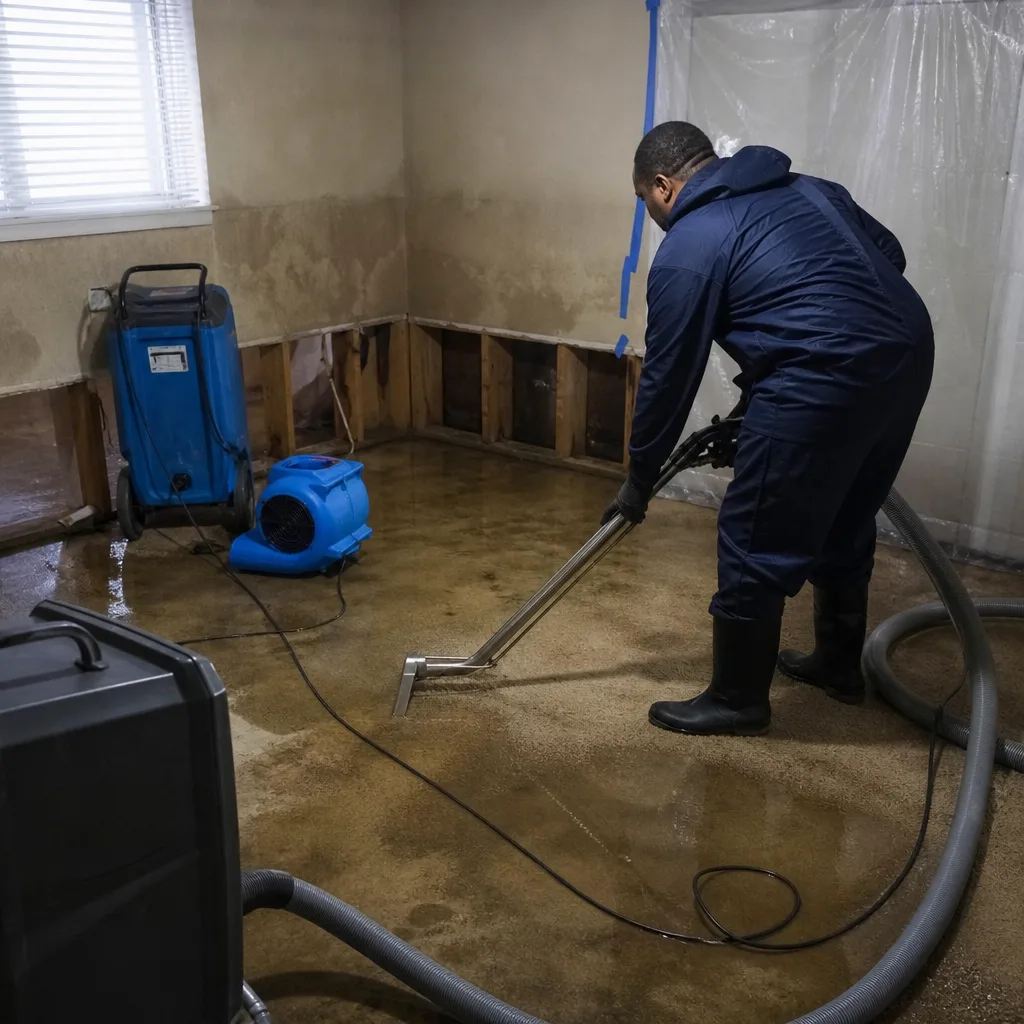
Removal in Sealy always starts with containment, because the last thing you want is a remediation crew kicking spores into your living room while pulling contaminated drywall. If the contamination source is Sewage Cleanup in Sealy territory, we follow the same containment-plus-removal protocol to protect your living space. We seal off the affected area, run HEPA air scrubbers, and physically remove colonized material rather than just spraying over it. Sheetrock, insulation, carpet pad, and compromised framing come out in sealed bags. Then we treat the remaining surfaces with an EPA-registered antimicrobial and dry the structure to the standard your insurance carrier will want documented. Daily moisture readings get logged in writing, all the way down to the dry standard.
Black Mold Remediation
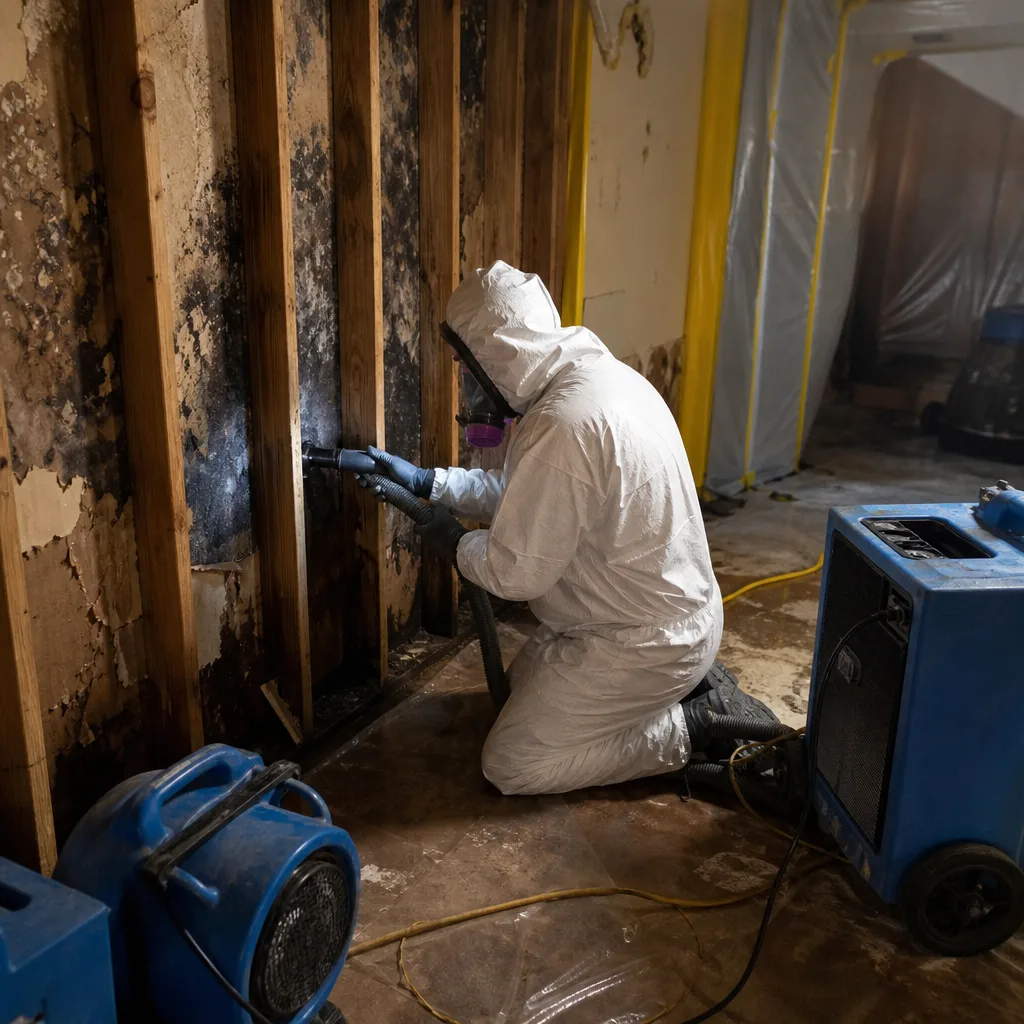
Stachybotrys is the one Sealy homeowners ask about by name, usually after a Google search of a dark patch behind the water heater or along a baseboard. Whether it’s Stachybotrys or another toxigenic species, the protocol is the same: contain it, physically remove it, treat the substrate, and verify the moisture problem is eliminated. For situations requiring Biohazard & Crime Scene Cleanup - Sealy protocols, we apply the same rigorous containment and documentation standards. Black mold in Sealy homes tends to show up in two places: behind baseboards on slab foundations where clay has held water against the edge, and in pier-and-beam crawlspaces where humid Gulf air and groundwater meet the underside of floor decking. We handle both every week, and we document everything for your adjuster.
Air Quality Restoration
Once the source is removed, the air needs to be clean again. We run HEPA-filtered air scrubbers and negative-air machines during and after remediation to pull airborne spores, mycotoxins, and fine particulate out of the living space. After the job, we’ll re-test the air to confirm spore counts are back to normal outdoor baseline. In a town like Sealy where humidity rides high much of the year, this final verification step matters. A home can look fine and still carry enough airborne mold to trigger allergies, asthma, and that persistent musty smell.
What happens when you call
- 1
A real person answersNo phone trees - you reach a local pro.
- 2
You get an upfront price rangeHonest numbers before anyone is dispatched.
- 3
A background-checked tech heads outLicensed & insured, dispatched right away.
- 4
You approve before work beginsNothing starts until you say go.
Common Mold Problems We See in Sealy Homes
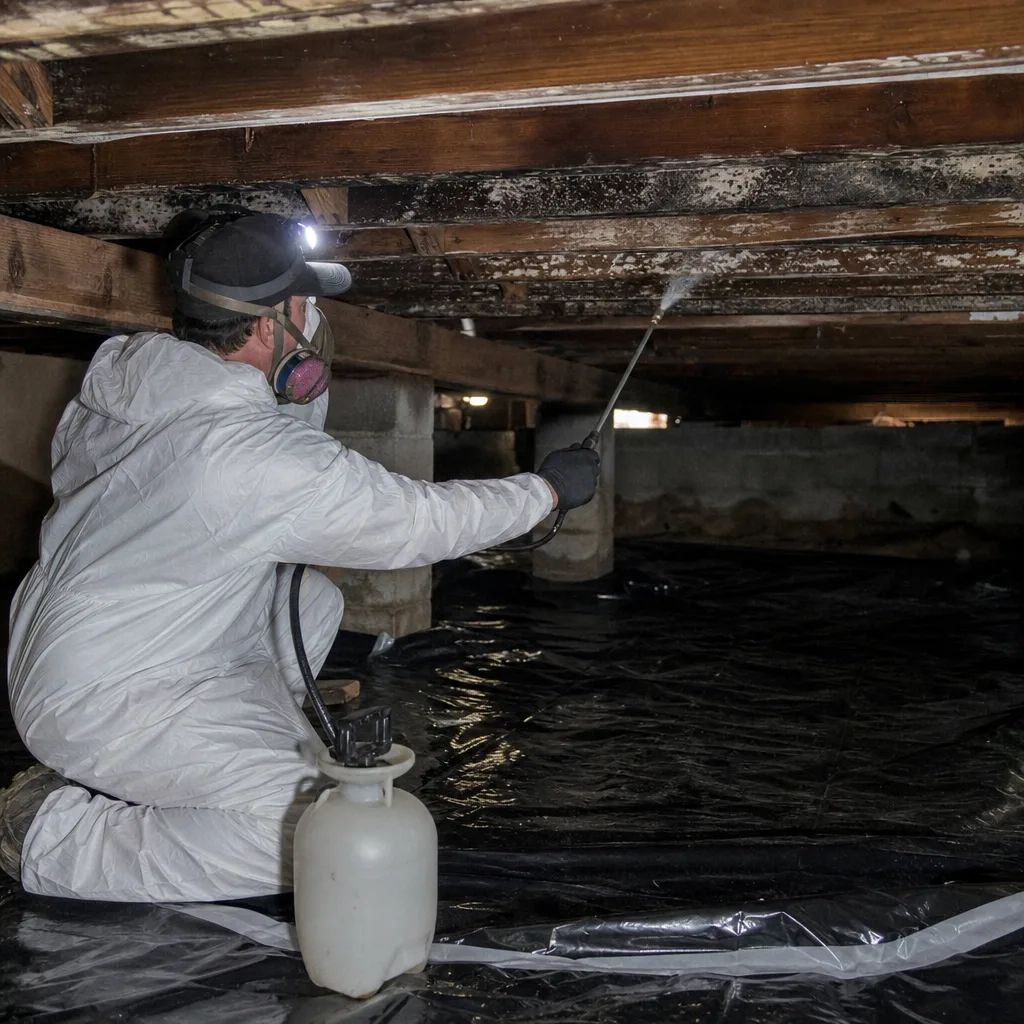
- Groundwater wicking into pier-and-beam crawlspaces. Sealy’s older 1940s-1970s wood-frame homes sit on piers above Austin County clay that becomes nearly impermeable when saturated. After heavy rainfall, groundwater migrates upward through the soil and into the crawlspace for days, even when no roof or wall shows a leak. The floor decking gets damp from below, and mold follows.
- Slab-edge moisture hiding behind baseboards. Newer slab-foundation homes in Sealy’s I-10 corridor growth ring face a different problem. Expansive clay swells and holds water against the slab edge for extended periods, and that moisture travels under vinyl plank and behind baseboards. By the time you see staining, the mold has usually been growing for weeks.
- Unvented skirting trapping humid Gulf air. Homes with enclosed or poorly vented pier-and-beam skirting trap the region’s naturally humid air against floor joists. Even without a flood event, sustained interior humidity in the 65-75% range can support mold growth year-round in Sealy, because the coastal plain simply doesn’t dry out the way it does in the Hill Country.
- Adjusters misattributing crawlspace mold to plumbing. This is one we see too often along North Meyer Street and in the older neighborhoods near downtown. An out-of-area adjuster walks a wet crawlspace, assumes a supply-line leak, and the claim stalls while the mold advances into framing. Our written scope and documented moisture mapping give the carrier the evidence they need to reclassify the source as groundwater migration.
Pricing for Mold Remediation in Sealy, TX
We quote Sealy work by square footage of affected material, the type of mold confirmed, and the accessibility of the space. That said, you should have real numbers to plan around. A crawlspace mold job in a typical Sealy pier-and-beam home usually lands between $2,200 and $4,800, including treatment of joists and decking plus a vapor barrier. A contained bathroom or utility-room remediation behind a slab-baseboard runs $1,200-$2,800. Full home air-quality restoration with post-remediation verification adds $600-$1,500 depending on square footage. Mold inspection and testing with lab results ranges $350-$650. Every quote is written, no surprises on the bill, and we bill your carrier directly. We’ll walk you through the numbers before any work begins. Call (888) 977-4690 for a free estimate.
We Also Serve Cities Near Sealy
Floodline Restoration Co. of Houston serves homeowners across the west Houston corridor and Austin County. If you’re in Mold Remediation in Sealy territory or a neighboring community, our crews are already working nearby. We regularly serve Brookshire, Fulshear, Katy, and Hempstead, bringing the same certified teams, daily moisture logs, and written scope to every job. Call and you’ll speak with a live dispatcher who can get a crew moving in your direction today.
Serving Sealy, TX - Our Local Coverage Area
We’re based in the Sealy area and know this community well. Use the map below to see our service coverage - if you’re nearby, we can almost certainly help.
FAQs - Mold Remediation in Sealy
Sealy sits on expansive Gulf Coastal Plain clay that becomes nearly impermeable once saturated, holding water against foundations and under piers for days after the rain ends. That extends the drying timeline and creates hidden moisture reservoirs that drier, sandier soils simply don’t produce. Remediation here has to account for groundwater that keeps returning after the visible water is gone, which is why we verify the dry standard with daily meter readings before we rebuild anything.
In Sealy’s oldest housing stock, the crawlspace is the first point of failure, not the roofline. Sustained post-storm soil saturation drives groundwater up through the crawlspace floor and into the joists and decking, even when no roof or wall breach exists. When the damage goes beyond mold into full structural impact, our Sealy Storm & Disaster Restoration team handles the complete recovery. On a 1960s pier-and-beam home off North Meyer Street, we found subfloor mold colonization from groundwater migration after heavy rain, with no roof leak anywhere. We set up a Dri-Eaz LGR 2800i and XPOWER air movers in the crawlspace, treated the joists with an EPA-registered antimicrobial, and installed a crawlspace vapor barrier so the moisture couldn’t re-wick. Call (888) 977-4690 if your floors feel soft or your crawlspace smells earthy after a storm.
During a regional storm event, the Houston metro’s restoration resources get pulled in every direction at once, and Sealy’s distance from those hubs can mean longer waits for out-of-town crews. We keep crews working locally in Austin County, and our live dispatch runs 24/7, so a phone call gets a person and a scheduled arrival time, not a queue. That’s the difference between stopping a small mold bloom early and rebuilding framing that’s been sitting wet for two weeks.
Newer slab-foundation homes around Sealy’s I-10 corridor growth ring hide moisture at the slab edge, where wet clay holds water against the exterior wall for days. That water migrates under baseboards and vinyl plank, so the first visible sign is often a slight darkening or warping at the baseboard, not a wall stain. By then, the mold has been active behind the trim for weeks. We remove the baseboard, assess the affected drywall, treat it, and verify the slab edge is drying before closing things back up.
A dehumidifier can help prevent new mold, but it cannot remove mold that’s already colonized drywall, framing, or insulation. Once spores have embedded in porous material, the material has to be physically removed or treated, and the air needs HEPA scrubbing to capture what’s become airborne. The good news is that some jobs are smaller than homeowners fear. A one-room containment with treatment can be done in a single visit with professional-grade Dri-Eaz, Phoenix, and XPOWER equipment running through the night. We’ll tell you honestly whether you’re looking at a cleaning or a removal, and we’ll put it in writing before any work starts. Call (888) 977-4690 for a straight answer.
Written by Curt Bowman, Owner at Floodline Restoration Co. of Houston, serving Sealy and the surrounding Austin County communities with mold remediation, water damage restoration, and full rebuild services backed by the 90-Day Done Right Promise.