
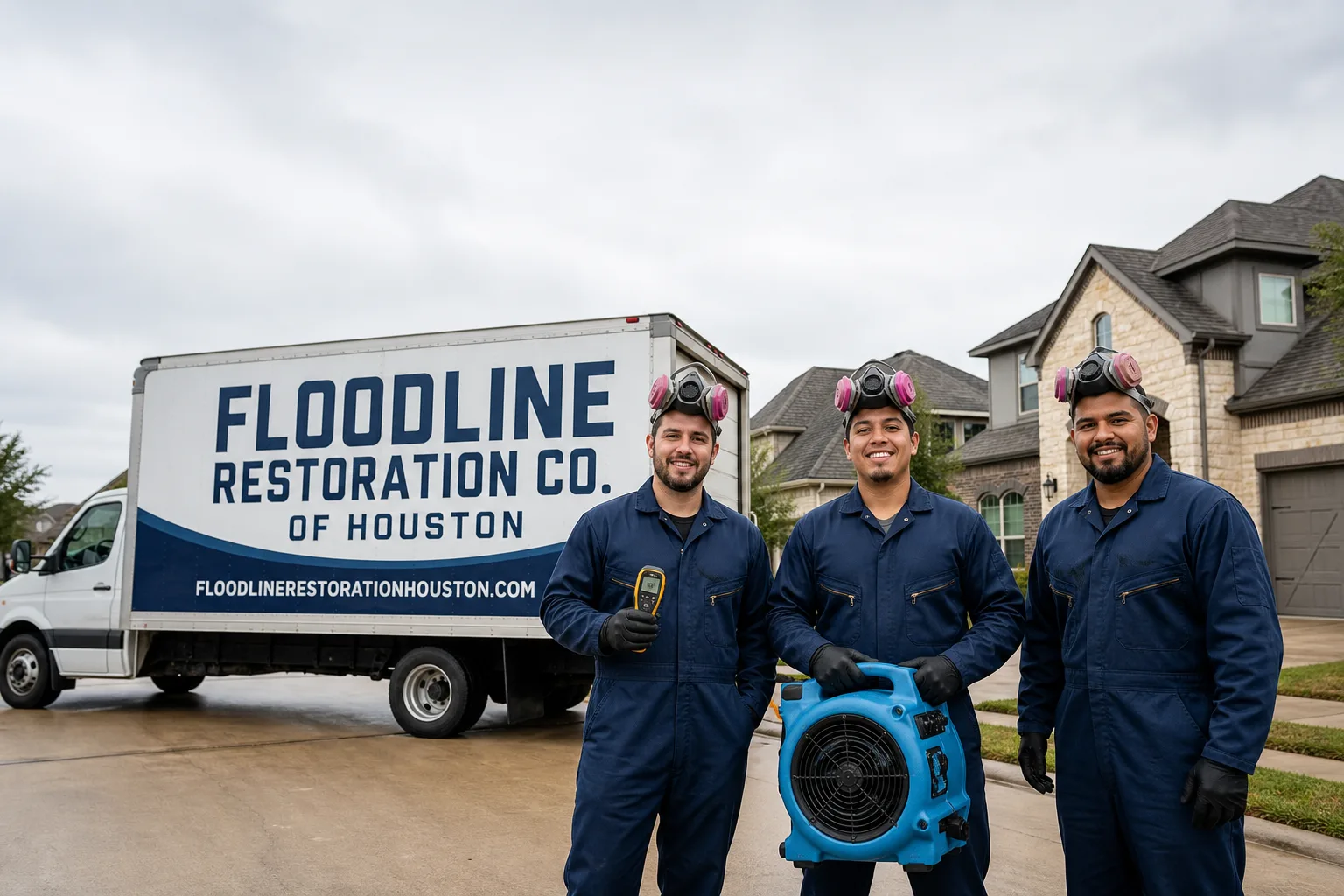
Fast, Reliable Fire & Smoke Damage Restoration Across Cleveland
Fire and smoke damage in Cleveland, TX rarely stays contained to one room, and in our experience, it’s rarely a simple cleanup. With so many homes and workshops spread across acreage lots along FM 1010, FM 787, and the back roads of Liberty County, smoke has time to travel. It moves through breezeways, shared HVAC runs, and open carports before anyone spots the first sign of trouble. Floodline Restoration Co. of Houston answers calls from Cleveland homeowners at (888) 977-4690 with a live person, any hour, because when a fire has just been put out, you shouldn’t have to leave a voicemail and wait. Our crews know the long service drives, the oversized workshop doors, and the pier-and-beam foundations that define this part of the Piney Woods.
Why Floodline Restoration Co. of Houston Is Cleveland’s Preferred Fire & Smoke Damage Restoration Company
Cleveland sits in the East Fork San Jacinto River floodplain, and that shapes how we approach fire and smoke restoration here differently than we would in Conroe or Atascocita. Water from fire suppression soaks into pier-and-beam subfloors fast, and in Cleveland’s 70-80% year-round humidity, mold starts colonizing those cavities within 24 hours. That means every fire job we run in Cleveland treats mold prevention as an immediate priority, not an afterthought. Our crews are background-checked, uniformed, and trained to IICRC standards, and they’ve spent years reading moisture maps in homes built from the 1950s through the 1980s, plus a high number of HUD-code manufactured homes common across rural Liberty County. We show up when we say we will, with professional-grade equipment already loaded for the specific structure we’re walking into. No sales desk, no handoff to a subcontractor. The same crew that starts the job finishes it.
Our fire and smoke restoration work in zip codes 77327 and 77328 is backed by the 90-Day Done Right Promise, the Keystone Standard we put in writing on every job. If it’s not done right, we make it right. No arguing, no paperwork battles. That’s a square deal for Cleveland homeowners.
Our Fire & Smoke Damage Restoration Services in Cleveland
Every fire in Cleveland leaves a different signature, but the steps to make a home safe and livable again follow a disciplined order. Here’s what we handle, start to finish.
Emergency Board-Up & Tarping
After a fire, a Cleveland home or detached workshop is immediately vulnerable: open eaves, broken windows, and warped door frames invite weather, animals, and curious passersby. Our board-up crews respond the same visit, not the next day, stabilizing openings with plywood and heavy-duty fasteners sized for oversized rolling doors and tall workshop openings common on acreage properties. For a 16-foot-tall shop door off FM 1010, a standard residential board-up kit won’t hold. We carry materials for those larger spans on the truck.
Smoke & Soot Removal
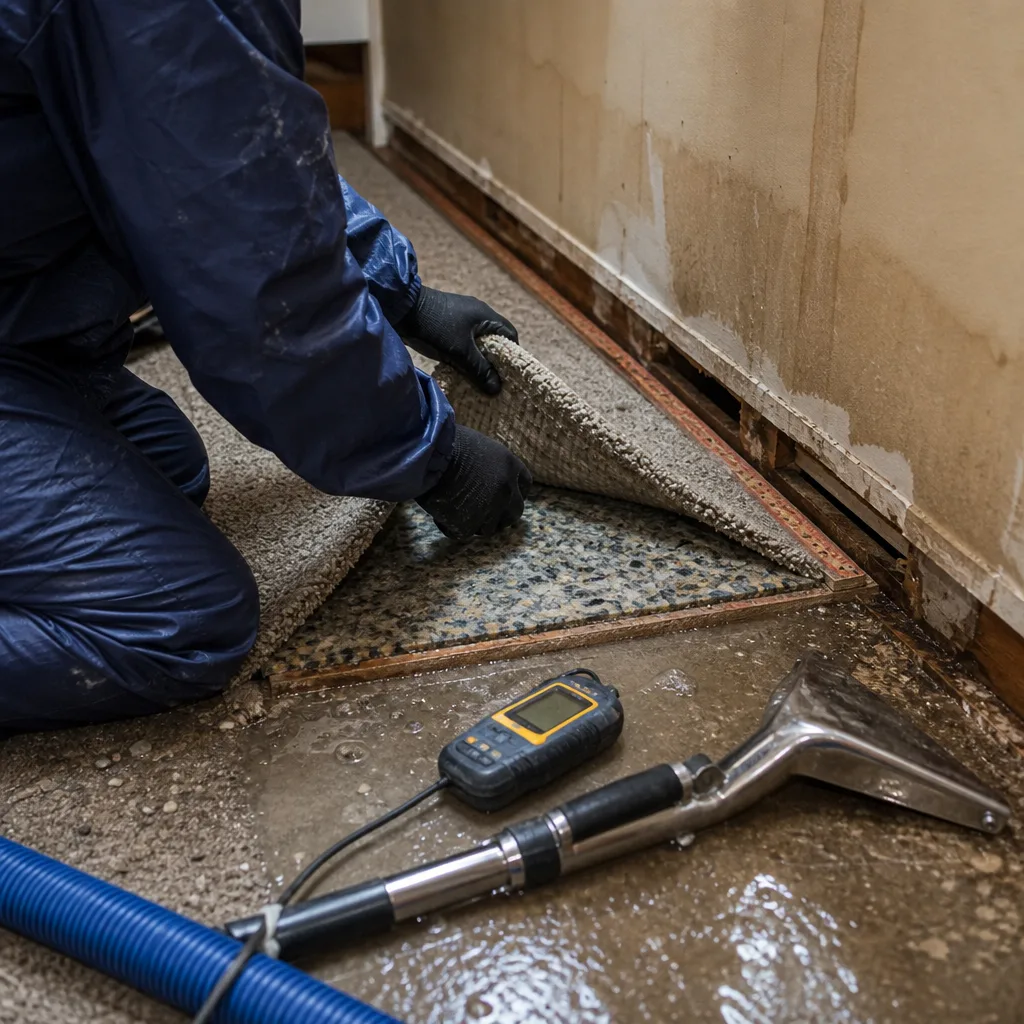
Smoke doesn’t settle evenly. It stratifies near the ridge of a tall workshop, clings to rafters, and presses into drywall, insulation, and wiring chases. In Cleveland, where workshops and detached garages often sit a hundred feet or more from the main house, smoke can linger in a building long after the visible fire is out, working into materials that look untouched. We use professional-grade air movers and filtration from XPOWER and Dri-Eaz sized for high-ceilinged spaces, pulling smoke out of the cavities where it hides before deodorization begins.
Odor Removal & Deodorization
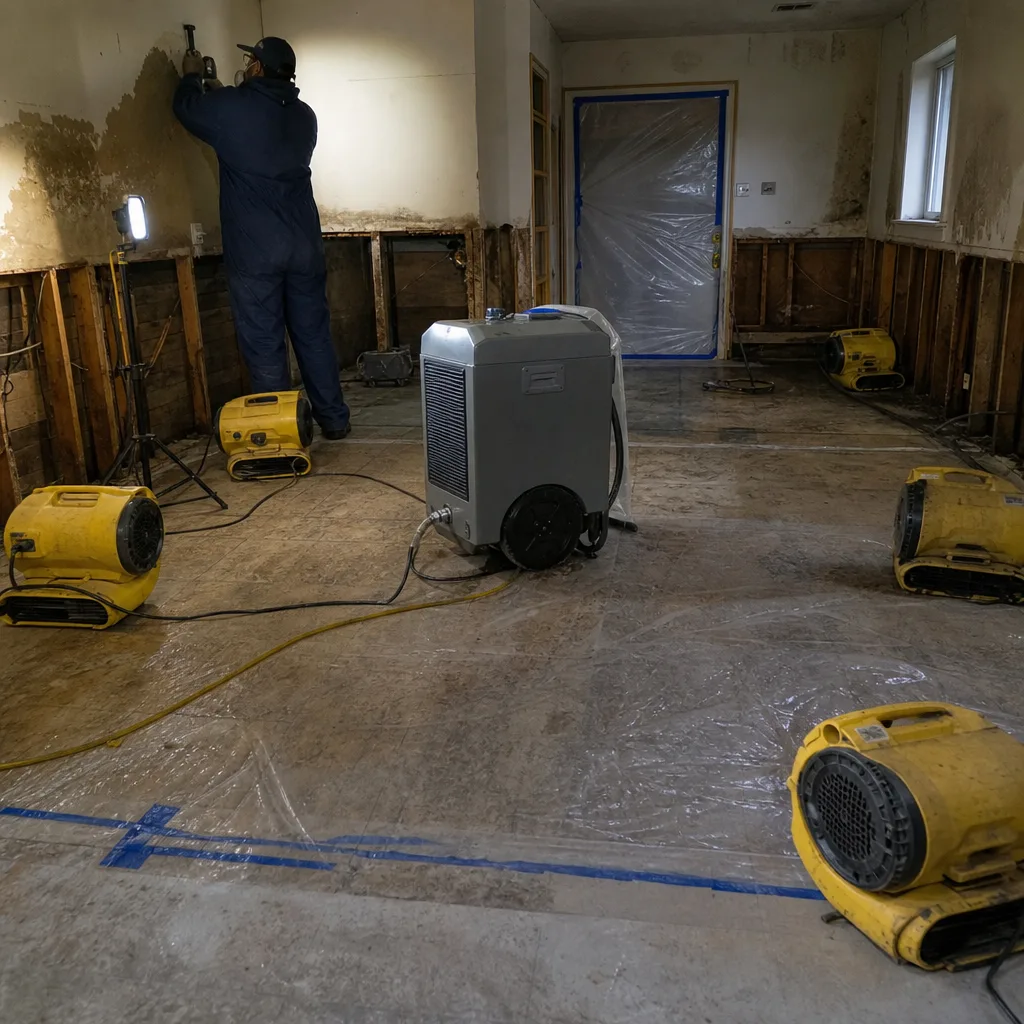
Smoke odor in a Cleveland home can come back weeks after a fire if it’s only masked, not removed. Deep-seated odor in porous surfaces, insulation, and ductwork requires more than an ozone treatment; it requires finding where the smoke actually traveled. On acreage lots, that often means checking the shared HVAC run between a burnt-out workshop and the main house, plus any breezeway that connected the two. We treat the path, not just the room.
Contents Cleaning & Pack-Out
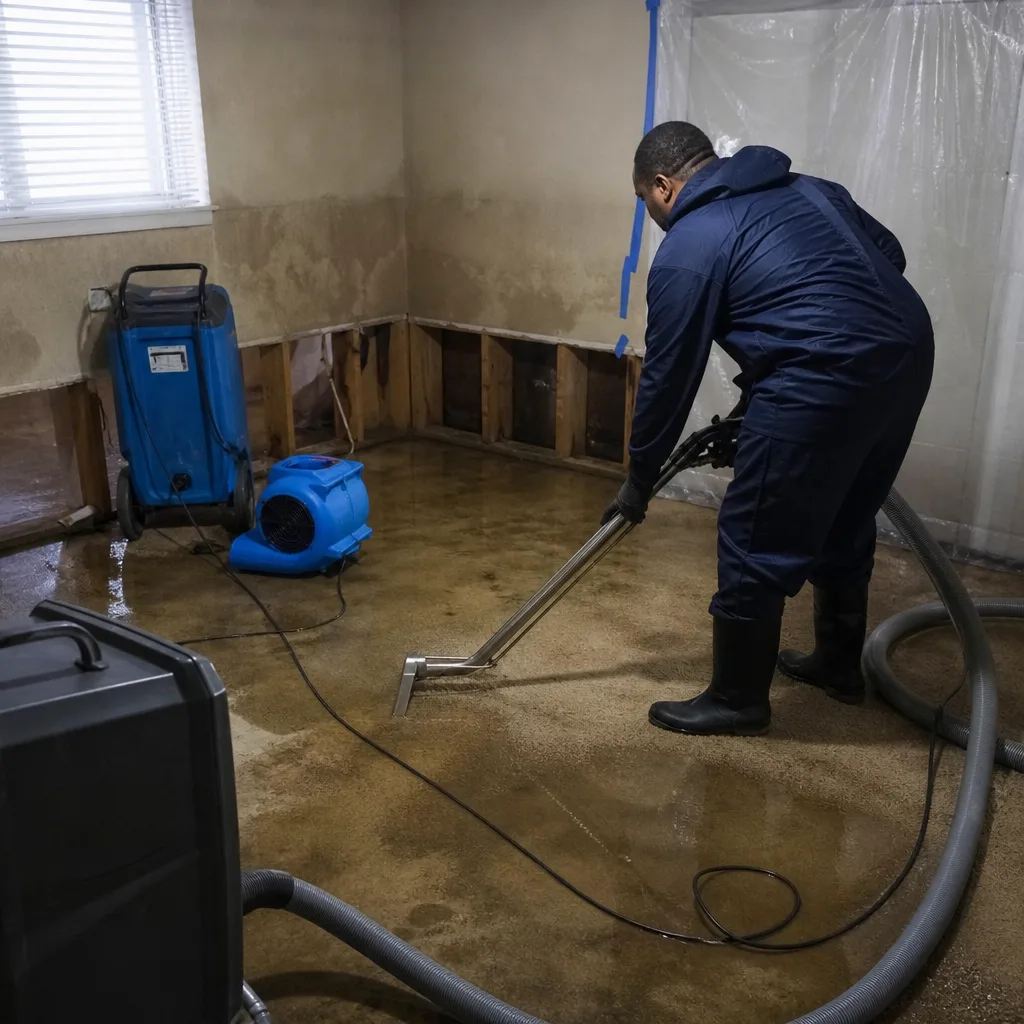
When a Cleveland fire damages a workshop, barn, or attached garage, the contents that survive often carry soot and odor even if they look fine. Hand tools, hunting gear, family photos, quilts, and kitchenware respond to different cleaning methods. We inventory, pack out, and clean contents offsite when needed, then return them with a documented chain of custody. For homeowners who’ve spent thirty years building a workshop, we treat every item like it belongs to someone we know, because it does.
What happens when you call
- 1
A real person answersNo phone trees - you reach a local pro.
- 2
You get an upfront price rangeHonest numbers before anyone is dispatched.
- 3
A background-checked tech heads outLicensed & insured, dispatched right away.
- 4
You approve before work beginsNothing starts until you say go.
Trusted Brands We Service in Cleveland
We stock replacement parts and cleaning materials matched to the equipment and building systems we see most in Liberty County. That means ready access to Injectidry panels for drying stubborn subfloor cavities, Dri-Eaz air movers and dehumidifiers for large-volume spaces, and XPOWER filtration units for airborne soot. Whether we’re stabilizing a HUD-code manufactured home off SH 321 or drying out a pier-and-beam farmhouse after fire suppression water soaked the joists, we bring equipment calibrated for the job on the first trip. Cleveland homeowners shouldn’t have to wait a week for a part to ship from Houston.
Common Fire & Smoke Damage Restoration Problems We See in Cleveland Homes
- Smoke traveling from a detached workshop into the main house through a shared breezeway or HVAC run: Many Cleveland acreage lots connect outbuildings to the house with covered walkways or duct extensions. Smoke follows that path, and homeowners only notice the odor in the living room days later. We inspect the full travel path, not just the fire room.
- Residential-grade air movers failing on tall shop and barn interiors: A 16-foot-tall ridge needs high-velocity, industrial axial fans to clear smoke stratification. Using a standard home dehumidifier sized for a bedroom won’t touch the upper third of a workshop. That’s a common reason restoration jobs fail the first time, and it’s why we size equipment to cubic volume, not square footage.
- Mold starting in pier-and-beam subfloors within 24 hours of fire suppression water: Cleveland’s humidity above 70% means the clock starts immediately. When firefighters soak a floor system, that water sits against wood joists in a warm, humid cavity. Delaying mold-inhibiting treatment by even a day can turn a smoke cleanup into a full mold remediation.
- Warped oversized rolling doors on workshops and barns: Fire heat warps steel tracks and wooden frames on heavy sliding doors, and a standard residential board-up won’t secure a 12-foot-wide opening. We carry materials and fastening methods specifically for those larger spans, common on rural Cleveland properties.
Pricing for Fire & Smoke Damage Restoration in Cleveland, TX
What a fire and smoke restoration job costs in Cleveland depends on how far the smoke traveled and what it soaked into. To give you real numbers: emergency board-up and tarping in Cleveland typically runs $850-$1,800 depending on opening size and materials. Smoke and soot removal from a single-room fire averages $1,200-$3,200; a whole-home smoke cleanup with ductwork and contents cleaning commonly lands between $4,500 and $11,000. Odor removal and deodorization adds $900-$2,800 on top of surface cleaning. When structural fire repair enters the picture, costs shift based on framing, subfloor, and finish work; a pier-and-beam repair after fire and water damage often starts around $6,000 and rises with the extent of charring. For an exact written quote on your Cleveland property, call (888) 977-4690. Estimates are free, and a live person answers.
We Also Serve Cities Near Cleveland
In addition to Cleveland, our crews regularly respond to fire and smoke restoration calls in Conroe, Willis, Atascocita, and West Livingston. If you live on the edge of town or on acreage between municipalities, call us. We’ll tell you straight whether we serve your road.
Serving Cleveland, TX - Our Local Coverage Area
We’re based in the Cleveland area and know this community well. Use the map below to see our service coverage - if you’re nearby, we can almost certainly help.
FAQs - Fire & Smoke Damage Restoration in Cleveland
Cleveland fires often involve structures already sitting in a floodplain, and fire suppression water adds to saturated ground. In Galveston, storm surge recedes quickly; in Cleveland, the East Fork San Jacinto River can crest days after a storm, leaving the ground around a burned structure waterlogged for a week or more. That means our board-up work has to account for soft soil and standing water, and our drying plan has to include the exterior ground contact zone, not just the interior. We use moisture mapping from day one and log daily readings until the dry standard is met.
Cleveland’s rural workshops and detached garages often have oversized rolling doors or sliding barn doors with openings 10 to 16 feet wide and tall. A standard residential board-up kit is built for a 3-foot-wide entry door. Securing a warped 14-foot rolling door on a workshop off FM 1010 requires heavier plywood, longer fasteners, and bracing techniques that hold against wind and shifting steel. We carry those materials on the truck so the opening is secured the same visit.
Yes, and on Cleveland acreage properties, it often does. Smoke moves through any shared air path: a breezeway, a covered walkway, shared HVAC ducting, or even just open windows across a short yard during a fire. We’ve walked into main houses a hundred feet from a burned shop and found soot layered on blinds and odor embedded in furniture. If we don’t inspect the full path, you’ll smell it again in three weeks. That’s why our scope always includes the connecting spaces, not just the fire origin.
It does, and we treat it accordingly. HUD-code manufactured homes have belly boards, vapor barriers, and underfloor insulation that trap smoke and water differently than site-built framing. Fire suppression water drips into the belly cavity and soaks insulation, and smoke presses into the thin wall cavities fast. Restoration in a manufactured home requires pulling belly board access panels, drying the underfloor cavity with Injectidry panels, and deodorizing wall cavities from the interior. We do this in Liberty County regularly and document every moisture reading for your insurance carrier.
Start the same day if you can. Cleveland’s humidity sits above 70% most of the year, and mold in a fire-suppression-soaked subfloor can establish within 24 to 48 hours. The sooner we get air movement on wet materials and mold-inhibiting treatment into cavities, the less demolition you’ll need later. Call (888) 977-4690 as soon as the fire department releases the structure. A live dispatcher answers, and a crew can be on the road to Cleveland that same visit.
How We Handle Fire and Smoke in Cleveland’s Workshops and Detached Garages
Most restoration companies in Southeast Texas cut their teeth on house fires in suburban subdivisions. Cleveland’s fire calls are different. We’re often dispatched to a detached workshop or barn on five or ten acres, where a fire smoldered unnoticed for hours because no neighbor was close enough to see the smoke. By the time we arrive, the heat has had time to work: deep char in the framing, soot driven into rafters, and a heavy rolling door warped out of its track. Our one-trip mobilization matters on these jobs. We bring the right axial air movers to clear smoke stratification near a 16-foot ridge, XPOWER filtration to pull airborne soot out of the cavity, and board-up materials sized for oversized openings. The homeowner doesn’t pay for a second trip because we undersized the equipment the first time.
Our techs responded to a late-night shop fire off FM 1010 near Cleveland where a wood-frame workshop’s heavy sliding door had warped in the heat. We used a Dri-Eaz axial air mover and XPOWER filtration to clear smoke from the oversized cavity, then stabilized the opening with emergency board-up before beginning structural fire repair on the pier-and-beam foundation. That’s the kind of job Cleveland throws at you: not a small kitchen fire, but a deep, slow burn in a building that was never designed for a fast response. We plan for it.
This is also where Cleveland’s flood history collides with fire restoration. The East Fork San Jacinto River floodplain has put water under many of these structures before, and fire suppression water reactivates old damage. A subfloor that dried out after Harvey may have hidden rot or compromised joists that fire water soaks again. We read the moisture map, compare it to the char pattern, and give you an honest scope in writing before any work starts. No overselling, no surprises.
For Cleveland acreage owners, the question isn’t whether smoke got into the main house. It’s how far it traveled and whether the first crew actually found all of it. We check the full path: breezeway, shared HVAC, open soffits, even the gap under a carport roof. Then we treat the whole path. That’s the only way to keep odor complaints from showing up a month later. It’s done right, and it’s backed in writing.
Contact Floodline Restoration Co. of Houston for Fire & Smoke Damage Restoration in Cleveland
If you’ve had a fire in a Cleveland workshop, home, or manufactured house, don’t wait for the smoke to settle into the framing. Call (888) 977-4690 now. A live person answers at two in the morning, a certified crew reaches Cleveland the same visit, and you’ll get a written scope before any work begins. We bill your insurance carrier directly, we document everything with photos and moisture logs, and we stand behind the job with the 90-Day Done Right Promise. Seniors and veterans always receive 5% off, and any repair over $250 qualifies for $50 off. We’ll be there when we say.
Written by Curt Bowman, Owner at Floodline Restoration Co. of Houston, providing fire and smoke damage restoration to Cleveland and surrounding Liberty County communities.