
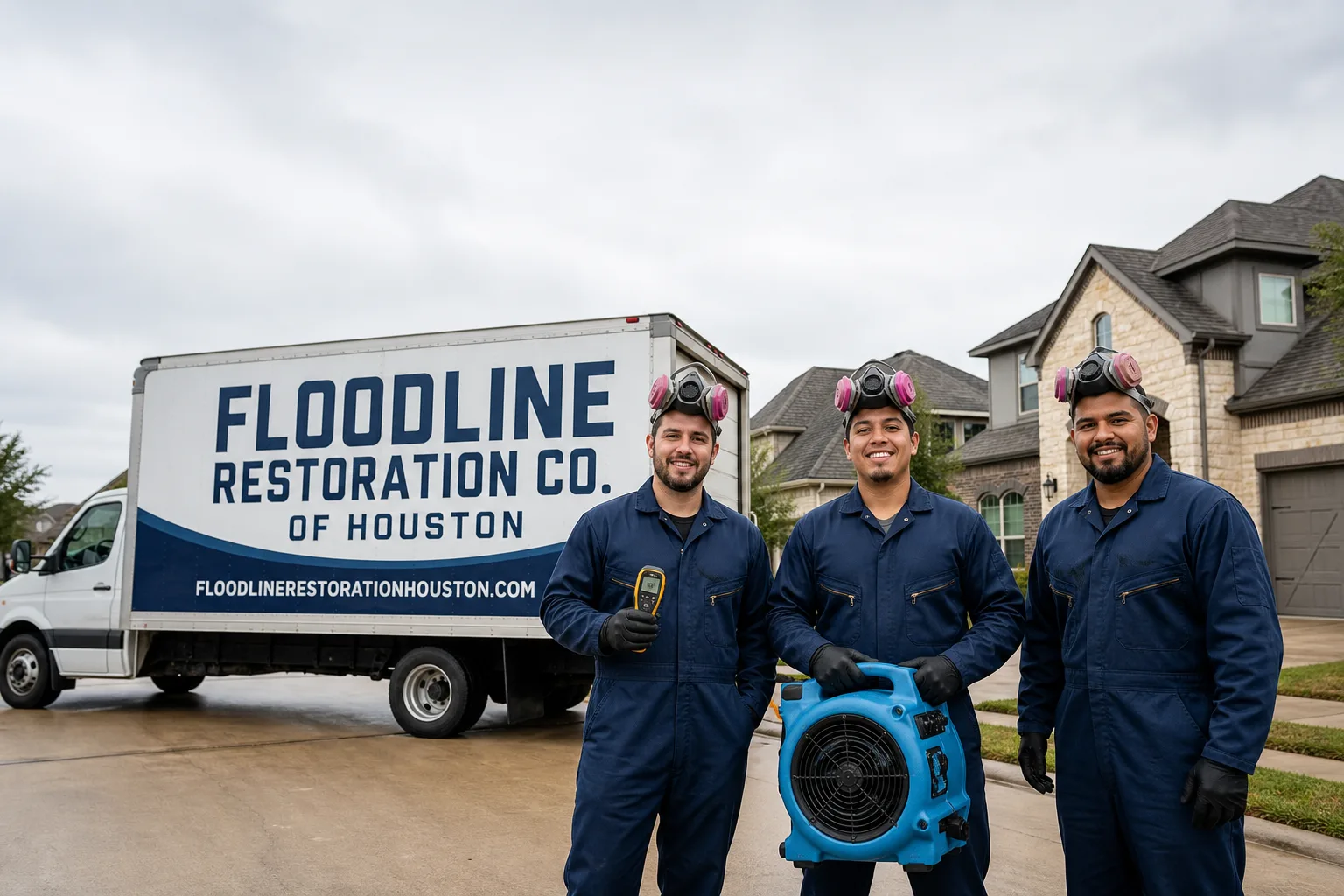
Fast, Reliable Biohazard & Crime Scene Cleanup Across Alief
Biohazard cleanup in Alief typically runs $1,200-$3,800 for a contained blood or bodily fluid scene, and $2,500-$7,500 for an unattended death requiring structural removal and odor treatment. We dispatch crews to Alief from our Houston office and usually have a certified technician on site within 90 minutes of your call. If you’re standing in a home in the 77411 zip code right now, call (888) 977-4690. A live dispatcher answers. Not a recording.
Why Floodline Restoration Co. of Houston Is Alief’s Preferred Biohazard & Crime Scene Cleanup Company
We’ve worked enough jobs in Alief to know what’s behind the drywall before we open it. Homes here were platted almost entirely in the 1970s and 1980s as affordable suburban tract housing, and most sit on concrete slabs with original paper-faced gypsum board. That matters when you’re dealing with blood, bodily fluids, or decomposition. Water damage restoration in Alief is critical because floodwater in this basin contacts the lowest 12-18 inches of interior framing directly. So does anything soaked into carpet or bedding. We check for both before we ever apply a disinfectant.
Our Biohazard & Crime Scene Cleanup crews are background-checked, uniformed, and certified to IICRC, RIA, and IFA standards. Curt Bowman founded Floodline Restoration Co. in 2010, built around a dispatch board rather than a sales desk. That structure still holds. You call, you get a real person, and a crew shows up with the right equipment. Every job is backed by the 90-Day Done Right Promise, in writing. If it’s not done right, we make it right. No arguing, no paperwork battles.
We serve Alief from our Houston office. Dispatch is central; the work is local. The same technician who starts the containment finishes the job. We don’t hand off scenes mid-cleanup to a subcontractor who’s never seen the moisture history of the house.
Our Biohazard & Crime Scene Cleanup Services in Alief
Crime Scene Cleanup
A crime scene in an Alief home requires more than surface cleaning. Blood soaks through carpet, padding, subfloor, and often into the slab-contacted drywall that sits at the base of every ranch house here. We remove contaminated materials to the full depth of saturation, disinfect with hospital-grade agents, and verify the cavity is dry before we close it up. If we find residual flood moisture behind a wall that’s been patched three times since Harvey, we address that too. You can’t disinfect what’s still wet.
Trauma & Unattended Death Cleanup
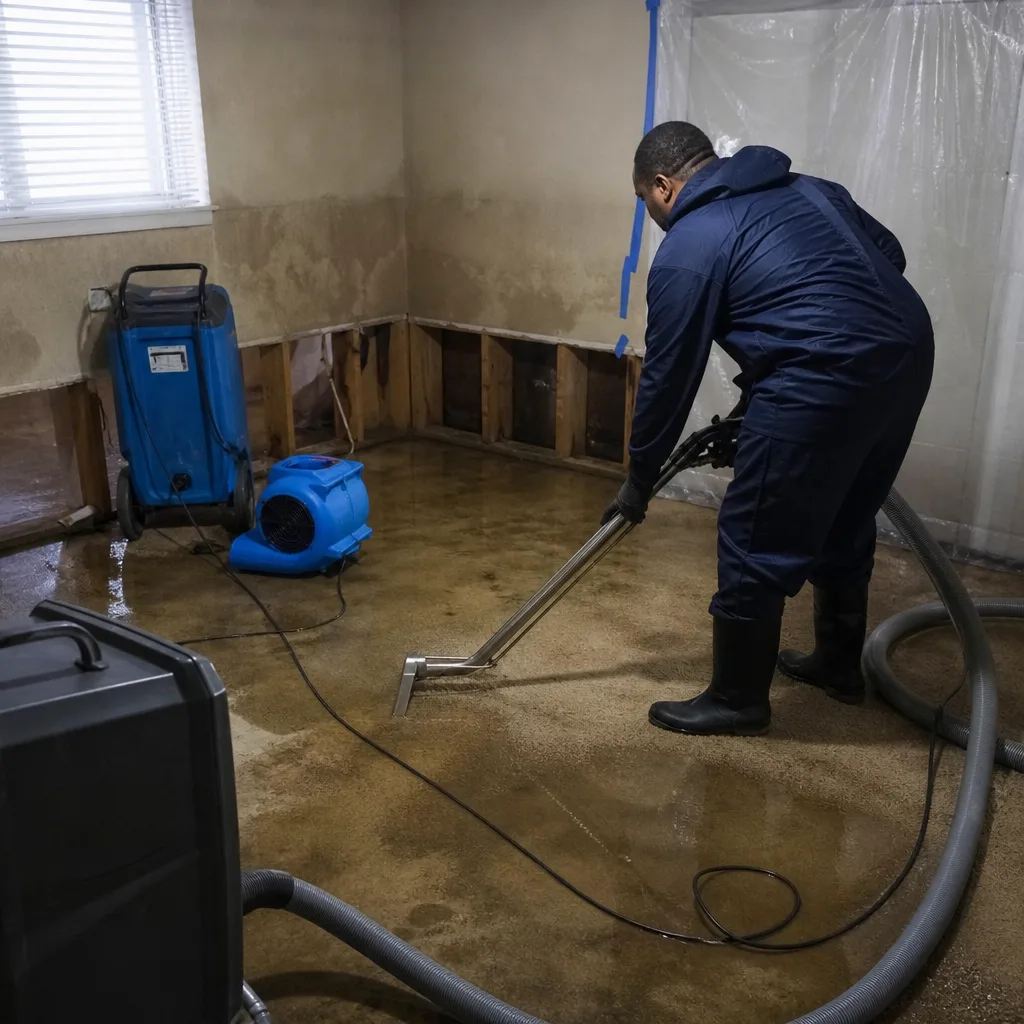
Unattended death scenes in Alief are complicated by the climate. Decomposition progresses quickly in homes where indoor humidity stays above 70% year-round. The slab under a 1970s ranch home doesn’t breathe. When a body rests on carpet or a bed for days or longer, fluids migrate downward and wick upward through the same wall cavities that floodwater has already saturated. We remove not just the visible contamination but the hidden reservoir behind baseboards and under flooring. Then we dry to standard, document everything, and hand you the moisture log.
Hoarding Cleanup
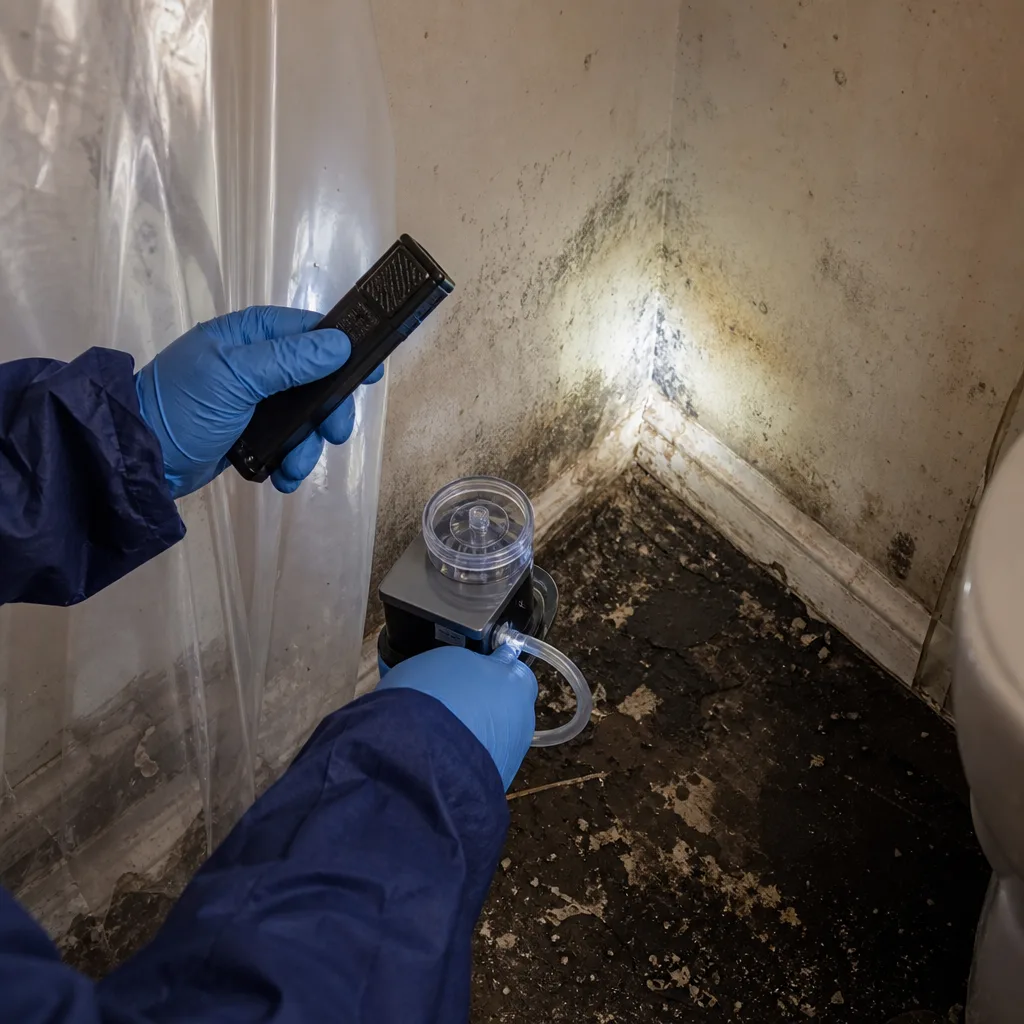
Hoarding cleanup in Alief often uncovers structural problems the clutter was hiding. Mouse and roach waste, mold, decaying food, and sometimes needle hazards. But we also find slabs that have wicked moisture into everything touching the floor. If the home flooded in 2017 and was never properly dried, the bottom layer of hoarded material is a mold remediation - Alief priority. We sort, remove, and remediate in the same visit when possible. Most jobs in single-story ranch homes are completed in one day.
Blood & Bodily Fluid Cleanup
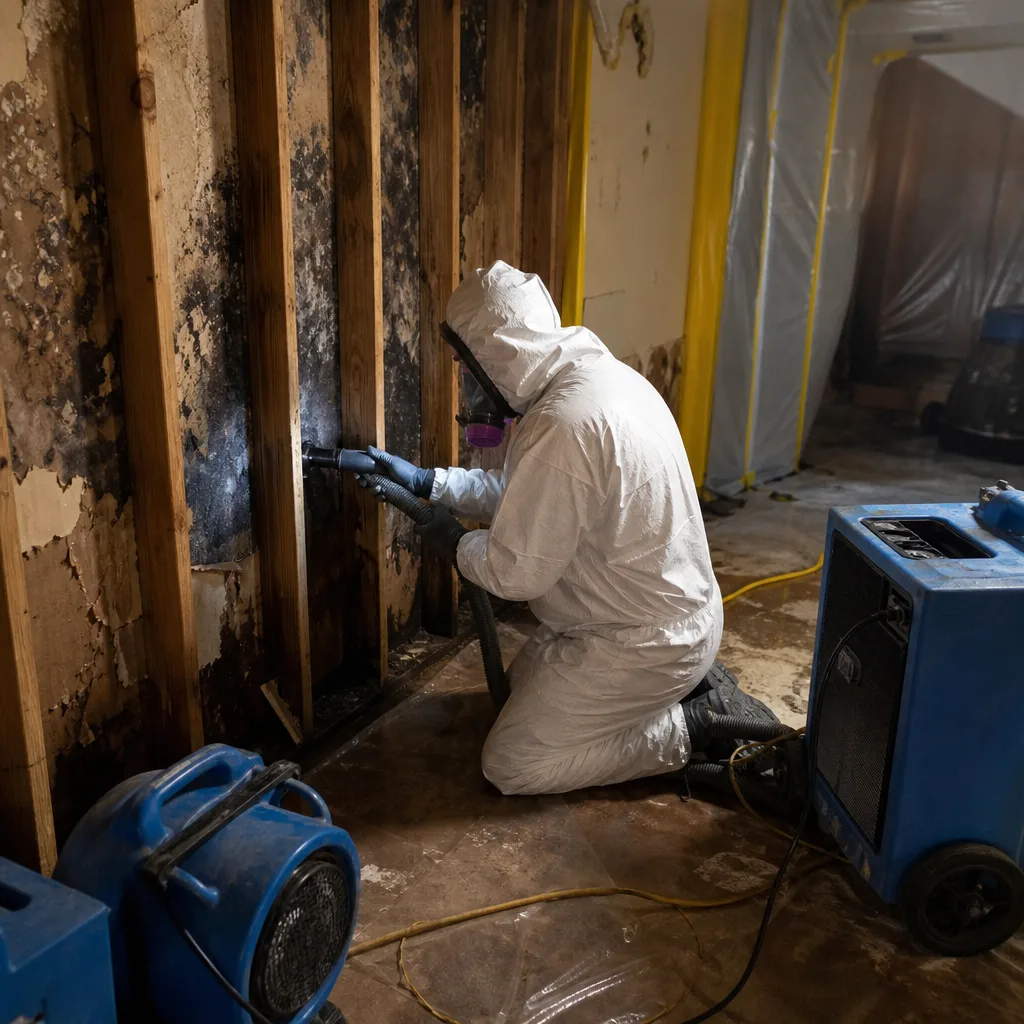
Blood cleanup in a carport, laundry room, or bathroom of an Alief home means checking beyond the obvious stain. Original concrete slabs from the 1970s and 1980s hold moisture. Blood on unsealed concrete penetrates fast. We use professional enzymes and controlled demolition to remove all traces, then verify with ATP testing before declaring the scene cleared. If the wall behind the blood shows Alief fire & smoke damage restoration-level contamination from Memorial Day 2015 or Tax Day 2016, we cut that section out. It’s the only way to guarantee the odor won’t return in July when the slab warms up.
What happens when you call
- 1
A real person answersNo phone trees - you reach a local pro.
- 2
You get an upfront price rangeHonest numbers before anyone is dispatched.
- 3
A background-checked tech heads outLicensed & insured, dispatched right away.
- 4
You approve before work beginsNothing starts until you say go.
Trusted Brands We Service in Alief
We stock and service professional-grade equipment built for the Houston climate. B-Air air movers and Injectidry wall-drying systems run on nearly every Alief job because paper-faced drywall in slab homes needs aggressive, targeted drying. Our technicians hold IICRC and RIA certifications, which means the person running the drying log understands psychrometrics, not just button-pushing. When you call about the equipment we installed after a biohazard or water-loss job, the same company that put it in answers the phone.
Common Biohazard & Crime Scene Cleanup Problems We See in Alief Homes
- Stacked flood-line repairs hiding contamination. In subdivisions platted before Harris County’s post-Harvey detention upgrades, we routinely pull drywall to find two or three distinct flood-line patches, each sealed over rather than fully dried. Biohazard work can’t ignore that. We open, dry, and treat before we sanitize.
- Slab moisture wicking into wall cavities. The concrete slab under a 1970s Alief ranch home is a moisture battery. When blood or bodily fluids sit on unsealed slab surfaces, they soak in and spread laterally under the floor covering. Surface cleaning leaves the source behind. We remove, dry, and verify.
- Original galvanized plumbing leaking behind walls. Many Alief homes still have original galvanized supply lines weakened by decades of Houston’s hard, mineral-heavy water. A slow leak inside a wall cavity masks biohazard odors and feeds sewage bacteria. We inspect plumbing adjacent to any contamination scene as standard practice.
- Disinfectants applied over active mold. A cruder cleanup crew will spray a surface with bleach and call it done. In this humidity, any hidden moisture fuels mold within 24-48 hours. We treat the structure first, then the biological surface. The order matters.
Pricing for Biohazard & Crime Scene Cleanup in Alief, TX
A straightforward blood cleanup in a single bathroom of an Alief home usually runs $1,200-$2,500. A contained crime scene with moderate contamination in one or two rooms typically lands between $2,500 and $4,800. An unattended death requiring structural removal, full containment, and multi-day odor treatment runs $2,500-$7,500 depending on how far fluids have migrated into slab-contacted framing. Hoarding cleanup prices start around $1,800 and climb with volume. Tear gas or chemical cleanup in a rental unit falls between $1,500 and $3,500. We give you a written scope before work starts, every time. No surprises on the bill. Call (888) 977-4690 for a free estimate. Senior and veteran customers receive a 5% discount, always.
We Also Serve Cities Near Alief
Our crews cover the whole southwest Harris County corridor. If you’re in Four Corners, Mission Bend, Stafford, or New Territory, the same Floodline Restoration Co. team responds. The dispatch line is the same: (888) 977-4690. We serve Biohazard & Crime Scene Cleanup in Alief and every neighborhood around it.
Serving Alief, TX - Our Local Coverage Area
We’re based in the Alief area and know this community well. Use the map below to see our service coverage - if you’re nearby, we can almost certainly help.
FAQs - Biohazard & Crime Scene Cleanup in Alief
Repeated flooding adds structural drying to the job, which typically extends the timeline by one to three days and adds $800-$2,000. When floodwater has saturated the paper-faced drywall behind a contaminated wall, we can’t just disinfect the surface. We have to cut out the wet material, dry the cavity with Injectidry or Dri-Eaz equipment, and only then treat the biological contamination. That’s extra labor and disposal, but skipping it means the odor and mold return within weeks. Call (888) 977-4690 and we’ll give you a written scope before any work begins.
Yes, but the drywall damage changes the scope. In a 1970s slab-on-grade ranch home, blood near the base of a wall almost always contacts drywall that has already been compromised by slab moisture. The correct approach is removing the contaminated drywall to the full depth of saturation, not just the visible stain. We then dry the cavity to standard and install new material. That’s the only way to guarantee no residual biohazard remains. Call (888) 977-4690 for a free estimate.
It depends on whether the Harvey water exposure was properly dried. If the house was remediated and a moisture log shows all cavities dried to standard, then yes, after our hoarding cleanup and air-scrubbing process, the home is safe to occupy. If the home was never dried properly, or if the hoarded material kept moisture trapped against the walls for years, then we have to address that first. We won’t clear a home for occupancy until the structural moisture readings support it. Call (888) 977-4690 and we’ll tell you exactly what’s needed.
We treat it as a combined biohazard and structural remediation job. Stacked flood-line repairs mean the wall has been opened and sealed repeatedly, often with moisture still trapped inside. Decomposition fluids follow the same paths that floodwater did. We open the wall at the flood line, inspect the entire cavity, remove all contaminated and water-damaged material, dry to standard, then disinfect and rebuild. Trying to clean the surface only leaves the reservoir behind. Call (888) 977-4690 for an assessment. We document everything for your insurance carrier if you choose direct billing.
No special permit is required for tear gas residue cleanup in Harris County, but the underlying plumbing and slab moisture complicate the work. Tear gas particles bond to any damp surface, including drywall that’s wicking moisture from the slab. If original galvanized pipes have been leaking inside a wall cavity, the tear gas residue will have bonded to the wet paper facing. We cut out and remove contaminated drywall, neutralize the chemical residue on every exposed surface, and dry the cavity before closing. Do not attempt tear gas cleanup yourself. The residue migrates into HVAC systems and can cause respiratory irritation for weeks. Call (888) 977-4690 and we’ll walk you through the process.
Alief’s Flood History Changes Everything About Biohazard Cleanup Here
Here’s the part most crime scene cleanup guides never mention. Because Alief sits in the Brays Bayou tributary network with chronic overtopping, and because this area absorbed three major floods in two years, the first 12-18 inches of interior wall framing in nearly every slab-on-grade ranch home has been repeatedly soaked. That means a standard biohazard job in Alief is rarely standard. Blood seeping into carpet or flooring meets wall cavities that have hosted floodwater three times. Decomposition fluids wick through the same paper-faced drywall that already carries mold spores from Harvey. You cannot safely bleach a wall that still holds Tax Day Flood moisture behind it. The contamination will resurface.
In a 1970s ranch home in Alief’s 77411 zip code, our crew responded to an unattended death scene where the concrete slab had wicked moisture from the Tax Day Flood into the paper-faced drywall behind the deceased’s closet. Before we could safely remove the blood and bodily fluids, we had to cut out the saturated drywall up to the flood line, dry the cavity with Dri-Eaz equipment, and treat the mold that had colonized behind the ‘previously remediated’ wall from Hurricane Harvey. A layered contamination scenario we see repeatedly in this drainage basin. Any company that skips the flood history is doing surface work. We don’t do surface work.
Landlords in older Alief subdivisions sometimes attempt a surface wipe-down of trauma scenes without removing the contaminated slab-contacted drywall. Decomposition byproducts then wick upward through capillary action, and the unit starts smelling again in the next humid stretch. Homeowners and unlicensed cleaners seal over blood into wall cavities that still hold residual flood moisture, and the odor returns weeks later. Crime scene cleanup crews with no local experience overlook the repeat flood history and apply disinfectants without checking for hidden paper-faced drywall saturation. Active mold lives beneath the treated surface. We know because we’ve opened walls others had already “cleaned.”
What We Do Differently on Every Alief Job
We start with the floodline, not the surface stain. Our technicians check the moisture history of the wall cavities before we ever apply an enzyme or disinfectant. In a basin that overtops during sub-tropical rainfall, residual moisture hides where the naked eye can’t see it. We use professional-grade Dri-Eaz, Phoenix, and B-Air equipment to dry to standard, logging daily readings until the dry specification is met. That moisture log goes to you and your insurance carrier. Direct insurance billing is available, meaning you never play messenger between us and the adjuster. Photo documentation on every job. A written scope before work starts. And the 90-Day Done Right Promise in your hands when we leave. If it’s not done right, we make it right. That’s the Keystone Standard, and it’s in writing.
Call (888) 977-4690 any hour, any day. A live person answers. We’ll tell you straight what needs to happen and what it will cost. No pressure, no sales script. Just a square deal from a company that plans to be serving Alief for another thirty years.
Written by Curt Bowman, Owner at Floodline Restoration Co., serving Alief since 2010.